
Bhramari Pranayama Benefits: Bumble Bee Breath, Nitric Oxide And Calm
Brain surgery led Stuart to breathing meditation (pranayam)
Below, hear how Stuart decided he needed Bhramari Pranayama benefits. I’ll also outline why they’re another reason to use this type of breath meditation. Humming raises the nitric oxide in your nose, which is one reason Bhramari (Bumble Bee Breathing) is getting research attention. You can also get a breath meditation Introduction via an online meditation course in breathing meditation (aka pranayama). Flametree’s breathing meditation center also has weekly breath meditation classes. They include in-studio or online meditation classes in breath meditation, and more. Check out this type of online guided meditation classes, or pranayama online course. So try pranayam, or read more about it below.
Bhramari pranayama benefits: the short answer
Bhramari pranayama (Bumble Bee Breath) is breathing in slowly, then humming softly as you breathe out. The main Bhramari pranayama benefits people notice are a calmer mind and easier sleep. Research has found three things so far: humming raises nitric oxide in the nose about 15-fold compared with a quiet breath out; the long hum slows breathing to about six breaths a minute, which lifts heart rate variability (a sign of a relaxed nervous system); and in a 2026 review of trials in people with high blood pressure, Bhramari ranked among the more helpful mind-body practices, in small studies. It is taught in every pranayama class at Flametree Yoga Studio in Darwin and live online.
Iyengar yoga is the style developed by Mr BKS Iyengar. In the 20th century he did more than anyone to set down traditional Indian yoga, through his books and his teaching, and he pioneered the use of props. It is sometimes called modern classical yoga, and it’s the style we teach at Flametree. Mr Iyengar’s saying is a good one to hold on to: “Breath is the king of the mind.” This page is part of our breath and pranayama notes.
Bhramari pranayama benefits in short form
- What it is: humming as you breathe out, eyes and ears closed if you like.
- How to do it in five simple steps.
- Nitric oxide: what the 2002 humming study measured, and what it did not.
- Calm and heart rate variability: why the long exhale matters.
- Blood pressure: promising small trials, not a replacement for medicine.
- Stuart’s story, after brain surgery.
- Humming lying down: a gentle routine with folded blankets or towels.
- Who should skip it, and when to talk to your doctor first.
- Classes in Darwin and online, first class free.
How to do Bhramari pranayama: 5 steps
- Sit upright on a chair or a folded blanket, shoulders soft, eyes closed.
- Breathe in slowly through the nose.
- Breathe out slowly through the nose while humming a low, steady “mmm” with the lips closed.
- Let the hum last as long as it comfortably can. Feel the vibration in the face and head.
- Repeat 5 to 10 times, then sit quietly for a minute. Stop if you feel dizzy.
Once that is comfortable, a teacher can show you Shanmukhi mudra (closing the ears and eyes gently with the fingers), which draws the attention further inward.
Stuart’s story: why he took up Bhramari
Recently, Stuart, a Flametree student, got two new and unexpected holes in his head!
They were made by brain surgeons to drain blood that had accumulated between his skull and his brain.
Apparently, for every extra decade of our age, the greater is the tiny gap between the inside of our skulls, and the brain itself.
The doctor said that if older folks get a bump on the head, like Stuart did, they’re more likely to have blood accumulate in the gap.
Anyway, Stuart has recovered well, including with the help of his fitness and good health from yoga.
Bhramari and nitric oxide: humming raised it 15-fold in the nose
At the same time, I (Chris), have just heard a very good presentation by another brain surgeon. It strongly emphasised what I already knew, and what I discuss further below.
That is, nitric oxide is an important signalling gas in the body, including for blood flow.
There are various ways that we naturally produce nitric oxide.
In a 2002 study of 10 healthy adults, humming raised the nitric oxide measured in the nose about 15 times compared with a quiet breath out (Weitzberg and Lundberg, American Journal of Respiratory and Critical Care Medicine, doi 10.1164/rccm.200202-138BC). The study measured the gas in the nose during humming. It did not test health outcomes.
The idea that a gas can matter this much is not new.
But in 1998, three scientists got the Nobel Physiology and Medicine prize for their discoveries concerning nitric oxide on these issues. I talk about it more below, in this discussion of Bhramari pranayam.
Pranayama Breath Meditation Video Mini Course. Learn more.

Due to his injury, Stuart (pictured) could not type, talk or walk. Bhramari is helping him a lot. It’s a Sanskrit word for the breathing technique. In your breathing practice, I’ll show you how to use the index fingers and middle fingers, so you get all the benefits of Bhramari pranayama practice. Pregnant students should tell their teacher first. Bhramari pranayam is a great breathing exercise will have a positive impact on your life.
Among other things I also outline below, in a small 2026 study of healthy adults, humming raised heart rate variability (a sign the relaxing side of the nervous system is active).
Below, I’ll also show you the important role of even a simple technique like Shanmukhi mudra. It is a simple process done with the hands to make your conscious flow inward by closing the senses towards the outside.
Stuart takes up breath meditation pranayam too
As a result of what happened, Stuart is making some big changes to his life.
I’m pleased to say that Stuart has now also started coming regularly to my pranayama classes (online or in the Flametree yoga and breath meditation center, in Darwin, Australia).
So you see that Stuart got a new perspective of the importance of looking after his brain as well as possible!
Stuart has in fact done another type of daily meditation for 40 years. He also plans to continue with that too.
But he’s also now doing regular breath meditation, including Bhramari pranayama.
Stuart got more mental clarity, energy, and a better brain!
Stuart says that Bhramari (and the other pranayama techniques used in each practice), gives him more mental clarity, and additional energy. It also helps him (and many others) with sleep, stress, anxiety, and much more.
Below, I’ll outline more about the other Bhramari pranayama benefits that he’ll now also be getting.
Meanwhile, if you want to join my in-studio or online meditation classes, see our Introduction at the orange link below, or our weekly classes. Almost every class includes some Bhramari (also called Bumble Bee breathing).
In the classes, you’ll notice that over ten weeks, you actually get an in-the-studio or online meditation course.
So I hope to see you soon at the Flametree breath meditation center, and / or in our Bhramari pranayam Introductions.
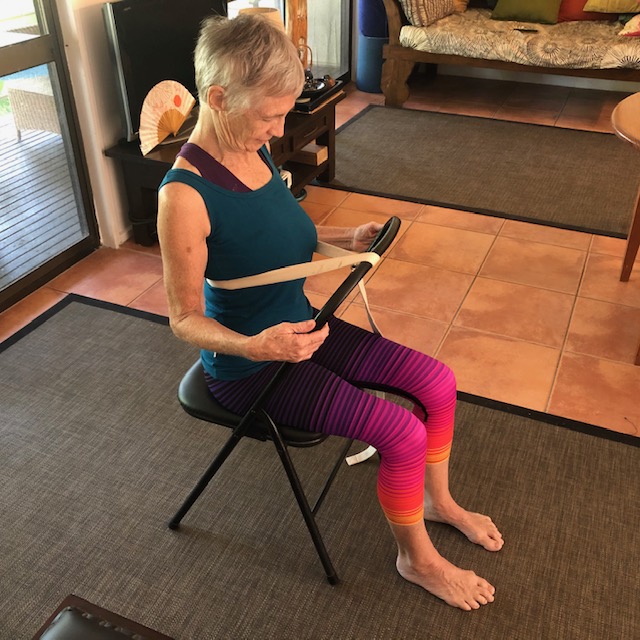
Using the chair, with belt support, is a comfortable position for the early morning or anytime. Lotus pose, or even cross legged, is not needed. Nor is any other Sanskrit word! Bhramari is just doing a humming sound of a bee, as part of your breathing patterns. Have an empty stomach for the practice of Bhramari pranayama. Take a deep breath and mix in the humming sound vibrations as you exhale. Any humming sound will do. It does not have to sound like a black Indian bee, or many others!
The outcome of in-studio or LIVE online breath meditation is huge.
Students commonly tell us it helps with stress, sleep and a busy mind. Research is still catching up on the rest, as the sections below explain.
Obviously, have a quiet place for your breath practice of yogic breathing. Breathe through the nose, and if you tend to breathe through your mouth, our note on how to stop mouth breathing is a good companion to this page.
What is Bhramari pranayama?
Bhramari pranayama (or breathing meditation) is where one makes the sound like a bumble bee in the base of the throat.
Yoga and Bhramari breathing have been practised for centuries, and are known from practice long before modern research began testing them.
As well as being another type pranayam, it’s also sometimes also called bee breathing, bumble bee breathing, or Bhramari breath.
Exhaling is done with a sound that is a bit like a bumble bee. The slow humming sound slows down the length of exhalation.
The basic Bhramari technique, of humming as you breath out, is very simple, and makes for a highly effective pranayam.
In-studio or online classes
In my in-studio or online breathing meditation classes, I guide people through through the process, using demonstrations and verbal directions.
These pranayam classes are very easy, using some of the props I demonstrate in pictures. It’s worth using these pranayam classes, because breathing meditation (aka pranayama) classes, are a type of in-studio or online guided meditation classes.
in other words, I gently and discretely show you, and lead you verbally, in what to do.
Bhramari pranayam comes with various additional techniques too. In the picture below, I’m demonstrating one of them.
New to Flametree? See the half price pass
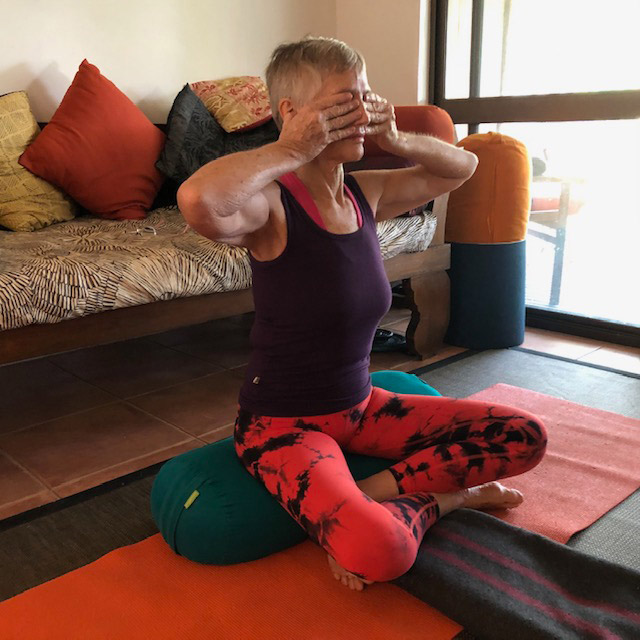
It’s me, Chris Lalor, the Senior Iyengar Teacher at Flametree, demonstrating Bumble Bee breath. In this version of this pranayam breathing meditation technique, I’m blocking the eyes and ears, to draw the senses inward, and quieten the mind. This is done while humming.
In the picture above, I (Chris) demonstrate an addition of Bumble Bee breath. The technique makes you calmer, and the technique more powerful.
As you can see in the picture, some middle fingers are on my left nostril and right nostril. My little fingers are just below my nose.
It’s all done while I do the humming bee breath as I breathe out.
Use of the hands produces an additional sense withdrawal to enhance the power of yogic breathing.
How the Bhramari Pranayam benefits are produced
Bhramari Pranayam soothes the nervous system.
The sound draws the mind inward away from all external distractions. So it allows the practitioner to focus on the vibration of the breath.
Bhramari breathing meditation is recommended when the mind is very busy, or when feeling agitated or distressed. Many students also find it settling before sleep.
So this post will also discuss Bhramari pranayama steps and benefits.
Research has started to explain the calm. A 2026 study of 24 healthy adults in Applied Psychophysiology and Biofeedback found humming slowed breathing to about six breaths a minute and raised heart rate variability (a sign the relaxing side of the nervous system is active), and suggested the long exhale, more than the sound, does the work (Kim and colleagues, doi 10.1007/s10484-026-09772-y). For a start, it works via the autonomic (unconscious) nervous system.
It turns out that the slowing down of the exhalation encourages the “rest and digest” part of your nervous system.
It’s also called the parasympathetic nervous system. The vagus nerve is a key part of it.
Pranayam, or breath meditation works partly via your nervous system
Activating this part of your nervous system, instead of the alternative sympathetic (“fight and flight”) nervous system, calms us down.
But that’s only part of the explanation.
Done yoga before? See the half price pass, including the pranayama classes
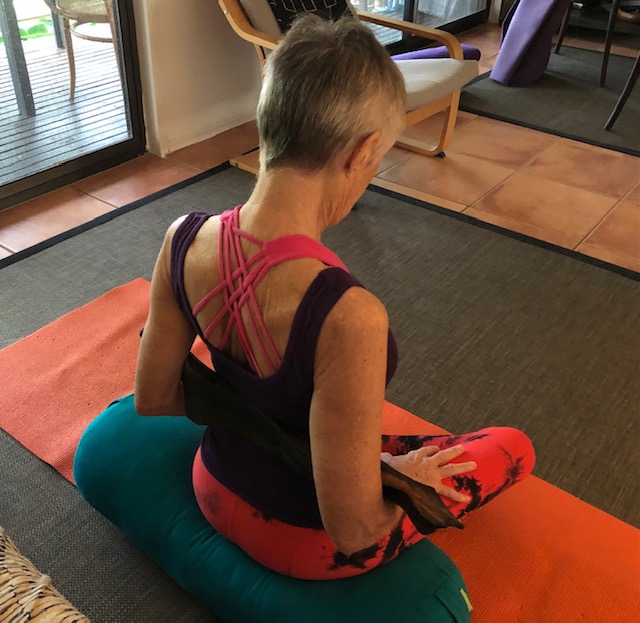
Here, I’m using a meditation stick to help sit upright. These breathing techniques, using deep breaths, and the other breathing exercises you can learn, will bring you into the present moment. It’s a type of mindfulness meditation. The techniques are each a simple exercise that are one of the easiest ways to quickly have a positive effect for you in stressful situations. The deep breathing exercises are using diaphragmatic breathing, (but not belly breathing).
By the way, in pranayam, or breath meditation, you’ll notice the mind wanders.
Further more, you may have a stressful thought, or there are background sounds, or other physical sensations that distract you. If so, just follow the teacher and return to your breath.
Pranayam, or regular meditation practice on the breath, is a good way, and one of the effective ways, to get the same or better outcomes of mindful breathing meditation, loving-kindness meditation, and more.
Bhramari pranayama and nitric oxide
But let’s get back to how Bhramari works.
In Bhramari pranayam, the humming produces nitric oxide in the nose.
In the 2002 humming study, nasal nitric oxide rose about 1,500% (15 times) during humming.
Yes, that’s right, nitric oxide increases by 15 times.
Whether that extra nitric oxide is behind the benefits people feel has not yet been tested. It is a reasonable idea, and research is still catching up.
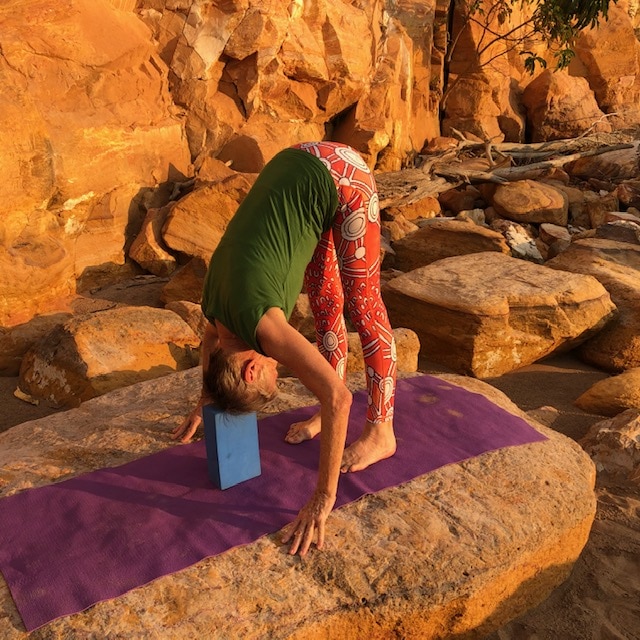
This pose, or any version of it, is one of the 2 or 3 used to prepare, at the start of the practice of meditation. At Flametree yoga and breathing meditation center, you’ll get breath meditation sessions that are sometimes also called guided meditations. It works no matter what amount of daily practice you do. But the more you have a daily meditation practice in breathing meditation, the better it will work.
The course material is told to you verbally as you are ready for it. Chris will steadily explain what’s useful to know, when it’s useful to know it. For example, that includes how nitric oxide works, and is maximised.
So you can work at your own pace, and steadily get all the benefits of meditation.
Keep at it and closely observe the changes in your physical health, stress reduction, and achievement of your full potential.
Ask someone who knows you to keep a watch too. They may see it more than you do.
Chris Lalor, the certified Senior Teacher at Flametree, is one of the most experienced meditation teachers you’ll find.
That’s a key reason why this as the studio or via the online meditation course is one of the best meditation courses you’ll find.
What is nitric oxide? Why is it so important to breathing meditation?
But again, back to nitric oxide, and how it works.
In 1998, three scientists got the Nobel Physiology and Medicine prize for their discoveries concerning nitric oxide. They found it was a signaling molecule in the cardiovascular system.
It a colourless gas that relaxes the inner muscles of the blood vessels. The vasodilation causes blood vessels to widen and increase circulation.
So nitric oxide matters for many parts of our health, though no study has yet tested whether humming changes any of them.
What about blood pressure? A 2026 network meta-analysis (a review that compares many practices at once) of 15 trials and 949 people with high blood pressure ranked Bhramari among the more helpful mind-body practices for lowering it, while warning that the studies were few and small (Cui and colleagues, Frontiers in Cardiovascular Medicine, doi 10.3389/fcvm.2026.1677353). Breathing practice can support, not replace, the treatment your doctor recommends. See also breathing and blood pressure.
The same 2002 study found humming greatly increased air exchange between the nose and the sinuses, compared with a quiet breath out.
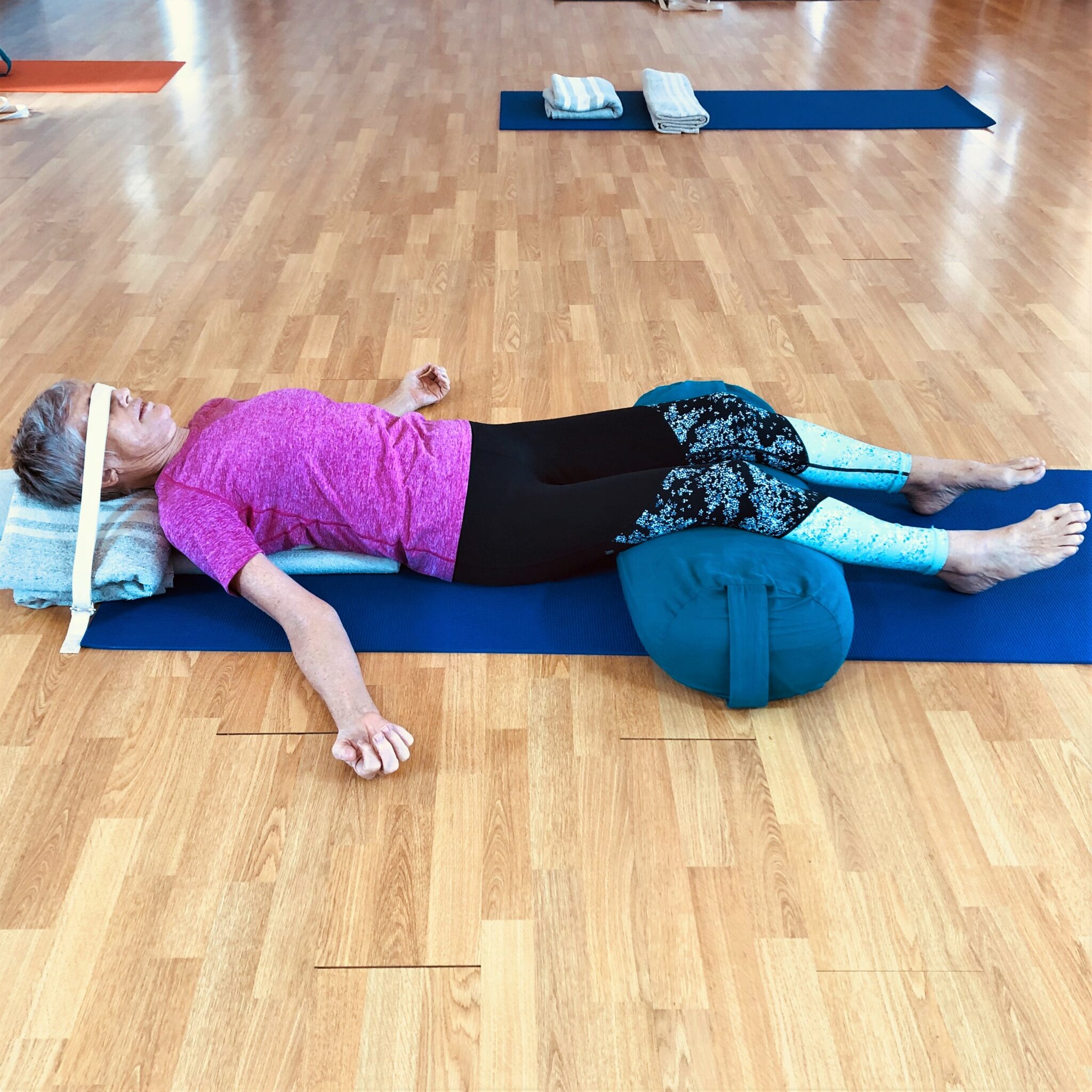
Initially, you’ll spend much time using the beginner meditator set-up in this picture. Breath meditative practices are an effective way for you to steadily work towards more advanced technique. As in real life, one of the best ways for a meditation practitioner.to progress is to learn basic techniques first. Flametree yoga and breath meditation center has the best course because you’ll first learn core practices first. It’s experiential, without any esoteric concept or hard to understand western scholars. Via the in-studio or online LIVE course you will always get a short meditation practising each of the techniques taught. So your skills and better health benefit will build with every breathing meditation class.
Bhramari pranayama and nitric oxide: what is known, and what is not
In the body, nitric oxide plays a part in inflammation and in the immune defence of the airways.
No study has shown that humming prevents or treats an infection, so we make no such claim.
For all yogis, I suggest you continue to practise Bhramari pranayama, or seriously consider taking up pranayam regularly.
Many students find it one of the quickest ways to settle a busy mind.
In short, it is a simple, low-risk way to de-stress and quieten your mind.
So, if you want to learn Bhramari properly, try our weekly pranayama classes, or the pranayama video course for home practice. See how it works for you.
If you also search for pranayama topics on this blog, there is also much more information, as well as links to pages about other types of breath meditation or pranayam.
Remember, Bhramari is easy to do, and the time goes very fast. They’re easy, and it’s worth using classes, because breathing meditation (aka pranayama) classes, are a type of in-studio or online guided meditation classes. You are gently shown and reminded of what to do.
How do you do Bhramari lying down?
Lying down is a gentle way to start, and a good one before sleep. This is the routine Chris teaches for a quick humming meditation. Go slowly, because it is more powerful than it looks.
- Lie flat with one or two folded towels or blankets under your head and upper chest.
- Put another towel under your head so your chin tips down a little.
- Take a normal breath in, then a longer breath out.
- Take another normal breath in. As you breathe out, hum any steady sound and listen to it.
- Repeat the breath in and the hum about five times.
- Breathe normally for two to three minutes.
- Repeat the humming four to seven more times.
- Finish by lying in relaxation for three to ten minutes.
You can rest your knees over a bolster if that is more comfortable. Once your spine is stronger, you can sit in a chair, with your back to a wall, or cross-legged. For the hand position, Shanmukhi mudra gently closes the ears, eyes and lips and partly closes the nostrils. It draws the attention inward, and a teacher should show you how.
What did Stuart notice from regular pranayama?
Stuart had done a mantra meditation every day for over 40 years before his injury. After starting pranayama, he reported a large and lasting rise in energy and clarity, which carried through the day after a morning session. He found it quietened mind chatter more than any other meditation he had tried, and felt calmer and less grumpy, which his partner noticed. A morning session took him 30 to 50 minutes, longer than the 20 to 30 minutes he was used to.
That is one person’s experience, in his own words, and not a trial result. Stuart’s own point is that you only find out what pranayama gives you by doing it.
What does the research on Bhramari say overall?
Early studies are encouraging but small. According to PubMed, a 2017 systematic review of Bhramari studies (Kuppusamy and colleagues, Journal of Traditional and Complementary Medicine) found six eligible studies, none of them randomised trials. It rated their quality as very low, yet reported a pattern of calming “rest and digest” activity in the body, and called for larger, better designed trials (doi 10.1016/j.jtcme.2017.02.003). Not yet tested at scale is not the same as wrong, which is why this page describes the studies as they stand.
Why go slowly with pranayama?
The classic text the Hatha Yoga Pradipika compares the breath to a wild animal, such as a lion or an elephant, that is tamed gradually. The idea is respect and patience. Chris’s own pranayama practice teaches the same thing: some days the breath comes easily, and on other days it feels as if the lungs are full of concrete, so you listen and do not force it.
No difficult posture needed!
No particular meditation postures are needed, as long as your back is straight.
Build this breathing meditation into your daily life, and notice what changes for you.
An in-studio or online meditation course is a first step towards reducing psychological stress, and making ongoing physiological changes.
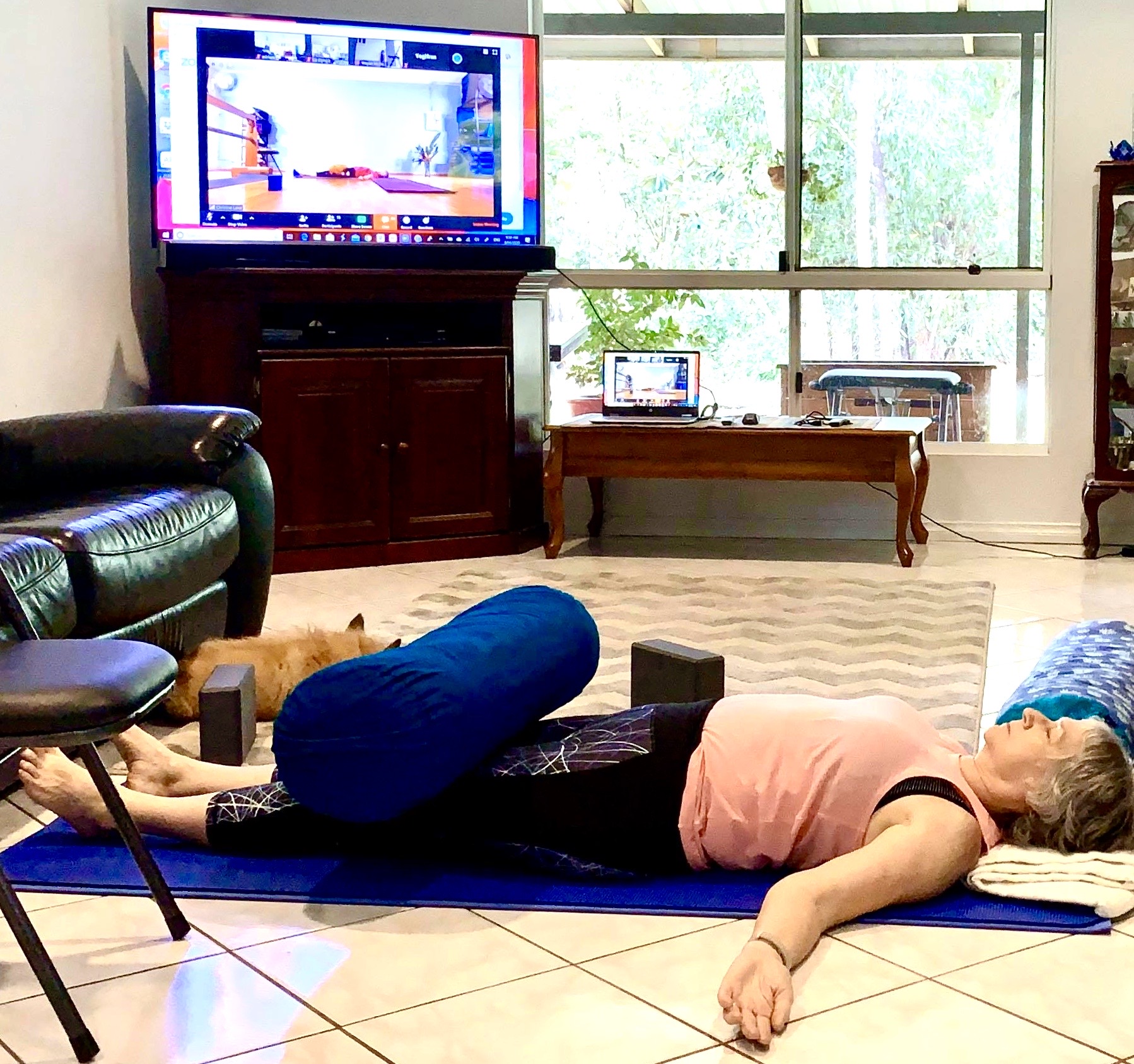
At Flametree yoga & breath meditation center, you’ll always finish with a relaxation pose like this. If doing LIVE online meditation courses, use as big a screen as you can. Notice how one student, M, has her PC plugged into her TV. Then you can see the teacher’s demonstrations well. The teacher (Chris Lalor) also has a big screen, and can see you well. Keep you screen on, as you’ll then get better feedback from the teacher.
In the studio & online, from your first class, you’ll be part of a group meditation that is also a LIVE meditation.
Class by class, the meditation group will learn different meditation techniques.
Among other things, you’re likely to quickly notice you will get more more mindful movement, Moreover, students commonly tell us they sleep more deeply, feel less anxious, and notice a feeling of inner peace.
Yoga deals to get Bhramari pranayama benefits
For beginner meditators, Flametree yoga & breath meditation center is a great way to do in-studio or online courses for the first time. You just come along to the weekly classes, and you’ll learn new skills in a sequential manner.
The teacher adjusts course material for whoever is in the actual class on the day. So the class it always a a level suitable for you.
Best of all, online meditation classes in breath meditation are more convenient (and cheaper) than finding a local studio (even if one is available at all).
Breath meditation, or pranayam, is a practical mindfulness practice. From Darwin to Los Angeles, and far beyond, use each simple tool that you will steadily learn in each in-studio or online session.
Try this breath meditation weekly classes (but note that it’s best to have done the breath meditation Introduction mentioned on this page, or the equivalent). I say more about that below.
By the way, in another post, I (Chris) also wrote how pranayama keeps me sane! Check it out for more about the benefits of pranayama and breath meditation.
Packages and class times
All non-beginner packages at Flametree include pranayama breathing meditation weekly classes.
The non-beginner timetable shows the current breath meditation classes.
The pranayama classes are LIVE online or in-studio. Pranayama works especially well online, and is extremely convenient.
Pranayama is taught by Flametree’s popular & certified Senior Yoga Teacher, Chris Lalor (pictured above). She’s been studying pranayama, and doing pranayam, for over 25 years.
If you wish, check out the many very positive reviews and stories from students about Flametree yoga and breathing meditation center.
The pranayama classes include regular Bhramari pranayam. You’ll get plenty of Bhramari pranayama and nitric oxide benefits, and more.
The pranayama classes are on the non-beginner timetable. There are also breathwork and meditation classes on the beginner timetable at Coolalinga.
If you are not sure which suits you, ask us.
Your first class is free if you are new to Flametree. Details of the best starting offers are below.
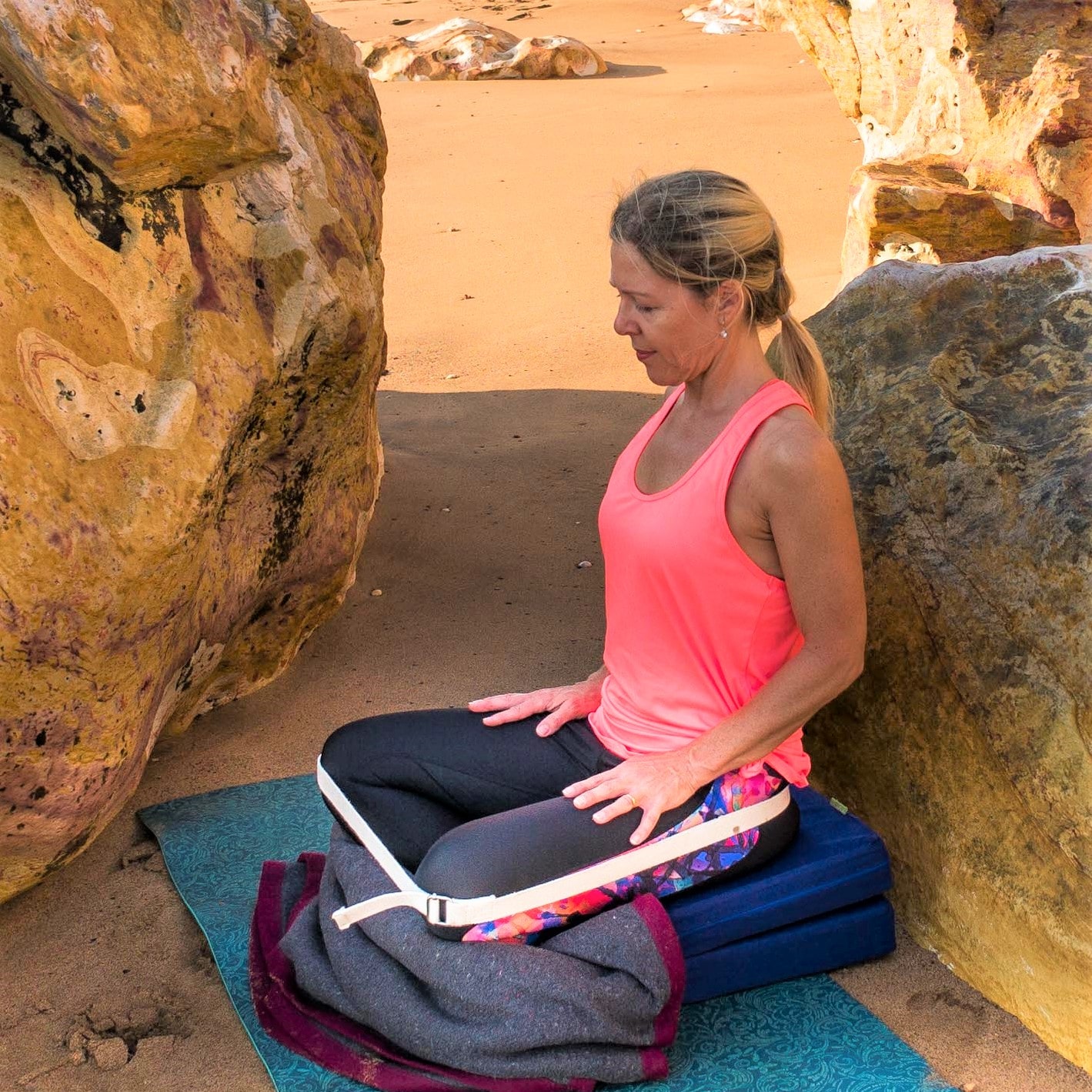
Using a belt around the knees is easy way to sit for pranayama. Another good option is to sit in a chair, supported by a belt. Get some Bhramari pranayama and nitric oxide benefits in your body and mind. They’re easy, and it’s worth using classes, because breathing meditation (aka pranayama) classes, are a type of in-studio or online guided meditation classes. You are gently shown and reminded of what to do. So try Flametree yoga and breath meditation center.
Bhramari pranayama: common questions
What are the benefits of Bhramari pranayama?
The benefits people notice most are a calmer mind, less stress and easier sleep. Research has found that humming raises nitric oxide in the nose about 15-fold, that the long hum slows breathing and lifts heart rate variability, and that Bhramari ranked well for blood pressure in a 2026 review of small trials.
Does Bhramari increase nitric oxide?
Yes, in the nose. A 2002 study of 10 healthy adults in the American Journal of Respiratory and Critical Care Medicine found humming raised nasal nitric oxide about 15 times compared with a quiet breath out. It measured the gas, not health effects.
How do you do Bhramari pranayama?
Sit upright with the eyes closed, breathe in slowly through the nose, then breathe out slowly while humming a low, steady mmm with the lips closed. Let the hum be long and smooth. Repeat 5 to 10 times, then sit quietly. A teacher can add the hand position that closes the ears and eyes.
Can Bhramari lower blood pressure?
Early research is promising. A 2026 review of 15 trials in people with high blood pressure ranked Bhramari among the more helpful mind-body practices, but the studies were few and small. It can support, not replace, your doctor’s treatment.
How long should you do Bhramari for?
Five to ten rounds, or a few minutes, is a good start. Some trials used 10 to 20 minutes a day. What matters most is a slow, comfortable hum and practising regularly.
Is Bhramari good for sleep and anxiety?
Many students find it one of the quickest ways to settle a busy mind before bed. The long, humming exhale slows the breath, which research links with a more relaxed nervous system. It is a support, not a treatment for an anxiety condition.
Who should not do Bhramari pranayama?
Most people can do gentle Bhramari. Skip it if you have an ear infection, a current headache or severe depression, and avoid pressing on the ears or eyes if you have an eye or ear condition. If you have a serious heart condition, talk to your doctor first. Do not force the breath, stop if you feel dizzy, and if pregnant, tell your teacher.
Can you do Bhramari lying down?
Yes. Lying flat with folded towels or blankets under your head and upper chest is a gentle way to start, and it suits the time before sleep. Once your spine is stronger you can sit in a chair, against a wall or cross-legged.
Does the humming sound matter?
Not much. Any steady hum will do, and it does not have to sound like a bee. A small 2026 study of 24 healthy adults suggested the long, slow exhale does more of the work than the sound itself.
Where can I learn Bhramari pranayama in Darwin or online?
Flametree Yoga Studio includes Bhramari in its pranayama classes at Woolner and live online, and in its breathwork and meditation classes at Coolalinga. Your first class is free if you are new.
Learn Bhramari with Flametree, in Darwin or online
- New to Flametree? Your first class is free. In Darwin, just come along to the studio. Online, click the class time you want and we email you the link to join (get your link to join an online class here). See the beginner timetable.
- Keep going at half price. See the half price pass: 10 classes at half price with 2 extra classes free, to use online, in the studio, or both. It is for new students, and for anyone who has been away three months or more.
- Already practising yoga? There is also a non-beginner half price pass. See the non-beginner timetable.
For home practice there is also the pranayama breath meditation video course. More on breath practice: what is pranayama, nadi shodhana, Ujjayi pranayama and is pranayama safe?
General information only, not medical advice. Talk to your yoga teacher, yoga therapist, and your doctor if you wish. Sources: Kuppusamy M et al 2017, J Tradit Complement Med; Weitzberg E, Lundberg JO 2002, Am J Respir Crit Care Med; Kim T et al 2026, Applied Psychophysiology and Biofeedback; Cui H et al 2026, Frontiers in Cardiovascular Medicine. Flametree Yoga Studio, Darwin and live online.




Thank you very much for your informative articles Chris they are always generous and inspiring
Thanks for your comment. All the best.
This very simple breathing meditation is a wonderful way to start (or finish) your day. You will feel more grounded, focussed and energised doing this practice. Personally I find doing a fieuw slow twist afterwards finish it of very nicely. Thank you Chris for “spreading the word” on this beautiful practice. It’s in the breath. 🙏🏼🐝🙏🏼🐝🙏🏼🐝
Hi Nico. As you probably know, I help at Flametree. I was just re-reading the blog post on Bhramari and saw the comment you made about the power of it. So this is just a very belated note to say thanks hugely for taking the time to make a very positive comment. Thank you.
Stuart