
Neuropathy In Feet: What Helps Numb Or Burning Feet, And The Gentle Yoga Studied For It
Neuropathy in feet: the short answer
If you have neuropathy in your feet (nerve changes that leave them numb, tingling or burning), the best-studied yoga help is slow, supported standing and leg work that teaches the feet to feel the floor again. Small studies of people with diabetic neuropathy found that 8 to 12 weeks of yoga went with less nerve pain, better balance and stronger legs, and no serious problems were reported. The research is small, and we say so. Here is the article in short form:
- A 2026 review of 7 yoga studies (227 people) found less pain, better balance and stronger legs.
- A 2024 trial of 30 people cut pain and fear of falling in 8 weeks.
- Feet that feel less are linked with more falls, so balance work matters.
- Iyengar teaching starts at the feet: spread the toes, press the four corners.
- Chairs, walls and belts let you practise standing safely.
- We found no trials of breathing alone for foot neuropathy.
- Learn it in class in Darwin, or live online.
Last updated: 25 October 2026.
A quick word on Iyengar yoga. Iyengar yoga is the style developed by Mr BKS Iyengar. In the 20th century he did more than anyone to set down traditional Indian yoga, through his books and his teaching, and he pioneered the use of props such as chairs, belts and blocks. It is sometimes called modern classical yoga, and it is the style we teach at Flametree, in Darwin and live online.

Warrior II. Both feet press into the ground, each turned a different way, so the feet and ankles keep feeling and adjusting.
What is neuropathy in the feet, and why do feet go numb or burn?
Neuropathy in the feet means the nerves that carry feeling from the feet to the brain are not working as well as they should. Peripheral neuropathy (damage to the nerves outside the brain and spinal cord) can leave the feet numb, tingling, burning or oddly weak. The most studied form with yoga is diabetic peripheral neuropathy, which a 2026 review in Advances in Mind-Body Medicine says affects up to 50% of people with type 2 diabetes.
Many people just say “my feet are numb” or “my feet burn at night”. Those are the words we use here. Our guide to yoga for type 2 diabetes covers the wider picture. This page is about the feet.
The practical problem is the same whatever the cause. When your feet tell the brain less, you lose some of the quiet feedback that keeps you steady. That is why the yoga that has been studied focuses on feeling the floor and on leg strength.

The three arches of the foot. A foot that spreads and feels the floor uses all three.
What have the yoga studies found for neuropathy in the feet?
We looked at the three kinds of yogic practice separately: yoga poses, breathing and meditation.
Yoga poses
A 2026 systematic review in Advances in Mind-Body Medicine (Vijay and colleagues) pulled together 7 studies with 227 people who had diabetic neuropathy: four randomised trials, one quasi-experimental study and two single-group studies. The yoga lasted 8 to 12 weeks. People reported less neuropathic pain, better balance, stronger legs, faster walking and a better quality of life, and no serious adverse events were noted. The authors say the studies were small and at high risk of bias, and that bigger trials are needed.
One of those studies is a 2024 trial in Biological Research for Nursing (Faridi Dastjerdi and colleagues). It put 30 people with type 2 diabetes and neuropathy into a yoga group (15) or a no-exercise group (15). The yoga group did 60-minute sessions three times a week for 8 weeks. Compared with the control group, they had stronger muscles, better sense of where the feet were in space (proprioception), less pain, less worry about falling and a better quality of life.
A related finding comes from a 2022 trial in Spine (Yildirim and Gultekin) on a different nerve problem, nerve pain from a slipped disc in the lower back. Of 48 people, those who did a stretch and strength yoga programme twice a week for 12 weeks had less neuropathic pain, back pain and disability than the control group, and the gap was still there at six months. That is a different cause, so we do not stretch it to the feet, but it shows yoga has been tested on nerve pain.
Also, a 2026 cross-sectional study in La Clinica Terapeutica (236 adults with type 2 diabetes) found that the 79 who practised yoga regularly had lower diabetic neuropathy scores than the 157 who did not. That kind of study cannot show that yoga caused the difference.

Mountain Pose with a block between the thighs. The simplest standing pose, and the first place to feel the feet.
Breathing
No trials found. We did not find a trial of breathing practice on its own for neuropathy in the feet. Slow breathing does have a good record for stress, and many people with long-lasting nerve symptoms find a calm mind helps. Our guide to vagus nerve exercises explains the slow-breathing practices we teach.
Meditation
A 2026 trial in Psycho-Oncology (Poudel and colleagues) gave 114 breast cancer survivors a 6-week mindfulness programme (48 people), a cancer education programme (52) or usual care (14). Chemotherapy can cause numb, tingling feet and hands. Both the mindfulness and the education groups had fewer neuropathy symptoms than usual care at 12 and 26 weeks. It was not diabetic neuropathy, and mindfulness did not beat the education programme, but it is a point in favour of calm, trained attention.
Why do feet that feel less raise the risk of a fall?
Your feet carry many of the sensors your brain uses to keep you upright. In a 2006 Australian study of 176 people with an average age of 80, in The Journals of Gerontology Series A (Menz and colleagues), those who fell in the next year had stiffer ankles, weaker toes, less feeling in the soles and more foot pain than those who did not. Weak toes and foot pain stood out even after allowing for age and other falls risks.
The good news is that feet and toes can be trained. A 2016 trial in Clinical Biomechanics (Mickle and colleagues, University of Wollongong) put 85 people aged 60 to 90 into a supervised, progressive foot-strengthening programme or a home exercise group for 12 weeks. The supervised group raised toe strength by up to 36%, and their single-leg balance time improved. The home group did not change. A supervised class matters.
Falls are a real concern for many people with foot neuropathy, and Flametree takes balance seriously. In a 2013 Sydney pilot, 12 weeks of Iyengar-based yoga gave people around 68 years old better balance, faster walking and quicker standing up from a chair, the main risk factors for falls. Our guide to improving balance and our falls studies page go through it.

Press one heel down and the force travels up the whole leg. This is the feedback an Iyengar standing pose trains.
How does an Iyengar class work on the feet?
Iyengar teaching has always started at the feet. You are asked to spread your toes, lift and spread the soles, and press down evenly through the four corners of the foot: the base of the big toe, the base of the little toe, and the inner and outer heel. Chris Lalor, our Senior Iyengar teacher, puts it simply: “Feet are the foundation for all standing asana” (standing pose).
Geeta Iyengar, Mr Iyengar’s daughter, taught that when you press evenly into all four corners, the floor presses back and that rebound travels up through the legs, hips and spine. That is a teaching idea, not a measured finding. But a teacher watching your feet and adjusting them is exactly what a book cannot do, which is why the studies that worked used supervised sessions.
Props bring the pose to you. A chair or wall beside you takes worry out of standing, so you can hold the pose long enough for the feet to learn. This is also why a class is better than a video if your feet feel less than they used to.
Which gentle yoga moves suit numb or burning feet?
Here are the moves we teach most often for feet that feel less. They are described for learning in class. We start every one beside a chair or wall, with bare feet.
1. Mountain Pose with a block between the thighs
Stand tall with your feet hip-width apart. Spread your toes, lift the arches a little, then press down through all four corners of each foot. A block between the thighs wakes the inner legs. Stay for a few slow breaths and notice where your weight lands.
2. Warrior II beside a wall or chair
Take a wide stance, turn the front foot out and the back foot in slightly, bend the front knee over the ankle and press the outer edge of the back foot down. A hand on a chair or wall makes it steady. The two feet are asked to do different jobs at once, which is rich feedback for the nerves in the soles.
3. Triangle Pose with a chair
From a wide stance, reach one hand to a chair and keep both legs straight. Press the outer edge of the back heel down. The chair means you hold the pose without worrying about falling.

Triangle beside a chair. The chair takes the worry out of standing, so the feet can do the learning.
4. Warrior I with the back heel down
Step one foot back, turn it out a little, bend the front knee and press the back heel down as you lift your arms. The back foot works hard and the calf lengthens.
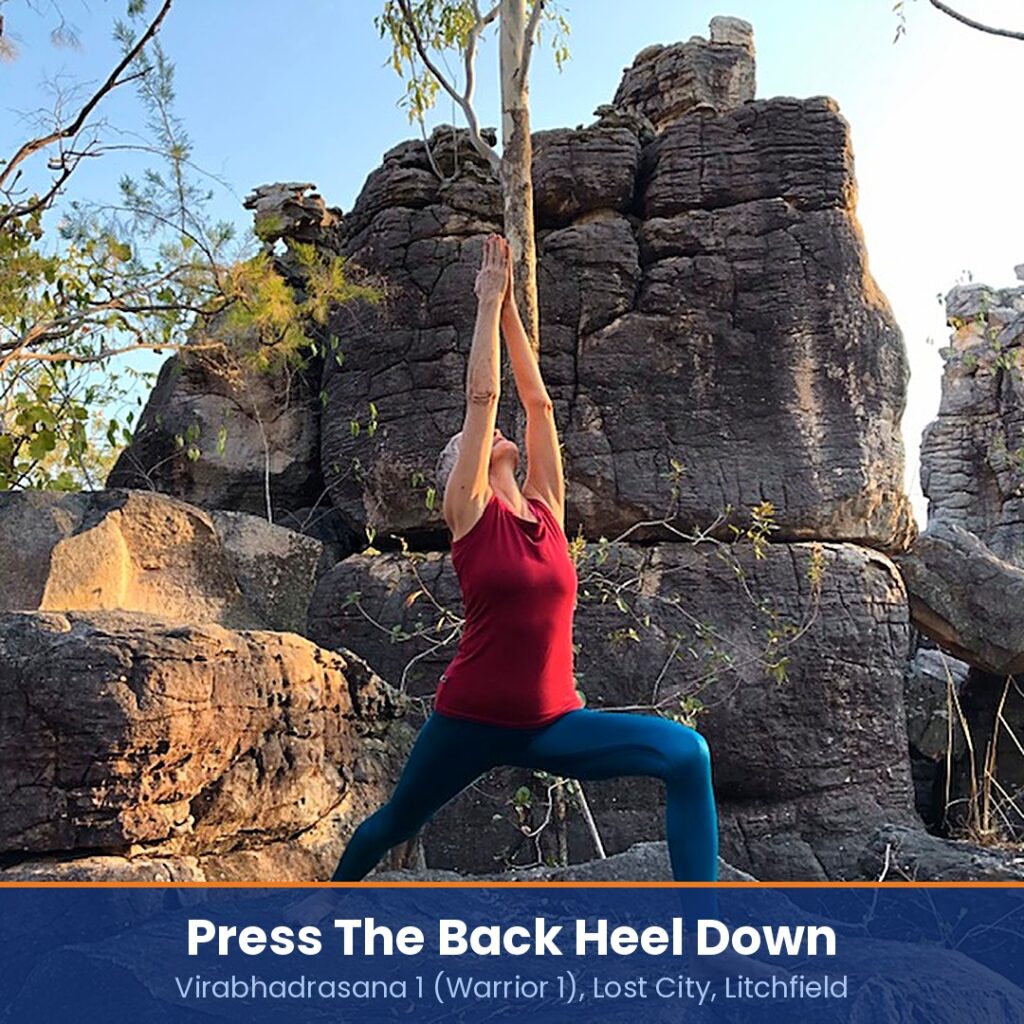
Warrior I. The back heel presses down, so the whole foot has to feel the ground.
5. Heel on a chair with a belt
Stand facing a chair, place one heel on the seat, loop a belt round the foot and hold it with the leg straight. This lengthens the back of the leg and the calf, which often feel tight when feet are sore.

One heel on a chair, belt around the foot. A supported way to lengthen the back of the leg.
How often and how long should you practise?
The trials used 8 to 12 weeks of regular practice: 60-minute sessions three times a week in the 2024 trial, and supervised classes in the toe-strength trial. Short, regular practice beats a long session now and then. A weekly class plus a second session is a good start. Please tell your teacher if your feet feel less than they used to, so they can set up your standing poses with a chair or wall, and look at your feet after class.
Get the free ebook Strong Bones, Steady Feet. New to Flametree, or away for 3 months or more? You get 2 free classes + 2 ebooks, only available via this offer. Already coming to class? You can still get the book.
Where can I learn yoga for neuropathy in my feet in Darwin?
For yoga for neuropathy in the feet in Darwin, come to a beginner class at Flametree’s Woolner or Coolalinga studios, or join live online from anywhere in Australia. Every class starts standing, on bare feet, with the teacher watching your feet and adjusting each pose, and chairs, walls and belts are always on hand. If your feet are sore rather than numb, see our guides to foot pain and heel pain.
Frequently asked questions
What can I do for numb or burning feet?
The best-studied yoga approach is regular, supervised standing and leg work with a chair or wall, practised for 8 to 12 weeks. A 2024 trial of 30 people with diabetic neuropathy found less pain and more strength with yoga three times a week.
Can yoga help neuropathy in the feet?
It may help. A 2026 review of 7 studies with 227 people found less nerve pain, better balance and stronger legs with yoga in diabetic neuropathy, and no serious problems. The studies were small, so bigger trials are still needed.
Does yoga help diabetic neuropathy?
Most of the yoga research is in diabetic neuropathy. Studies lasted 8 to 12 weeks and measured pain, balance, leg strength, walking speed and quality of life. Our guide to yoga for type 2 diabetes has the wider evidence.
Does yoga improve balance when your feet feel numb?
In the 2024 trial and the 2026 review, balance improved. A 2013 Sydney pilot of Iyengar-based yoga also improved balance, walking speed and getting up from a chair in people around 68.
Which yoga poses suit numb feet?
Standing poses beside a chair or wall: Mountain Pose, Warrior II, Triangle and Warrior I, plus a heel on a chair with a belt. They ask the feet to press and spread, which is rich feedback for the soles.
Is it safe to do yoga with neuropathy?
The studies reported no serious problems. Practise beside a chair or wall, tell your teacher your feet feel less, and look at your feet after class.
How long does yoga take to help with neuropathy?
Nobody can promise a timeline. The studies measured results after 8 to 12 weeks of regular practice.
Where can I learn yoga for neuropathy in my feet in Darwin?
Flametree Yoga Studio teaches Iyengar yoga at Woolner and Coolalinga in Darwin, and live online. Beginner classes start standing, with the teacher watching your feet and using chairs, walls and belts.
Where to next
- New to yoga, or coming back? Start with our half price 10 class pass with 2 classes free, in Darwin or live online.
- For a workplace, team or group: book private yoga classes for groups, online, at a Flametree studio or at your venue.
- Want to see class times first? Look at the beginner timetable.
Flametree Yoga Studio, Darwin and live online. This article is general information, not medical advice.
Sources (via PubMed): Vijay and colleagues, Efficacy, safety and functional outcomes of yoga therapy in diabetic peripheral neuropathy: a systematic review, Advances in Mind-Body Medicine, 2026, PMID 41926115; Faridi Dastjerdi and colleagues, Mind-body intervention for diabetic neuropathy, Biological Research for Nursing, 2024, PMID 38810022; Yildirim and Gultekin, Stretch and strength-based yoga for neuropathic pain due to lumbar disc herniation, Spine, 2022, PMID 35019882; Guhacharan and colleagues, Regular yoga practice and health in type 2 diabetes, La Clinica Terapeutica, 2026, PMID 42922231; Poudel and colleagues, MBSR effects on chemotherapy-induced peripheral neuropathy, Psycho-Oncology, 2026, PMID 41831208; Menz HB, Morris ME, Lord SR, Foot and ankle risk factors for falls in older people, Journals of Gerontology Series A, 2006, PMID 16912106; Mickle KJ and colleagues, Toe flexor strength in older people, Clinical Biomechanics, 2016, PMID 27780109. Teaching on the four corners of the foot: Chris Lalor and the Flametree ebook Strong Bones, Steady Feet.



