Yoga For Legs And Feet: A Base For Investigating Who You Are
Including yoga poses for feet and ankles.
Plus, what to wear on feet for yoga.
Also, is yoga bad for your feet? And, how to strengthen feet for yoga
Introduction to yoga for legs and feet
This post is a summary of Flametree’s talk on yoga for legs and feet. It also covers the best yoga poses for feet and ankles, and how to strengthen feet for yoga. It’s an Iyengar yoga for feet approach. It also answers common questions like what to wear on feet for yoga, and is yoga bad for your feet.
For much more on these points, flick through the slides below.
The most common questions are also discussed first. Then, the summary of the slides follows.
Is yoga bad for your feet
Yoga is not bad for your feet. Instead, good quality yoga will strengthen your feet, & spread out your foot evenly for better grip, walking, & overall posture. Due to so many feet – body connections, (Iyengar) yoga for feet is also excellent for your mind, & overall health.
How to strengthen feet for yoga
The short answer to how to strengthen your feet for yoga, is to regularly do good quality standing poses. It’s yoga for legs and feet that also works powerfully for ankles, hips, and spine, as well as your overall mind and body.
Below, the summary of Chris Lalor’s presentation on yoga poses for feet and ankles, outlines the wide range of wonderful outcomes you get from good quality Iyengar yoga for legs and feet.
What to wear on feet for yoga
Nothing! That’s the quick answer to what to wear on feet for yoga. Bare feet give you excellent grip. Plus, it allows spreading of your feet to the “4 corners of your feet” (via 3 arches). So, yoga poses improve, & you get all the other body-mind yoga benefits.
Slides On Yoga For Legs And Feet: A Base For Investigating Who You Are
Yoga for legs and feet
- Patanjali’s Yoga Sutras are still considered the major text of yoga because they outline yoga, and how to achieve a yogic state.
- The Yoga Sutras focus on the mind.
- They cover qualities of the mind and how we can influence it.
- Patanjali defined yoga as the ability ‘to still the fluctuations in the mind”, and to direct it, without distraction.
- Patanjali outlined a number of ways to help direct our minds, especially the 8-limb path.
- Via yogic practices, we learn to still fluctuations in our mind so we can see ourselves more clearly.
- Because your mind is busy, you think you are the sum of your thoughts.
- But, when you calm our mind, you see and get a deeper sense of self.
Misperceptions we all have
- We all tend to have a hard time perceiving things “correctly”, and consequently acting according to a correct perception.
- Seeing things as they are is called “Vidya”.
- When we act with correct perception, things go well.
- When we act from a place of misperception ‘avidya’, we suffer.
- Avidya is deeply rooted in all of us.
- It is the result of years of unconscious thoughts and actions.
- So, Avidya puts a veil over reality.
- Yoga is the study to remove misperceptions, and see ourselves more clearly.
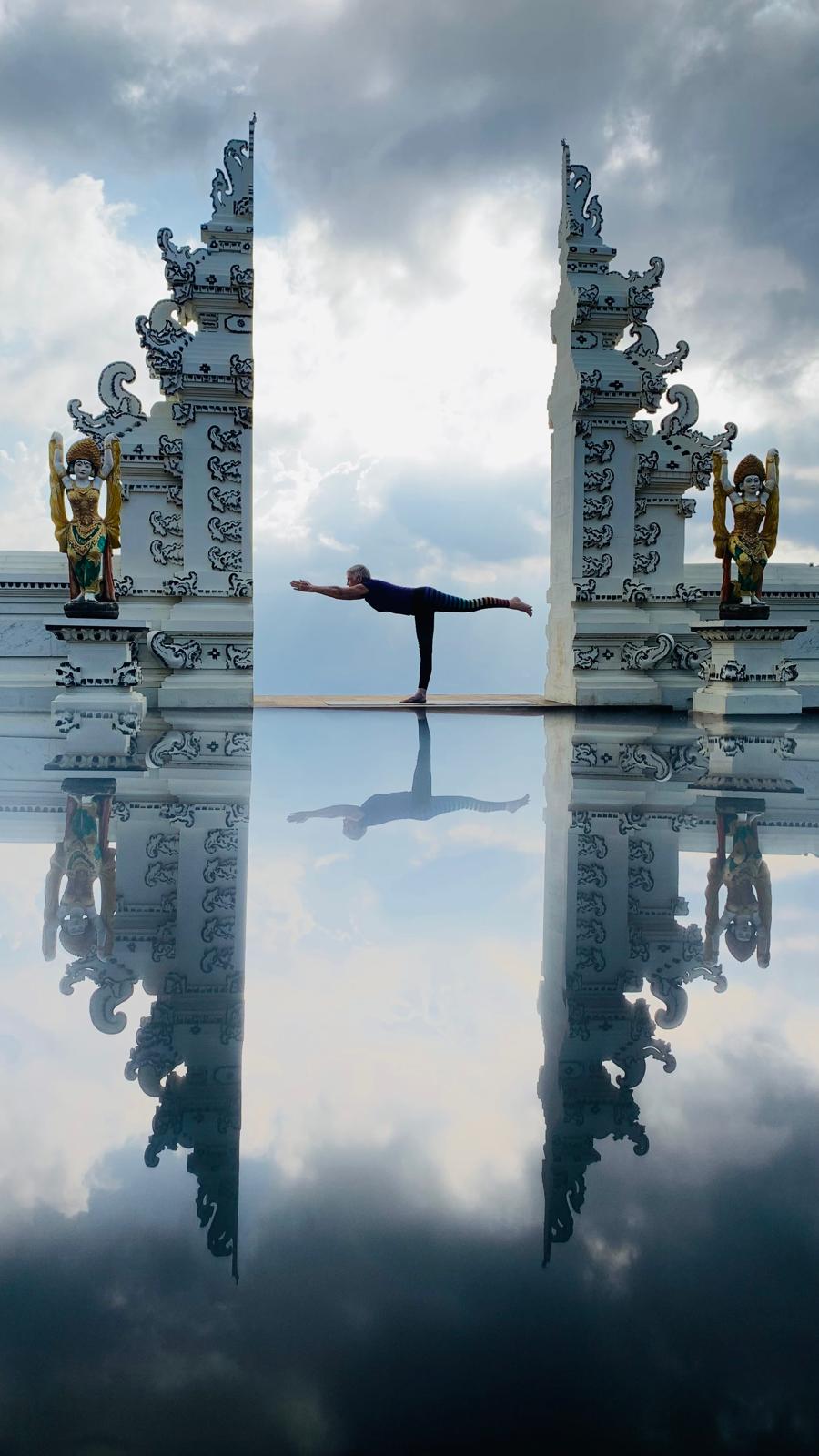
Yoga demonstration by Chris Lalor at gates in Bali for viewing Mt Agung.
Yoga brings you into the present
- The study begins in the present moment.
- Yogic practice brings you to the present.
- Via yoga and meditation you’re more able to observe your breath, body, and mind in the present moment.
- We begin by observing what we can see in the body right now, in the present moment.
- Mr Iyengar considered that if you studied the asanas and pranayama, then it would help still the fluctuation in the mind, and lead to seeing yourself more clearly.
Standing poses are fundamental to Iyengar yoga for feet
- Standing poses are key to the journey to clear perception, as well as the best yoga poses for feet and ankles
- They bring attention to the correct way to stand, from your feet upwards.
- Standing poses give us strength, and stability.
- Feet are the foundation for all standing asanas.
- Your feet connect to legs, hips, and more, via immense and intricate paths.
- Using feet correctly lets you bear your weight evenly.
- Bearing you weight evenly leads to a rebound action from feet, to hips, legs, and spine.
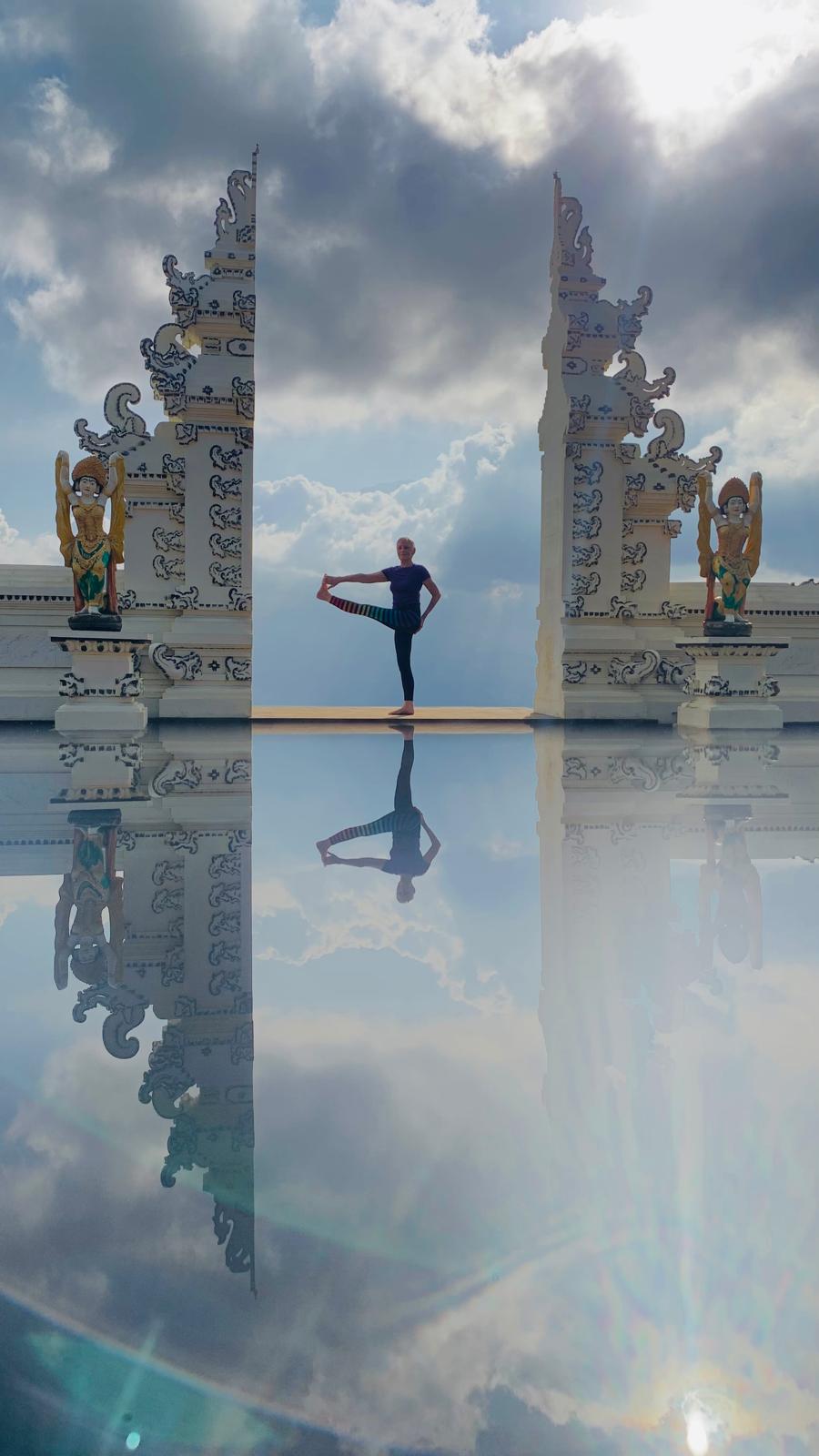
Yoga standing pose by Christine Lalor 2024. See what to wear on feet for yoga, plus dramatically more.
Yoga for legs and feet grounds you
- Earth is one of the 4 elements that form the universe.
- Feet connect us to earth. So, they are grounding.
- As a result, your feet ground you physically and mentally.
- Learning to stand firmly on your feet and legs without shaking, helps you investigate your mind in the present moment.
- When you are steady, your mind becomes quiet and focused.
- Balancing pose: when you become physically balanced, your mind also becomes quiet.
- When you press your back outer heel in a standing pose, the mind also becomes present.
A quick review of the Kleshas
- Patanjali explained that there are 5 obstacles to seeing things as they are.
- These obstacles are called kleshas.
- In an asana, when we become quiet , we get glimpses of the obstacles clouding our view of reality. These are our misperceptions.
- It’s hard to see avidya in action (our misperceptions).
- But, with time it’s also possible to see the other 4 kleshas.
- In asana and pranayama, we meet, and can overcome our misperceptions, and other Kleshas.
- Learning to use your feet to bear weight evenly is a key part of your yogic journey.
- Then, you bring health to all other parts of mind and body.
The 3 arches you can use in yoga for feet and ankles
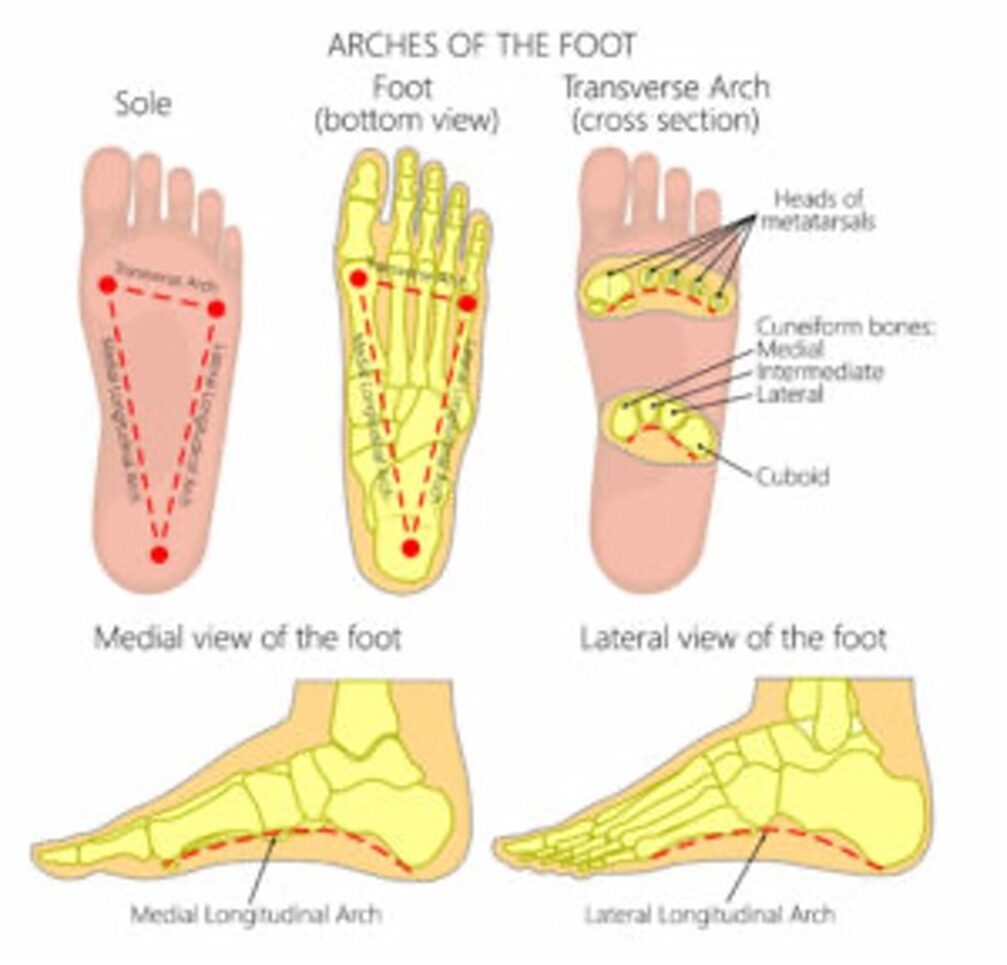
Picture shows the 3 arches of your feet. Standing poses Iyengar style will get you more conscious of effectively using all 4 corners of your feet for more stability, strength, calmness, and discovering your inner self. Plus, all 3 arches of the feet must all be engaged to get the rebound action discussed in this presentation.
Rebound concept in yoga poses for feet and ankles
- Theory: Any force is equal and opposite.
- So, press straight down evenly on your feet, then, there is an equal and opposite force pressing upwards.
- When you stand straight, the equal and opposite force “rebounds” up your legs and spine.
- As a result of rebounding forces, you maximise stability, and good posture.
- But, if you lean forward, onto the front part of your feet, you’re not stable.
- The equal and opposite rebound cannot happen, and you’re not stable
Falls are Australia’s leading cause of injury, hospitalisation, death
Falls are, or lead to:
- 43% of injury hospitalisations.
- 42% of injury deaths.
- 233,000hospitalisations in 2021–22
- 5,800 deaths in 2020–21
- Source: AIHW (Government official data).
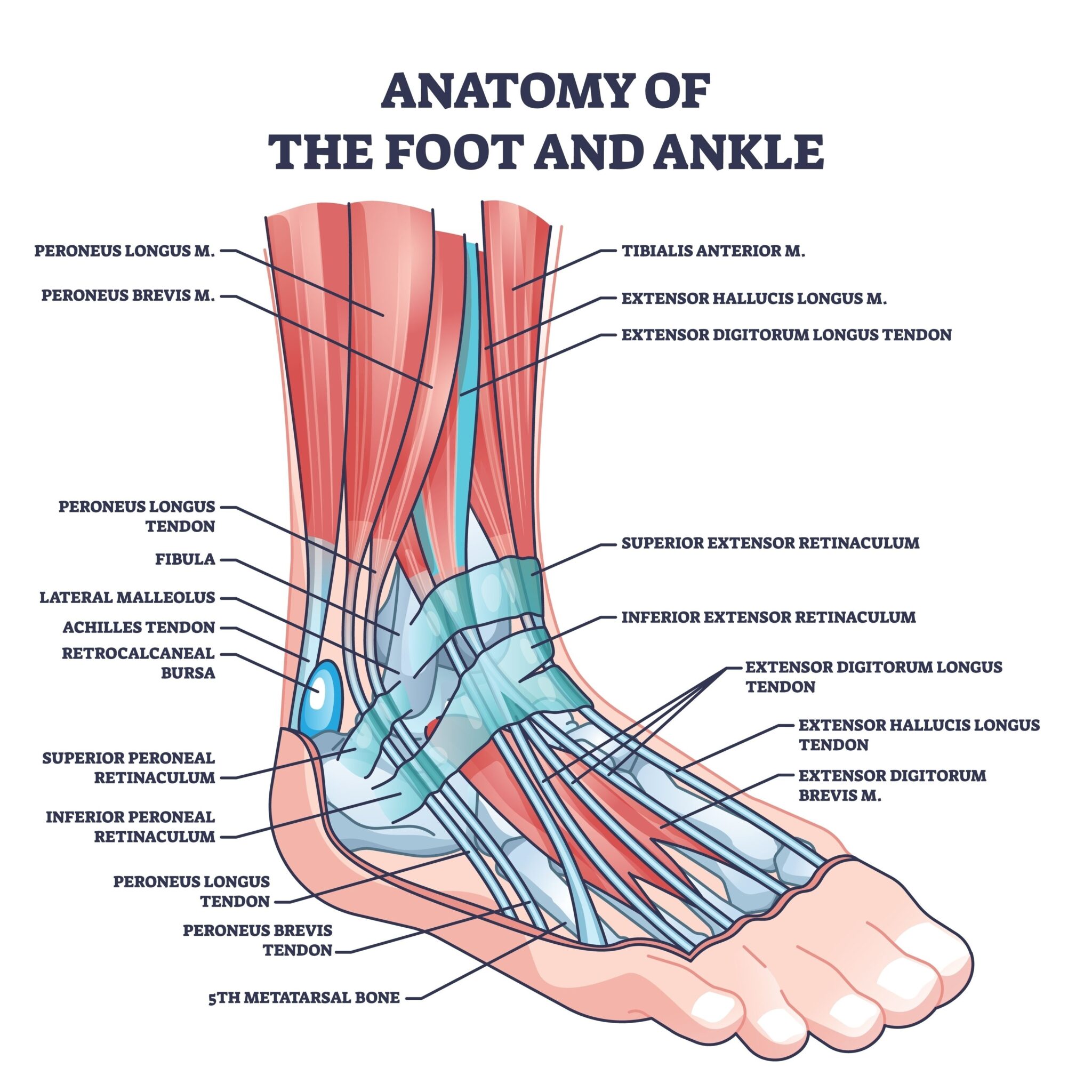
The feet are intricately and powerfully connected to the rest of your body. They also give you an immense range of movement, providing you consciously work to spread the foot, and use the huge range of movements and adjustments that are possible.
Iyengar yoga for feet
- Without the correct Iyengar yoga for feet, your muscles and bones are also not working best for you, or being strengthened correctly.
- It’s the same if you lean back onto your heels, or use challenging shoes!
- Tadasana (Mountain Pose) allows a rebound action from the arches of the feet, into leg and hip bones, and spine.
- When tadasana is done correctly, you can then turn your mind inwards to the core of your being.
- Tadasana, done in an Iyengar yoga style, is a foundation for all standing poses
Meditation in action
- The poses become a means to quieten your mind, and become a meditation in action.
- When weight is placed correctly, your breath can also flow properly through your whole body.
- Your asana becomes a means of integration between breath, body, and mind.
- So, asana is the path to stillness.
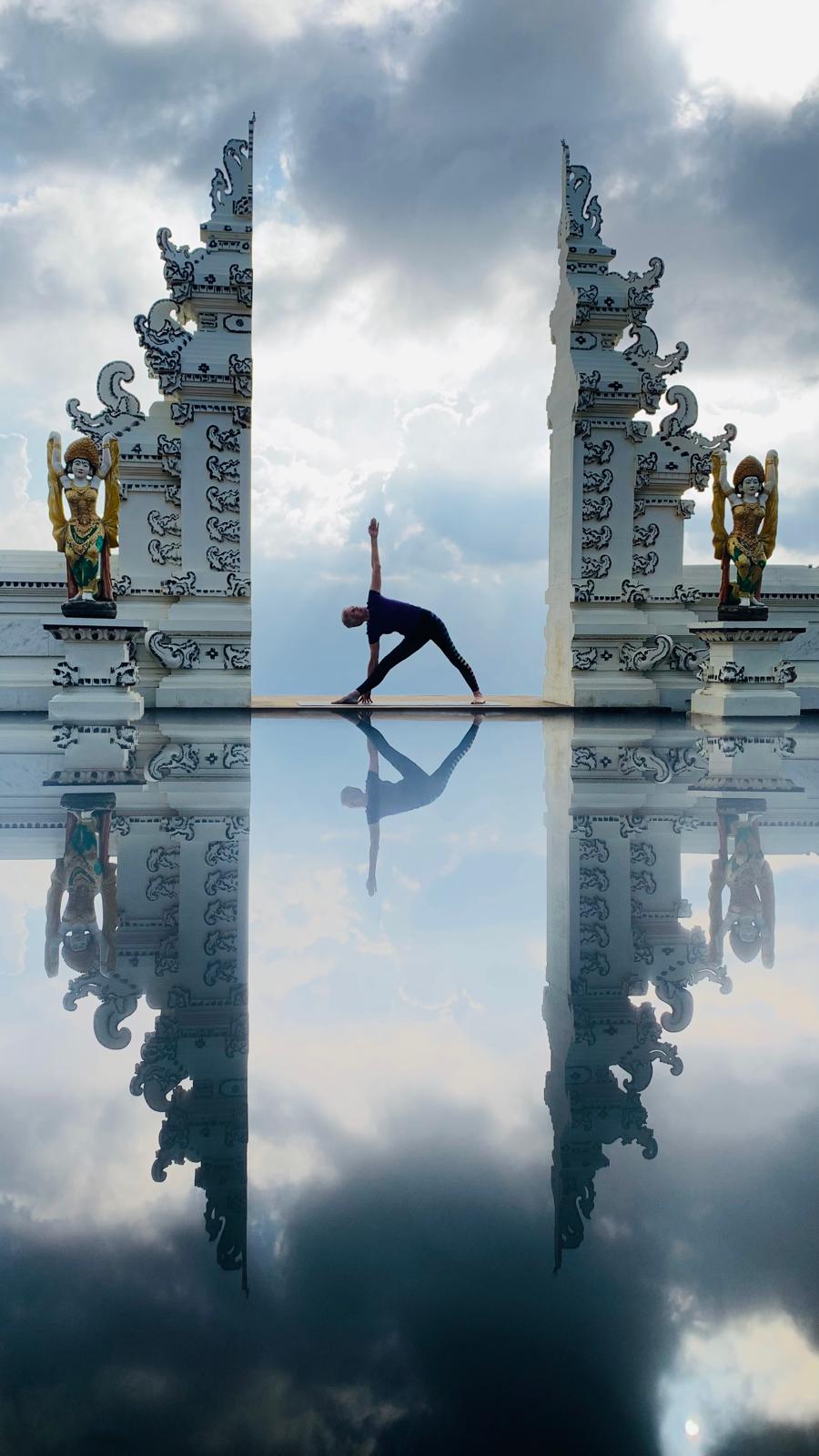
Triangle pose, the most famous of the yoga standing poses.
Anchoring in all yoga poses
- The same concept of anchoring is carried through into seated and other asanas.
- Standing poses are learnt first, giving the foundation for learning other asana.
- Same rebound processes are at work, to also quieten your mind.
- Spread your feet and toes for maximum stability.
- Compare ancient Chinese foot binding as an example of extreme instability.
- Also, you do things with your feet that indicate what you may be hiding, or your worry, and much more.
Some outcomes of physical stability
- Spreading your feet gives confidence, and a sense of who you are.
- Example: tottering has emotional and other results for you.
- Instead, put your weight on all 4 corners of feet.
- This grounds us both physically and mentally in the present moment.
- Plus, it brings clarity to see the effects of thoughts and actions.
- As a result, true understanding can take place.
Yoga for legs and feet: to become a better person.
- Our yoga practice therefore decreases avidya (misperception).
- Understanding your feet, finding physical stability, leads to mental and emotional stability.
- Then, quietness comes, with calmness, and a clear understanding of how all our thoughts and actions have outcomes.
- As a result, yoga is a journey we take to become a better person.
Yoga classes or videos
Use the orange links for great, cut price deals on Flametree classes, or videos.
With the videos, or classes, you’ll also be guided from the very beginning, with nothing assumed.
So, please consider Flametree’s beginner yoga, or beginner yoga videos.
With any of your meditation, yoga, or retreats, you’ll also get excellent teaching, by a certified Senior Teacher, Christine Lalor (aka Chris).
She’s been teaching yoga and meditation, and practising it daily, for well over 25 years.
Not only can she tell you about what to wear on feet for yoga, and why, but you’ll get a tour de force of whatever you’d like to know about yoga and what it can do for you.
Instructor, Chris Lalor, showing one position for guided meditation
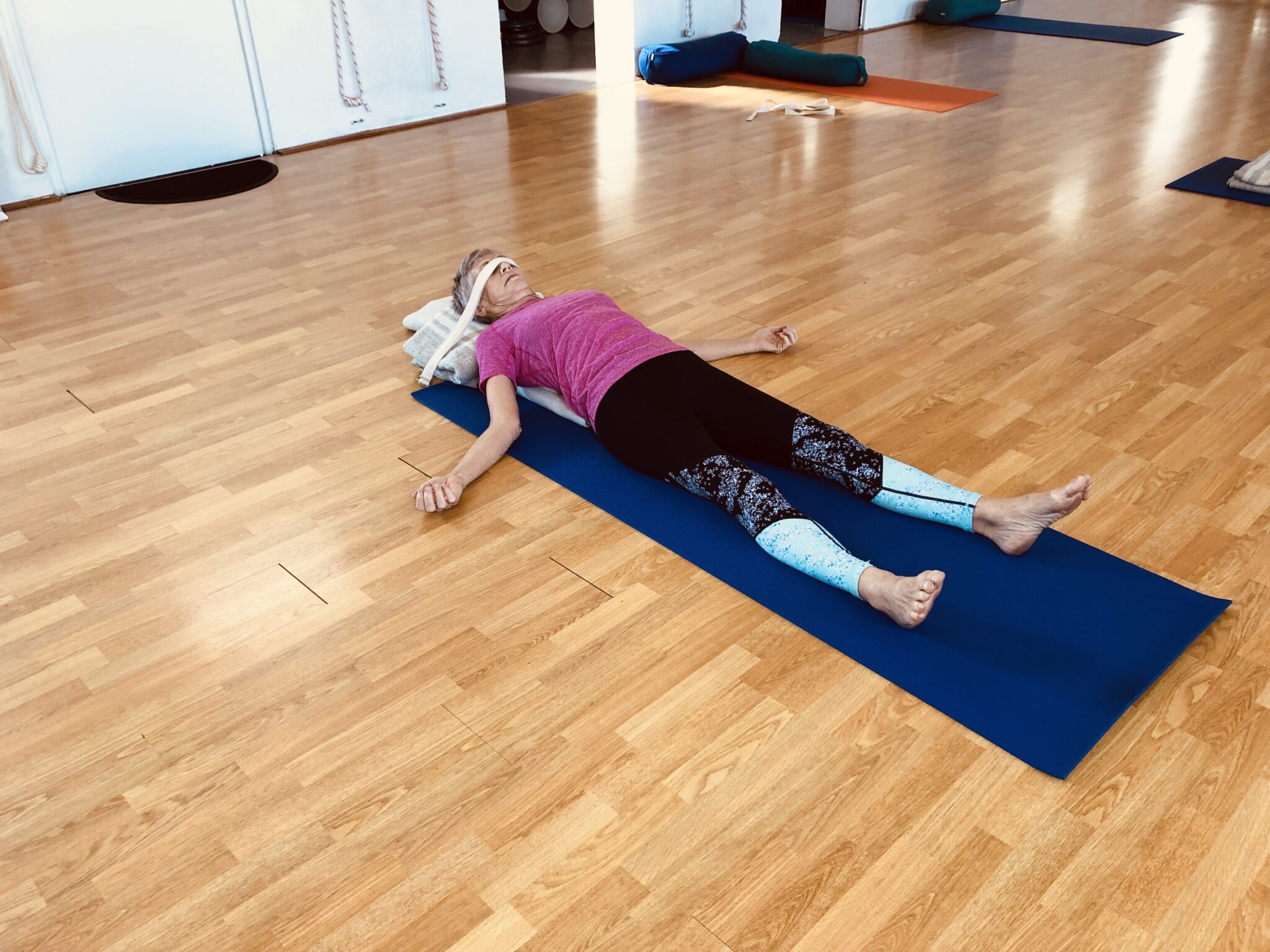
Flametree meditation is very doable, because it can also be done lying down, as demonstrated by Chris Lalor. Later, you move to sitting on a bolster, or chair.
Students verify what I say
Flametree classes are LIVE online (and in-studio), at the local time of Darwin, Australia (+9.30GMT).
On the timetables, for beginners, or non-beginners, you’ll also see classes in your local time.
Flametree beginners yoga can be started at any time, online or in-studio, or via our beginner yoga videos.
If you wish, please also see more about why and how yoga also works extremely well for weight loss.
Beginner classes are suitable for any age, gender, and size.
Check out the orange links below.
50% OFF 10 LIVE online or studio yoga CLASSES. Beginner & NON-Beginner.
33% OFF meditation VIDEO course including 10 FREE classes. HERE.
Facebook Page for Flametree