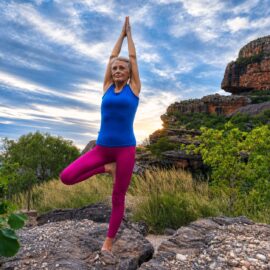
Iyengar Yoga Darwin: Classes, Teachers And How It Works
Iyengar yoga in Darwin: the short answer
Flametree Yoga Studio teaches Iyengar yoga in Darwin. Classes are taught at Woolner (19B Bishop St, near Parap) and Coolalinga (Coolalinga Central), seven days a week, and many also run LIVE online. The head teacher is Christine (Chris) Lalor, Senior Iyengar Yoga Teacher and certified yoga therapist, with more than thirty years of teaching. Certified Iyengar teachers train for a minimum of 3 years before certification.
Iyengar yoga (the method developed by B.K.S. Iyengar) is known for careful alignment, clear step-by-step instruction, and props such as blocks, belts, chairs and wall ropes, so each pose can be adjusted to the person doing it. That is why it suits people who are stiff, older, recovering from an injury, or new to yoga. Your first class is free if you are new to Flametree, and the best way to start is 12 classes for $59.50 (10 at half price plus 2 free).
Here is this page in short form:
- Where: Woolner and Coolalinga, plus LIVE online.
- Who teaches: certified Iyengar teachers, led by Chris Lalor.
- What makes it different: precise alignment, props, and levels.
- The teaching idea: straight, active limbs and a long spine.
- Worked example: Half Moon Pose (Ardha Chandrasana), step by step.
- Research: Iyengar-based yoga has been tested for back pain and falls risk.
- How to start: first class free, then 12 classes for $59.50.
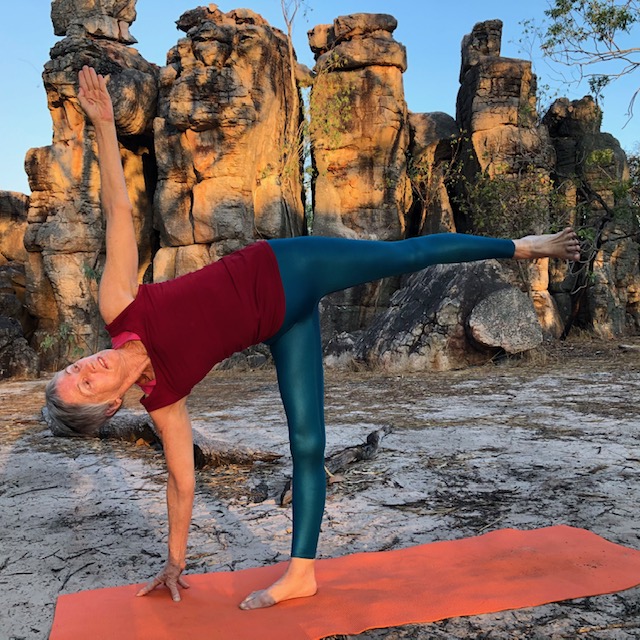
Iyengar yoga Darwin teacher Chris Lalor in Half Moon Pose (Ardha Chandrasana) at the Lost City, NT. Straight legs, long spine, arms in one line.
Where can I do Iyengar yoga in Darwin?
At Flametree’s two studios, and online. Woolner runs the full non-beginner timetable, from Non-Beginner Mixed to Experienced classes, plus beginner, Gentle, Restorative and Yoga For Backs classes. Coolalinga, 10 minutes from Palmerston, runs beginner classes every day and two non-beginner classes on Tuesday and Thursday mornings. See the beginner timetable and the non-beginner timetable.
For a studio class there is nothing to arrange: just come along, and mats and props are provided. For an online class, click the class time you want and we email you the link to join.
What makes Iyengar yoga different?
Three things, mostly. First, precision: poses are taught in stages, with clear instructions such as “lift the kneecaps” or “press the outer edge of the back heel down”. Second, props: blocks, belts, bolsters, chairs and ropes let a stiff or injured body do a version of the pose safely and learn the right shape. Third, levels: you start at Beginner 1 and move up when you are ready, so the class suits the people in it. There is a fuller explanation in Yoga for body, breath and mind and how Iyengar yoga is taught.
“Great teachers Iyengar style and good for all bodies no matter how stiff.” (Jill, Google review)
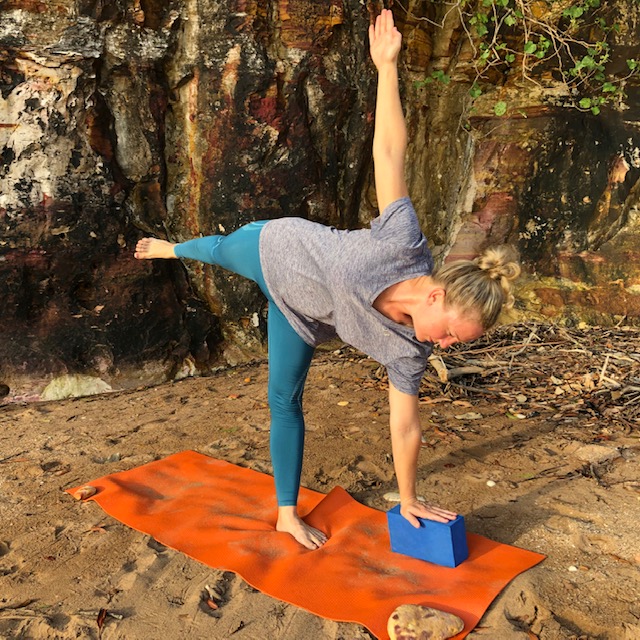
Kim, a certified Flametree Iyengar yoga teacher, in Half Moon Pose with a block under the hand. Props make the pose reachable while you build strength and balance.
Why Iyengar teachers ask for straight legs and a long spine
A lot of Iyengar teaching is about straightening the limbs: legs firm and fully extended, arms reaching in one line, spine long. This is known from long practice and senior teaching rather than tested point by point by modern research. Chris explains it in five ways.
- Lines of energy. In the yoga tradition, straight, extended limbs let prana (life force, in yoga’s own terms) move freely through the nadis (energy channels).
- Space and release. Actively lengthening the legs and arms makes room in the joints and lets unnecessary muscle tension go.
- Circulation and alertness. Students commonly tell us they feel more awake and alive after a class of strong standing poses.
- Stamina. Poses that need straight, strong legs, such as Half Moon, build leg strength and staying power over time.
- Attention. Keeping a leg truly straight takes full attention, which is why an Iyengar class can quieten a busy mind.
As B.K.S. Iyengar wrote in Light on Life: “The moment you bring attention, you are creating something, and creation has life and energy.”
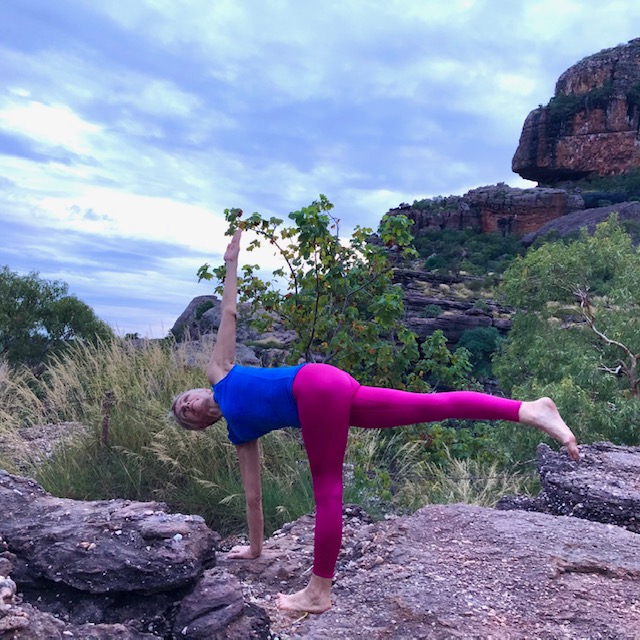
A revolved version of Half Moon Pose by Chris Lalor at Kakadu.
How to do Half Moon Pose (Ardha Chandrasana)
Ardha Chandrasana means half (ardha) moon (chandra) pose (asana). It is a standing balance that builds leg strength, balance and concentration. In class it is taught in stages, usually with a block and often with the back against a wall.
- Start in Triangle Pose (Utthita Trikonasana) to the right, both legs straight.
- Bend the right knee and place the right hand, or a block, about 30 cm in front of the right foot.
- Shift your weight onto the right leg and lift the left leg until it is level with the hip.
- Straighten the standing leg fully: lift the kneecap and firm the thigh.
- Extend the raised leg strongly back through the heel, and reach the top arm straight up in line with the shoulders.
- Turn the chest towards the ceiling. Hold for a few breaths, come down, and repeat on the left.
Watch Flametree’s short video of Half Moon Pose, filmed on Fannie Bay beach. If you have a back, neck or balance problem, learn it in class first, where the teacher can show you the right prop.
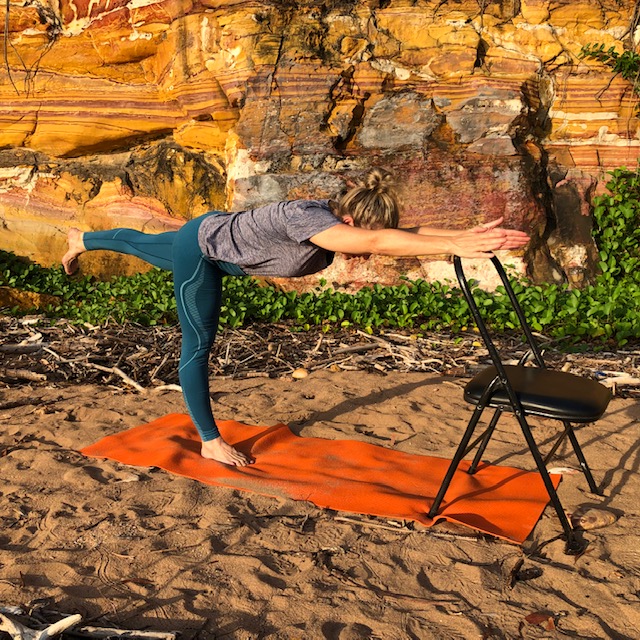
Warrior 3 with a chair. Iyengar yoga uses chairs, blocks and the wall so beginners can learn the shape of a balance pose safely.
What research has found about Iyengar-based yoga
Iyengar-based yoga has been used in several clinical trials (studies that compare a group doing the practice with a group that does not). For long-term low back pain, two US trials of Iyengar yoga by Williams and colleagues (2005 and 2009) found less pain and disability than the comparison groups; see our yoga for back pain page for the detail. For falls, a 2013 Sydney pilot study (Tiedemann and colleagues, Journals of Gerontology, 54 people, average age 68) found 12 weeks of Iyengar-based yoga improved balance, walking speed and getting up from a chair, the main risk factors for falls; see falls and yoga studies.
Much of what students value, such as feeling calmer, sleeping better or standing taller, is known from practice rather than measured in trials. The benefits of yoga page lists the 117 health conditions Dr Timothy McCall found studied in yoga research as at June 2019.
“I can’t imagine life without Flametree Yoga Studio. Head Teacher Chris and her team are incredible. Classes often have a theme and always have a logic that takes us from active to wind down, always with a fantastic blend of challenge, stretches and breathing exercises, along with really helpful Iyengar philosophy.” (Karen, Google review)
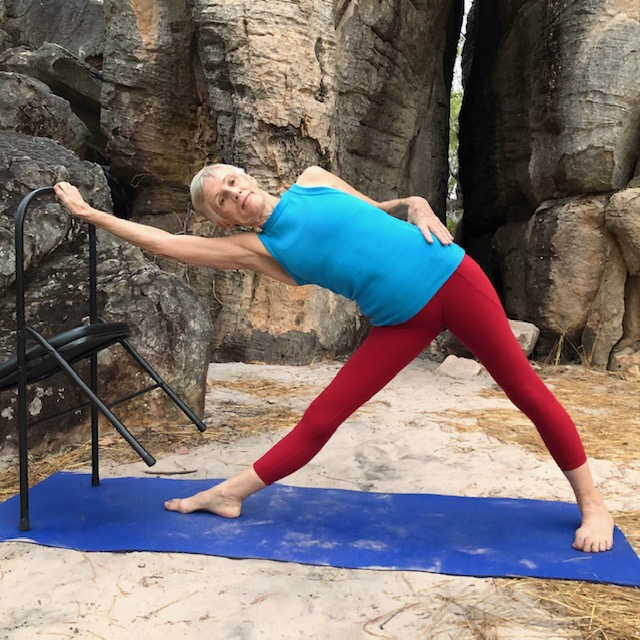
Triangle Pose (Utthita Trikonasana), the standing pose Half Moon grows out of. Iyengar yoga in Darwin for all ages, sizes and levels.
How to start Iyengar yoga in Darwin or online
Newcomers get their first class free. Then:
- New to yoga, or away 3 months or more: 12 beginner classes for $59.50 (10 at half price plus 2 free), in the studio, online or both, with a 14-day money-back guarantee.
- Experienced, and new to Flametree or away 3 months or more: 12 non-beginner classes for $104.50 (10 at half price plus 2 free).
- Thinking of teaching? Flametree also runs Iyengar yoga teacher training in Darwin and online.
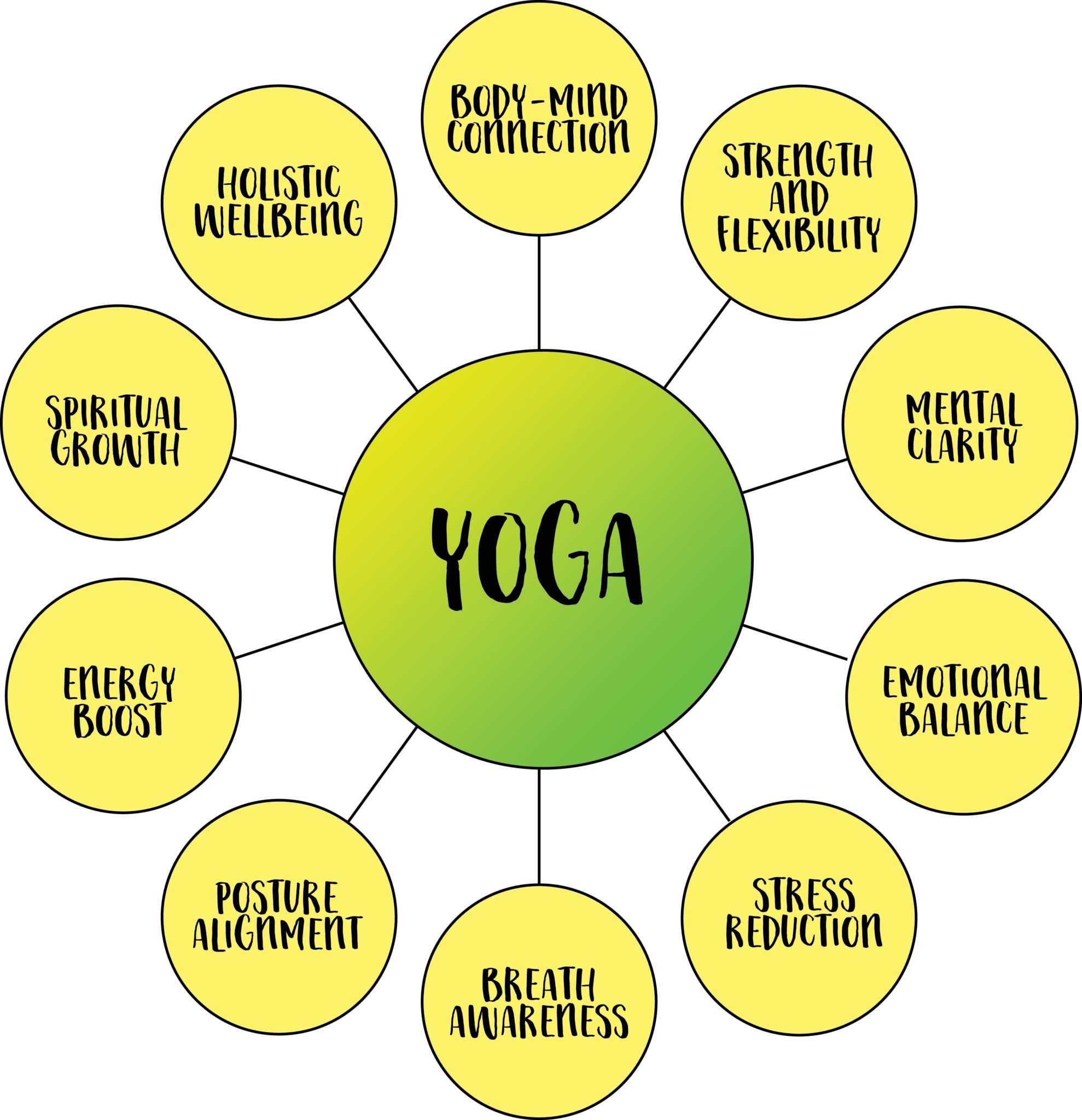
Some of the reasons students give for practising yoga. Start at any beginner class time that suits.
Iyengar yoga in Darwin: questions people ask
Where can I do Iyengar yoga in Darwin?
At Flametree Yoga Studio in Woolner (19B Bishop St, near Parap) and Coolalinga (Coolalinga Central), seven days a week, and LIVE online. See the class times.
Are Flametree’s teachers certified Iyengar yoga teachers?
Yes. Flametree’s classes are taught by certified Iyengar yoga teachers. Certification takes a minimum of 3 years of training and independent assessment. The head teacher, Christine (Chris) Lalor, is a Senior Iyengar Yoga Teacher and certified yoga therapist. Meet the teachers.
What happens in my first Iyengar yoga class?
You learn a small number of standing, sitting and resting poses, one step at a time, with props where you need them. The teacher gives clear, precise instructions and may adjust your pose. Tell the teacher about any injury or health condition before the class starts.
Is Iyengar yoga the same as hot yoga or vinyasa flow?
No. Iyengar yoga is not heated and is not a fast flowing sequence. Poses are held for longer, with attention to alignment, and the pace is adjusted to the class. The Darwin studios are air-conditioned.
Can I do Iyengar yoga online?
Yes. Many Flametree classes run LIVE online, with a teacher who can see and correct you, so you can practise from anywhere in Australia. Click the class time you want and we email you the link to join.
Why do Iyengar teachers ask you to straighten your legs?
Straight, firm legs give a pose a stable base and, in Iyengar teaching, let energy move freely through the body. Keeping a leg truly straight also takes full attention, which is part of how the practice quietens the mind.
What is Half Moon Pose (Ardha Chandrasana) good for?
Half Moon Pose is a standing balance that builds leg strength, balance and concentration. In Iyengar classes it is usually learnt with a block under the hand and often with the back against a wall.
How much do Iyengar yoga classes cost in Darwin?
Your first class is free if you are new. After that, 12 beginner classes are $59.50 for newcomers and anyone away 3 months or more. A casual beginner class is $14, and a casual non-beginner class is $24.
Flametree acknowledges the traditional custodians of the lands on which we teach yoga, as well as all First Australians. This page is general information, not medical advice. Feel free to check with your professional advisers if you wish, but also give yoga a try.