
Iyengar Quotes On Breath, Explained

Iyengar quotes on breath: the short version
When did you last notice a single breath? Mr BKS Iyengar, his daughter Geeta and his son Prashant spent their lives asking that question. These Iyengar quotes on breath are short lines from their books, magazines and classes, each followed by a plain-English explanation of what it means and how it shows up on the mat. The big ideas are to notice the breath, never to force it, and to learn pranayama (the Indian art of breath) slowly.
These Iyengar quotes on breath in short form
- Notice first: meet each breath as if it were a stranger, with curiosity.
- Picture it: clouds spreading, a lotus closing, a cool drink of water.
- Never force it: a horse comes to an apple, not to a chase.
- Not just deep breathing: pranayama adds attention, rhythm and care.
- Learn step by step: a few careful rounds beat a long rough session.
Iyengar yoga is the style developed by Mr BKS Iyengar. In the 20th century he did more than anyone to set down traditional Indian yoga, through his books and his teaching, and he pioneered the use of props. It is sometimes called modern classical yoga, and it’s the style we teach at Flametree. His daughter Geeta (1944 to 2018) and his son Prashant, who still teaches in Pune, became teachers too.
How should the breath feel?
The first breath should be like your meeting with a stranger for the first time.
What it means: It means meet each breath as if you’d never met it before. Most of us breathe thousands of times a day without a glance. Mr Iyengar asks you to look at one breath the way you’d look at a stranger, with fresh curiosity and no assumptions. In class you may be asked to sit quietly and simply notice how the breath arrives, before anyone asks you to change it.
Try this: Sit for one minute and watch the next three breaths come in, as if it’s the first time you’ve seen them.
Read more: What pranayama (the Indian art of breath) is all about · Our breath and pranayama notes
Taste the fragrance of breath, as you taste food with the tip of your tongue.
What it means: He’s saying the breath has a feel you can sense, not just a count you can keep. The tip of the tongue is very sensitive, so it’s a good picture for how delicate your attention can become. You may find that once you stop pushing, the breath has a texture: cool on the way in, warmer on the way out.
Try this: Breathe in through the nose and notice the temperature of the air at the nostrils.
Read more: Ujjayi pranayama in the Iyengar tradition · Nose or mouth: how you breathe
During inhalation, the breath should move exactly like clouds spreading in the sky.
What it means: A picture that helps: the breath spreads slowly and evenly, like clouds filling a sky, not like a bucket tipped into a bin. It asks for a breath that widens the ribs in every direction without a jerk or a gulp. In class a teacher may point to your back ribs or the sides of your chest, so you can feel the breath reach there too.
Read more: Yoga for body, breath and mind · More quotes on attention and awareness
In deep inhalation the chest moves up like a hill and the abdomen remains like a valley.
What it means: Geeta is describing the shape of a deep breath in: the chest rises like a hill while the belly stays soft and low like a valley. It’s a map you can check against your own body. Geeta taught breath as something to observe and refine, so a picture like this gives you something concrete to look for.
Read more: What pranayama is · Nose or mouth: how you breathe
The chest should deflate slowly and gradually, from the sides to the centre with centripetal force, like a lotus closing its petals after sunset.
What it means: This is the breath out. Let the chest soften slowly from the sides toward the middle, the way a lotus closes at sunset. There’s no collapse and no push, just a slow gathering in. The image helps people who tend to let the chest drop all at once at the end of a breath.
Read more: Ujjayi pranayama in the Iyengar tradition
If one is thirsty and drinks water slowly and gradually, the coolness is felt deep inside. Inhalation should bring a similar sensation – the touch of air should be felt in the lungs.
What it means: Think of how a long, slow drink of water feels cool deep inside. Geeta says a good breath in should feel like that: the touch of the air is felt deep in the lungs, not only at the nose or throat. It invites you to sense the breath all the way down, and not to hurry it.
Read more: Nadi shodhana (alternate nostril breathing)
The ribs are the wings of the body. Open your wings.
What it means: The ribs are the wings of the body, and in most of us they hardly open. Mr Iyengar says to open them, which is a posture instruction as much as a breath one. Lifting and widening the chest in sitting and standing poses gives the breath room, and a breath that’s allowed to be wide can feel quite different.
Try this: Sit tall and place your hands on the sides of your lower ribs. Feel them widen a little as you breathe in.
Read more: Yoga for posture · More quotes on the body and alignment

The exhalations should be like a bath that a mother gives a baby. Not like taking a heavy shower.
What it means: Prashant asks for exhalations that are gentle and caring, like bathing a baby, not a heavy shower. A hard, fast breath out feels like pushing. A soft, steady one feels more like tending something. The out-breath is often where attention drifts, so it’s worth giving it a quality of care.
Read more: Bhramari, the humming-bee breath

In exhalation, you become humble, whereas pride comes in inhalation.
What it means: It’s a short line with a human idea: breathing out is letting go, breathing in is taking in, and a bit of ego can come with taking. Mr Iyengar uses it as a way to watch yourself. Notice if your breath in is proud and grabbing, and your breath out quiet and willing. No belief is needed to try the experiment.
Read more: Pranayama keeps me sane · More quotes on philosophy and the self
Why can’t you force the breath?
Nothing pertaining to pranayama can be forced. That is why it teaches humility.
What it means: Here’s the answer first: the breath doesn’t obey force, it responds to patience. If you push, the body tightens and the breath gets shorter and rougher. That’s why Mr Iyengar says pranayama teaches humility. You can’t win by effort alone. You learn to listen, and the breath gets smoother when you do.
Read more: Is pranayama safe? Read this first · Managing effort in your yoga practice
You cannot catch a horse in a field by running after it. But if you stand still and hold out an apple, the horse will come to you.
What it means: A horse runs from someone chasing it, but walks over to someone standing still with an apple. The breath and the mind work like that horse. Chase them and they move away. Make yourself quiet and steady, and they come closer. It’s a good story for anyone who tries too hard to calm down.
Read more: More quotes on effort and discipline · More quotes on the mind and meditation
Kumbhaka is not holding breath; it is holding energy.
What it means: Kumbhaka is the pause that can follow a breath in or a breath out. Mr Iyengar’s point is that it isn’t a clenched hold, it’s a quiet stillness. If the face or throat tightens, it has become something else. This is why a teacher guides the pause step by step.
Read more: What pranayama is · Is pranayama safe?
In kumbhaka, you should not hold the breath, but the breath should hold you.
What it means: This turns the last quote around: don’t grab the breath, let the breath hold you. The picture is of being supported by the stillness rather than gripping at it. The change is small in words but large in feel, and it’s the kind of thing a teacher can see in your shoulders and jaw long before you can feel it.
Read more: What pranayama is
If the water gushes from the tap, the vessel cannot be filled at all to the brim. It is the same in deep breathing.
What it means: Pour water from a tap at full blast and the glass splashes and never fills properly. Pour gently and it fills to the brim. A hard, forceful breath is the same: it can’t fill you up evenly. Mr Iyengar uses it to explain why he separates pranayama from simply breathing deeply and fast.
Read more: Research on how to breathe, with James Nestor
To be receptive is the basic qualification of Pranayam. For Pranayam you do not need muscle. You need the gentle, sensitive and emotional mind.
What it means: Prashant’s version of the same point: the qualification for pranayama is being receptive, not being strong. You don’t need muscle for it. You need a gentle, sensitive attention that can take in what the breath is doing. If you feel you can’t do breath practice, this may be reassuring: nothing athletic is asked.
Read more: Our breath and pranayama notes · More quotes on the mind and meditation
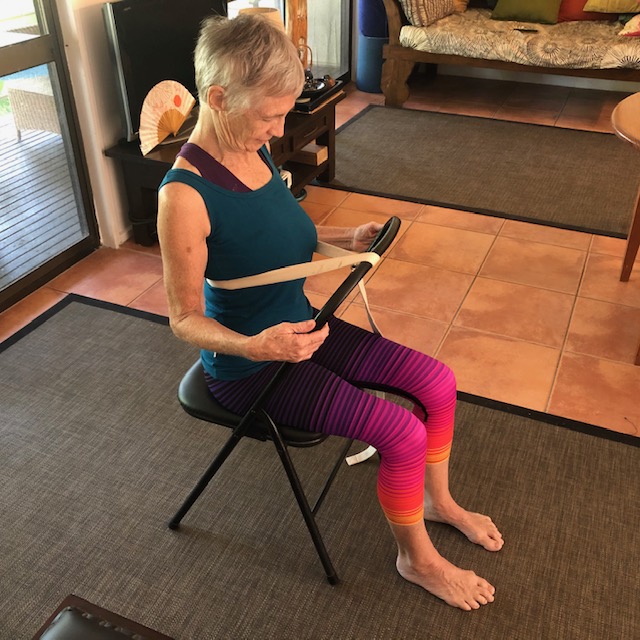
Breathe! Don’t blow like a windmill.
What it means: A sharp, funny image with a clear point: breathing is not blowing. A windmill whirls and waves its arms but doesn’t go anywhere. If you notice the breath turning into puffing, big gestures or noise, you’ve probably gone past what the body can follow.
Read more: Ujjayi pranayama in the Iyengar tradition
Is pranayama just deep breathing, and how do you learn it?
Pranayama is not an exercise. Do not compare pranayama with deep breathing.
What it means: Mr Iyengar is clear: pranayama (the Indian art of breath) is a different thing from breathing deeply for exercise. Deep breathing is about taking in more. Pranayama is about attention, rhythm and control of the breath, learnt step by step. The comparison is where many people go wrong, so he warns against it.
Read more: What pranayama is · Yoga for body, breath and mind
You don’t do normal breathing. Normal breathing has to be learnt. It is an ability that you have to develop.
What it means: It sounds odd, but Prashant says even ordinary, natural breathing is something you learn to do well. Most of us breathe in habits formed by stress, posture and shallow sitting. In an Iyengar class, the first work is often noticing those habits, long before any named technique.
Read more: Nose or mouth: how you breathe · Our breath and pranayama notes
Most of the time people breathe incorrectly. In Pranayama when you are sitting quietly you make so many mistakes. So how many mistakes might you make when you are doing the movement?
What it means: Geeta says plainly that most of us get the breath wrong, even sitting still. It’s not an insult, it’s a reason to go slowly and to be taught. If sitting quietly is already hard to get right, it makes sense to learn a technique in small, careful pieces, watched by someone who can see what you can’t.
Read more: Is pranayama safe? · What pranayama is
It is more important and beneficial to do a few cycles correctly than to be strict with duration.
What it means: Quality counts more than quantity. A few rounds done with care are worth more than a long session done roughly. It’s a good rule for a lot of things in yoga: stop when your attention fades, not when a timer says so.
Read more: How long to hold yoga poses · Making yoga a daily habit
You can take comfort from the fact that however poor your own pranayama is, it can scarcely be worse than mine was for the first few years.
What it means: Mr Iyengar shares that his own early pranayama was poor. If it was hard for him, it’s allowed to be hard for you. That kind of honesty is a big part of why people trust his writing. It takes the pressure off and makes room for slow, patient learning.
Read more: Starting yoga stiff, in your late 30s or 40s · More quotes for beginners
Your breath should be your teacher. Your breath should be giving you suggestions.
What it means: The last idea in this group: the breath itself gives feedback. If it catches, shortens or roughens, it’s telling you the practice has gone too far. If it flows, you’re probably on the right track. A teacher helps, but over time you learn to read your own breath.
Read more: Ujjayi pranayama in the Iyengar tradition · More quotes on attention and awareness
Related pages
- Yoga and breathing: our pranayama notes and articles
- What is pranayama?
- Is pranayama safe?
- Nose or mouth? How you breathe
More Iyengar quotes, explained: Attention And Awareness, Beginners And Stiffness, The Body And Alignment, Effort And Discipline, Learning, The Mind And Meditation, Philosophy, The Sutras And The Ego, Practice. Or see all the quotes on the Iyengar Yoga Quotes, Explained page.
Frequently asked questions
What did Mr Iyengar say about breathing?
Mr Iyengar taught that the breath should be noticed, smooth and never forced. In these quotes he compares the first breath to meeting a stranger, an in-breath to clouds spreading in the sky, and the breath to a horse that walks over to you when you stand still. Geeta and Prashant describe the same care in their own images.
Why did Mr Iyengar say pranayama cannot be forced?
In Light on Life he wrote, “Nothing pertaining to pranayama can be forced. That is why it teaches humility.” Forcing tightens the body, and a tight body makes a shorter, rougher breath. A teacher helps you work with the breath so that it stays smooth.
Is pranayama just deep breathing?
No. Mr Iyengar said pranayama is not an exercise and should not be compared with deep breathing. Deep breathing is about taking in more air. Pranayama adds attention, rhythm and control of the breath, and it is learnt step by step.
What did Geeta and Prashant Iyengar say about the breath?
Geeta described a deep breath in as the chest rising like a hill while the abdomen stays like a valley, and the breath out as a lotus closing its petals. Prashant said the out-breath should be like a mother bathing a baby, and that your breath should be your teacher.
Practise this at Flametree
Your first class is free if you’re new to Flametree. New students, and anyone who has been away three months or more, can also get a half price 10 class pass, in the studio or LIVE online.
- Beginners: see the half price 10 class pass for new and lapsed students
- Already done some yoga: see the half price 10 class pass for new and lapsed students
- See the timetable, including online classes
Can’t make a class? Practise at home with our video courses.
Flametree Yoga Studio teaches Iyengar yoga in Darwin and LIVE online. This page is general information, not medical advice. The quotes are short credited extracts from works by the Iyengar family; each credit names the source. Sources quoted on this page: Astadala Yogamala, Iyengar: His Life and Work, Light on Life, Sparks of Divinity, The Tree of Yoga, Yoga Wisdom and Practice, Yoga: A Gem for Women. Further reading: Mr Iyengar on Wikipedia · Geeta Iyengar on Wikipedia
