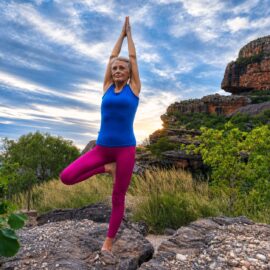
Yoga After Breast Cancer: What The Research Shows, And How To Start Gently
Yoga after breast cancer: the short answer
When treatment ends, many women expect to feel like themselves again. Instead there is tiredness that sleep does not shift, a stiff shoulder, broken nights and a body that feels unfamiliar. Yoga after breast cancer is one of the better-studied ways to help with that. A 2017 Cochrane review (the most trusted kind of research summary) found yoga improved quality of life, fatigue and sleep in the short term, and a 2024 cancer guideline says yoga may be recommended for fatigue after treatment. The research is not all one way, and we say so below. Here is what the studies show, what a gentle Iyengar class does, the safety points to clear with your team, and how to start in Darwin or online.
Iyengar yoga is the style developed by Mr BKS Iyengar. In the 20th century he did more than anyone to set down traditional Indian yoga, through his books and his teaching, and he pioneered the use of props. It is sometimes called modern classical yoga, and it’s the style we teach at Flametree. This page sits in our women’s health notes.
Yoga after breast cancer in short form
- Cochrane 2017: 24 studies, better quality of life, fatigue and sleep in the short term.
- ASCO guideline 2024: yoga may be recommended for fatigue after treatment.
- 2026 review: 32 studies, 2,423 survivors, less fatigue and better sleep with yoga.
- Honest caveat: a 2023 review of Hatha or Iyengar yoga alone found no clear effect.
- Early pilot, 2009: 44 women, restorative yoga, better mood and less fatigue, small study.
- Body image and posture: how you stand and how you feel about your body are linked.
- Safety: get your team’s clearance; take care with arms, scars, lymphoedema and bones.
- Next step: a gentle or restorative class, in Darwin or live online.

Supported bound angle pose (Supta Baddha Konasana) over bolsters. Restorative poses like this are often where women start after treatment.
Why yoga after breast cancer?
The effects of treatment often last well beyond the last appointment. Cancer-related fatigue (tiredness that rest does not relieve), poor sleep, worry, stiffness in the shoulder and chest, and in some women lymphoedema (swelling of the arm) are all common. Here is what the research says about yoga for these.
What does the research say about yoga after breast cancer?
Several reviews and a major guideline support yoga for fatigue, sleep and quality of life, mainly in the short term. Here are the studies, with the year and what yoga was compared with.

Rest properly at the end of practice. It is part of the pose, not an extra.
The Cochrane review, 2017
Cochrane pooled 24 studies with 2,166 women with breast cancer. Compared with no yoga, there was moderate-quality evidence that yoga improved health-related quality of life, reduced fatigue and reduced sleep problems in the short term. There was no clear effect on depression or anxiety compared with no yoga, and no clear effect in the medium term.
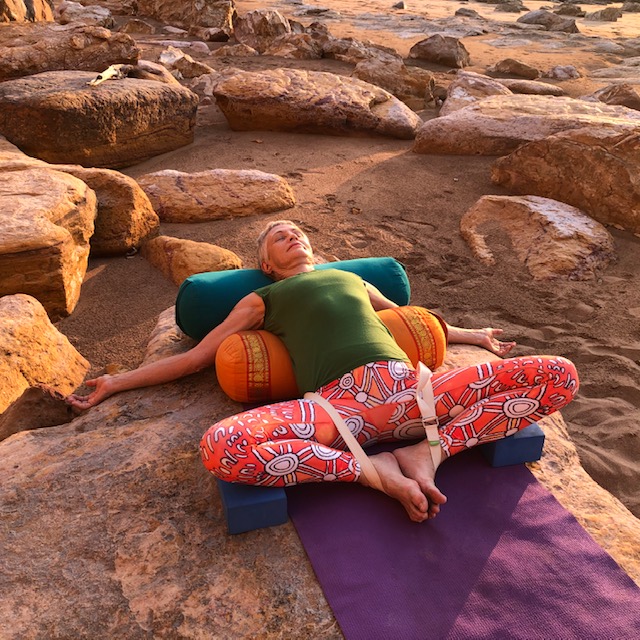
Bound angle pose with support opens the hips without strain.
The ASCO and Society for Integrative Oncology guideline, 2024
The American Society of Clinical Oncology guideline on cancer fatigue reviewed 113 trials. For survivors who have finished treatment, it says exercise, cognitive behaviour therapy and mindfulness should be recommended, and that yoga may also be recommended. The certainty of the evidence was rated low to moderate.
Newer reviews, 2026
- Dose review, 32 studies, 2,423 breast cancer survivors: yoga improved fatigue, sleep and quality of life compared with control groups. It worked better for fatigue after treatment than during it.
- Remote and home yoga review: 9 trials found a moderate improvement in quality of life with yoga delivered online, by video or at home, though results varied a lot. No serious yoga-related problems were reported.

A chair and bolster take the effort out of resting.
An early pilot of restorative yoga, 2009
A small United States pilot trial tested restorative yoga, the gentlest kind, in women with breast cancer. Danhauer and colleagues enrolled 44 women (average age 55.8, and about a third were still having treatment). Half did 10 weekly 75 minute restorative yoga classes. The other half were on a waitlist.
After 10 weeks, the yoga group reported better mental health, less depression, more positive feelings and a greater sense of peace and meaning. Their fatigue improved too. Women who started with lower emotional wellbeing seemed to gain the most. The authors said the study was limited by its size, and that it showed restorative yoga is practical for women with breast cancer (Psycho-Oncology, 2009).
The honest caveat, 2023
A 2023 review looked only at Hatha or Iyengar yoga: 11 studies, 777 adults with cancer. It found no clear effect on cancer-related fatigue, depression or quality of life, and rated the evidence low to very low. Most of the studies had some risk of bias, and the programmes were often poorly described.
We teach Iyengar yoga, so we would rather tell you this than leave it out. The larger reviews that include Iyengar alongside other styles are more positive. Iyengar teaching holds, from long practice, that carefully supported poses help recovery, and students often tell us they sleep and feel better. Research has not yet shown that one style of yoga does better than another after cancer.

A reclining pose over two bolsters, with the legs supported. The props do the work so the breath can slow down.
What a gentle Iyengar class does after breast cancer
After cancer, an Iyengar class is built around support, gradual progress and attention to the arm and chest.
- Restorative poses: lying over bolsters, legs up the wall, supported forward bends with the head resting. These allow deep rest without effort.
- Gentle chest and shoulder opening: arms raised with a belt or against the wall, taken slowly, to help with stiffness after surgery or radiotherapy.
- Standing poses with support: using a chair or the wall to rebuild leg strength and balance, which treatment can wear down.
- Slow breathing with a longer out breath, taught lying down first.
- A teacher who adapts: the same pose set up differently for each person, depending on surgery, treatment and energy that day.

Legs up the wall (Viparita Karani), with folded blankets under the hips. A quiet, supported pose for tired days.
Posture, the chest and how you feel about your body
Many women have a mixed relationship with their breasts, and cancer can make that more complicated. Chris Lalor says most women she knows feel strongly about their breasts: pleased on a good day, critical on a bad one. She found it true of herself when weight loss made her own breasts smaller and she was more emotional about it than she expected.
Chris notes that self-consciousness often starts young, around puberty. Many girls learn to stand in a way that closes off the chest, and the habit can stay into adult life. Worry about self-checks, comparing yourself with media images, and changes in shape with age can all add to it.
Bobby Clennell, a senior Iyengar teacher and the author of the book Yoga for Breast Care, observes that how a woman stands, with the chest dropped and the upper back rounded, can show how she feels. Chris acknowledges Clennell’s work in the way she teaches this.
In the Iyengar way, standing poses teach the chest to lift. Supported backbends over bolsters or a chair can ease tightness across the chest and armpits. After surgery or radiotherapy, these are taken slowly and only when your team has cleared you. Our page on backbend yoga explains how props make them gentler.
Small comforts count as well. Chris suggests a comfortable bra: she prefers one without wire, made of cotton or bamboo, and yoga tops that do not crush the breasts. After surgery or radiotherapy, ask your breast care team what is right for you.
These are observations from teaching, not research findings. And if you are worried about any change in your breasts, see your doctor.

Lying supported lets the breath slow and the body settle.
Safe practice after breast cancer
Check with your surgeon or oncology team before you start, and tell your yoga teacher about your treatment.
- After surgery: wait until your team clears you, and keep doing any arm exercises they give you.
- During chemotherapy or radiotherapy: keep it gentle, and skip class if you have a fever, feel unwell or your blood counts are low.
- Arms and chest: build up weight on the arms slowly, and avoid strong stretches across a healing scar.
- Lymphoedema: if you have it or are at risk, check with your lymphoedema therapist first and wear your garment if one is prescribed.
- Bones: some hormone treatments thin the bones. If yours are affected, avoid rounding the spine forward under load (see our yoga for osteoporosis page).
- Ports and lines: tell your teacher, so poses that press on them can be avoided.

Lying over bolsters with an eye cover for slow breathing (pranayama). Breathing practice is often the gentlest place to begin.
Gentle yoga after breast cancer in Darwin and live online
Flametree Yoga Studio teaches Gentle Yoga and Restorative Yoga at Woolner in Darwin and LIVE online across Australia, with Christine (Chris) Lalor, Senior Iyengar Yoga Teacher and certified yoga therapist, and the Flametree team. Online classes mean you can practise on a low-energy day without leaving home, with a teacher who can still see and adjust you.
Related pages: what is restorative yoga, how to calm your nervous system, what is pranayama, yoga for osteoporosis and yoga for posture.
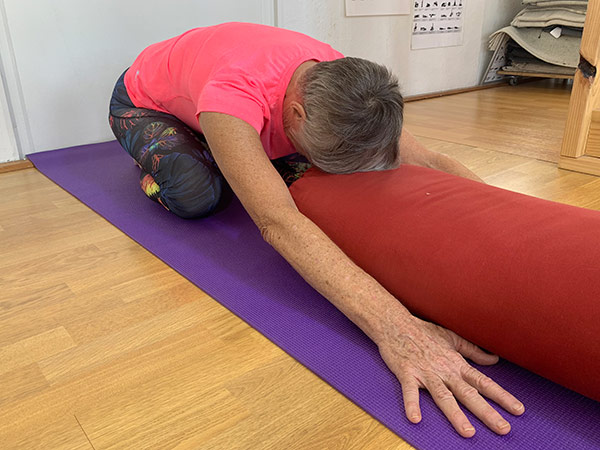
A forward bend with support calms the mind.
Practise this at Flametree
Flametree Yoga Studio teaches Iyengar yoga in the studio at Woolner and Coolalinga in Darwin, and LIVE online.
- New to Flametree? Your first class is free. In the studio, just come along. Online, go to our online class list, click the class time you want and we email you the link to join.
- Beginners: new students, and anyone who has been away three months or more, can get a half price 10 class pass with 2 extra classes free, to use online, in the studio, or both. See the beginner half price pass.
- Already practising yoga? The same half price 10 class pass with 2 extra classes free, for new students and for anyone away three months or more, is also available as the non-beginner half price pass.
- See every class time, including online classes, on the timetable.
Can’t make a class? Practise at home with our video courses.
Yoga after breast cancer: frequently asked questions
Is yoga good after breast cancer?
For many women, yes. A 2017 Cochrane review of 24 studies found moderate-quality evidence that yoga improved quality of life, fatigue and sleep in the short term compared with no yoga. In 2024 the ASCO and Society for Integrative Oncology guideline said yoga may be recommended for fatigue after treatment ends. Yoga supports medical care; it is not a cancer treatment.
Does yoga help cancer fatigue?
Often, after treatment. The Cochrane review and a 2026 review of 32 studies found less fatigue with yoga, and the 2024 ASCO guideline lists yoga as an option for fatigue after treatment. One honest caveat: a 2023 review limited to Hatha or Iyengar yoga, 11 studies, found no clear effect on fatigue, depression or quality of life.
What did the restorative yoga pilot trial for breast cancer find?
In a 2009 pilot trial of 44 women with breast cancer, the group who did 10 weekly restorative yoga classes reported better mental health, less depression, more positive feelings and a greater sense of peace and meaning than the waitlist group, and their fatigue improved. The authors noted the study was small, so it is a starting point rather than a final answer.
When can I start yoga after breast cancer surgery?
Only when your surgeon or breast care team says you can. The first weeks after surgery are for healing and the arm exercises your team gives you. Many women start gentle, supported yoga once the wound has healed and their team has cleared them, and build up from there.
Is yoga safe during chemotherapy or radiotherapy?
Gentle, supported yoga is often possible, with your oncology team’s agreement. Energy can change from day to day, so restorative poses and breathing are usually the place to start. Skip class if you have a fever, feel unwell, or your blood counts are low.
Can yoga help lymphoedema?
Research on yoga and lymphoedema (swelling of the arm after lymph nodes are removed or treated) is small. If you have or are at risk of lymphoedema, talk to your lymphoedema therapist first, wear your garment if one is prescribed, and build up arm weight-bearing slowly. Tell your teacher so poses can be adapted.
Can yoga help with body image after breast cancer?
Some women find yoga a quiet way to feel at home in their body again. In our experience, standing tall, supported chest-opening poses and slow breathing help women notice how they hold themselves. That is an observation from teaching, not a research finding, and it sits alongside the care of your team.
What yoga poses should I avoid after breast cancer?
Early on, avoid putting full weight on the arms, strong stretches across the chest near the scar, and lying on the front if the chest is tender. If treatment has thinned your bones, avoid rounding the spine forward under load. Your teacher can give you a supported version of most poses.
Is restorative yoga good after cancer treatment?
Restorative yoga, where the body is fully supported by bolsters, blankets and chairs, is often where women start after treatment. It lets you rest deeply and breathe slowly without effort. Research has studied yoga programmes as a whole rather than restorative poses alone.
Where can I do gentle yoga after breast cancer in Darwin?
Flametree Yoga Studio teaches Gentle Yoga and Restorative Yoga at Woolner in Darwin and LIVE online, with Christine (Chris) Lalor, Senior Iyengar Yoga Teacher and certified yoga therapist, and the Flametree team. Tell the teacher about your treatment before the first class. In Darwin, your first class is free if you are new to Flametree (in the studio, if you have lived in the NT for three months or more; online, anyone new).
This article is general information, not medical advice. Yoga supports cancer care; it does not treat cancer. Always follow your oncology team’s advice. Flametree Yoga Studio, Darwin and live online.
Sources: Cramer H and colleagues, Yoga for improving health-related quality of life, mental health and cancer-related symptoms in women diagnosed with breast cancer, Cochrane Database of Systematic Reviews, 2017, doi 10.1002/14651858.CD010802.pub2. Bower JE and colleagues, Management of fatigue in adult survivors of cancer: ASCO-Society for Integrative Oncology guideline update, Journal of Clinical Oncology, 2024, doi 10.1200/JCO.24.00541. Optimal yoga dose for improving cancer-related fatigue, quality of life, and sleep quality in breast cancer survivors, Journal of Cancer Survivorship, 2026, doi 10.1007/s11764-024-01699-9. Valeriani F and colleagues, Effects of remotely delivered yoga interventions on quality of life and symptom burden in women with breast cancer, Healthcare, 2026, doi 10.3390/healthcare14183040. Garcia-Munoz C and colleagues, No effects were found in favor of Hatha or Iyengar yoga exercises for improving cancer-related fatigue, depression symptoms, or quality of life, Supportive Care in Cancer, 2023, doi 10.1007/s00520-023-08174-8. Danhauer SC and colleagues, Restorative yoga for women with breast cancer: findings from a randomized pilot study, Psycho-Oncology, 2009, found through PubMed, doi 10.1002/pon.1503. Clennell B, Yoga for Breast Care (book).