
BKS Iyengar Quotes, Explained: Mr Iyengar In His Own Words

In short: This page gathers quotes from Mr BKS Iyengar’s books, talks and classes, sorted by topic. Each links to a plain-English explanation of what he said and how it shows up on the mat. It also has a short life story, his sources, and answers about his books, his teaching and his props.
BKS Iyengar quotes, in short
What would you ask the man who made Iyengar yoga? These BKS Iyengar quotes are short lines from his books, talks and classes, gathered by topic. Each one links to its plain-English explanation, so you can read what he said and how it shows up on the mat.
What is on this page of BKS Iyengar quotes
- Who he was: a short life story, facts only.
- His sources: the books and talks quoted here.
- Every quote, by topic: each links to its explanation.
- Questions: his books, his teaching and his props.
Iyengar yoga is the style developed by Mr BKS Iyengar. In the 20th century he did more than anyone to set down traditional Indian yoga, through his books and his teaching, and he pioneered the use of props. It is sometimes called modern classical yoga, and it’s the style we teach at Flametree. His daughter Geeta (1944 to 2018) and his son Prashant, who still teaches in Pune, became teachers too.

Triangle pose lengthens both sides of the body.
Who was Mr BKS Iyengar?
Mr BKS Iyengar was born on 14 December 1918 in Bellur, a village in south India, during a flu epidemic. He was the eleventh of thirteen children. His father, a village headmaster, died when he was nine, and the family was poor. As a boy he was often ill, with malaria, typhoid and tuberculosis.
In 1934, at 15, he went to Mysore to live with his sister. Her husband, the yoga teacher T. Krishnamacharya, began to teach him. In 1937 he moved to Pune to teach yoga, and Pune became his home. In 1943 he married Ramamani, and they had six children, including Geeta and Prashant.
He first used a prop in 1948. He could not get into Bound Angle Pose (Baddha Konasana), so he used bricks from the street. The violinist Yehudi Menuhin became his pupil in 1952, and in 1956 Mr Iyengar made his first trip to America. In 1961 he photographed the poses for his first book, Light on Yoga.
Ramamani died suddenly in January 1973. Students and friends then raised money to build an institute in Pune in her name, for Mr Iyengar, Geeta and Prashant. It opened on 19 January 1975, and it was then, he said, that the big idea of props really struck him.

Fold from the hips and keep the spine long.
Books and talks quoted here
- Light on Life: his late book on the journey of practice, from the body to the mind.
- Astadala Yogamala: his collected articles, talks and interviews, in several volumes.
- Sparks of Divinity: his sayings from classes, recorded by his pupil Noelle Perez-Christiaens and arranged by year.
- The Tree of Yoga: talks that use a tree, from roots to fruit, to explain yoga.
- Yoga Wisdom and Practice: short pieces on practice, props, ageing and food.
- Yoga: The Path to Holistic Health: his illustrated guide to poses and practice.
- Iyengar: His Life and Work: a book about him by his students, including the maxims called Wisdom of the Master.
- Yoga Rahasya: the magazine of the Pune institute, with his talks and answers to questions.
- Basic Guidelines for Teachers of Yoga: written with Geeta S Iyengar for teachers.
Every quote by Mr Iyengar on this site, by topic
Each quote links to its home page, where you will find the plain-English explanation. Quotes marked “with Geeta” come from Basic Guidelines for Teachers of Yoga, which they wrote together.
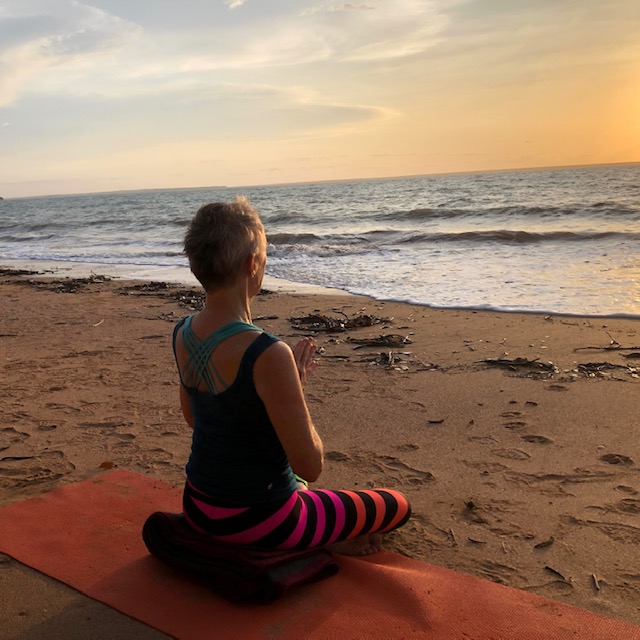
A tall, steady seat is where most breathing practice begins.
The Breath And Pranayama (13)
- The first breath should be like your meeting with a stranger for the first time. BKS Iyengar, Astadala Yogamala, volume 4, Iyengar on Pranayama
- Taste the fragrance of breath, as you taste food with the tip of your tongue. BKS Iyengar, Astadala Yogamala, volume 5, Guruji on Pranayama
- During inhalation, the breath should move exactly like clouds spreading in the sky. BKS Iyengar, Sparks of Divinity, 1971
- The ribs are the wings of the body. Open your wings. BKS Iyengar, Sparks of Divinity, 1972
- In exhalation, you become humble, whereas pride comes in inhalation. BKS Iyengar, The Tree of Yoga, Pranayama
- Nothing pertaining to pranayama can be forced. That is why it teaches humility. BKS Iyengar, Light on Life, Vitality: The Energy Body (Prana)
- You cannot catch a horse in a field by running after it. But if you stand still and hold out an apple, the horse will come to you. BKS Iyengar, Light on Life, Vitality: The Energy Body (Prana)
- Kumbhaka is not holding breath; it is holding energy. BKS Iyengar, The Tree of Yoga, Pranayama
- In kumbhaka, you should not hold the breath, but the breath should hold you. BKS Iyengar, Sparks of Divinity, 1975
- If the water gushes from the tap, the vessel cannot be filled at all to the brim. It is the same in deep breathing. BKS Iyengar, Yoga Wisdom and Practice, Pranayama and Deep Breathing
- Breathe! Don’t blow like a windmill. BKS Iyengar, Iyengar: His Life and Work, Wisdom of the Master
- Pranayama is not an exercise. Do not compare pranayama with deep breathing. BKS Iyengar, Astadala Yogamala, volume 5, Can Aerobics Replace a Purposeful Yogic Life?

Reach long through both arms in triangle pose.
- You can take comfort from the fact that however poor your own pranayama is, it can scarcely be worse than mine was for the first few years. BKS Iyengar, Light on Life, Vitality: The Energy Body (Prana)
The Mind And Meditation (20)
- Meditation is really to do everything with love… BKS Iyengar, Sparks of Divinity, 1965
- My asana is meditative… BKS Iyengar, Light on Life, The Inward Journey
- You should never allow the mind to wander. … A straight line is a difficult one, but it brings its own fruits… BKS Iyengar, Sparks of Divinity, 1972
- If closing the eyes and remaining silent is meditation, then all of us are meditating every day eight or ten hours in our sleep. BKS Iyengar, The Tree of Yoga, The Nature of Meditation
- Nowadays dhyana (meditation) has become like instant coffee. BKS Iyengar, Astadala Yogamala, volume 7, Yoga in General
- Meditation is the imitation of deep sleep in the wakeful state. BKS Iyengar, Sparks of Divinity, 1974
- Yogic meditation is not a benign somnolence or torpor. It is not placidity. A cow is placid, without practicing yoga. BKS Iyengar, Light on Life, Wisdom: The Intellectual Body (Vijnana)
- Concentration has a point of focus; meditation has no points. That is the secret. BKS Iyengar, The Tree of Yoga, Effort, Awareness and Joy
- I meditate, not sitting in a corner, but in every movement of life, in every position I perform, in every asana. BKS Iyengar, The Tree of Yoga, The Flower
- In meditation the mind is still but razor sharp, silent but vibrant with energy. BKS Iyengar, Sparks of Divinity, 1968
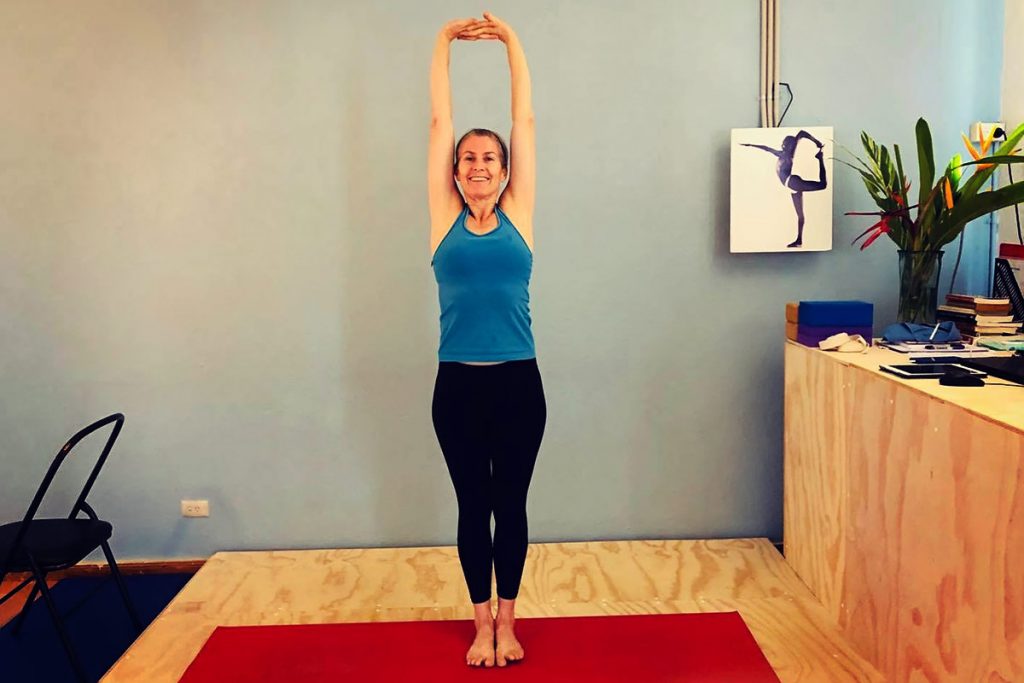
Mountain pose is the base for all the standing poses.
- In fact there is a pause of a few moments or a moment between each thought just as there is a full stop after every sentence. But these pauses go unnoticed by us. (with Geeta) BKS Iyengar and Geeta S Iyengar, Basic Guidelines for Teachers of Yoga, Theoretical Background
- Mind produces thought and image all the time, like a television with no off switch. BKS Iyengar, Light on Life, Clarity: The Mental Body (Manas)
- Have you ever noticed that when we have a problem we say, “Shh! Wait, let me think”? But what we really mean is “Shh! Wait, let me stop thinking.” BKS Iyengar, Light on Life, Clarity: The Mental Body (Manas)
- The mind can be a secret enemy and a treacherous friend. BKS Iyengar, Yoga: The Path to Holistic Health, Philosophy of Yoga
- As leaves move in the wind, your mind moves with your breath. BKS Iyengar, Light on Life, Vitality: The Energy Body (Prana)
- It is the nagging mind that expresses that yoga is hard. It is the mind that has the problem and not yoga. BKS Iyengar, Astadala Yogamala, volume 7, Is the Yogic Path Hard and Painful
- You can do everything up to it, but it happens when it happens. You can force a piano up three flights of stairs, but you cannot force the febrile human mind to be still. BKS Iyengar, Light on Life, Wisdom: The Intellectual Body (Vijnana)
- Meditation is the Olympic final for yoga. You cannot turn up half fit. All the preceding stages of yoga have served to train you up to tip-top condition. BKS Iyengar, Light on Life, Wisdom: The Intellectual Body (Vijnana)
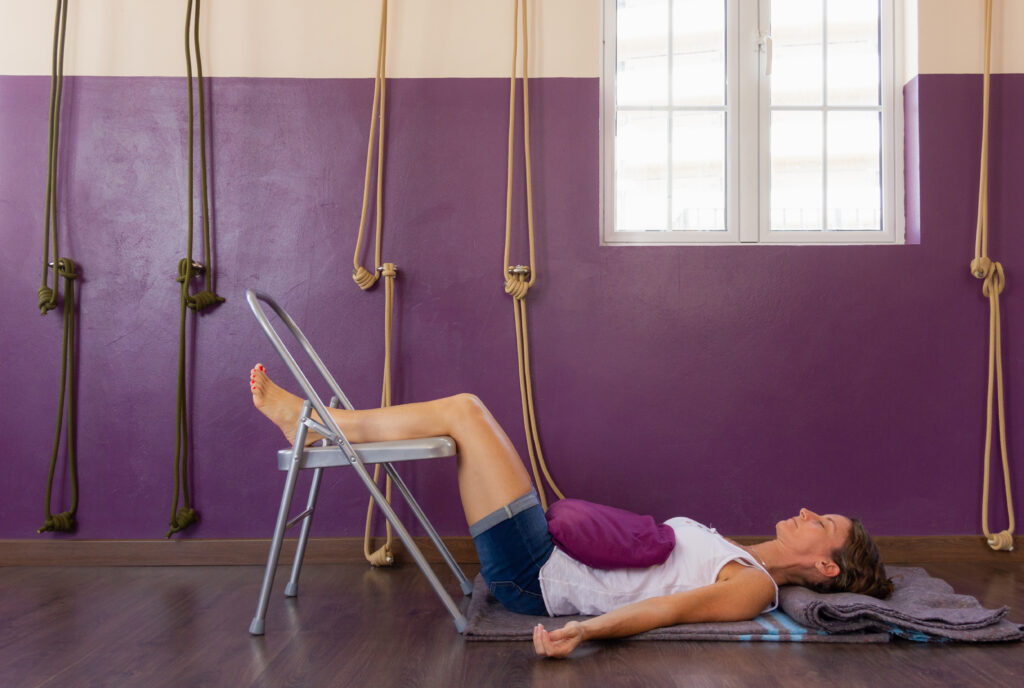
A bolster takes the effort out of resting.
- You can never do pranayama with an upset mind. BKS Iyengar, Light on Life, Vitality: The Energy Body (Prana)
- You say, Mind over matter. I say, Matter over mind. BKS Iyengar, Iyengar: His Life and Work, Wisdom of the Master
Attention And Awareness (16)
- Many people try to think their way into an asana, but you must instead feel your way into it through love… BKS Iyengar, Light on Life, Stability: The Physical Body (Asana)
- You must not seek, you must search. You must not see, you must look at. You must not hear, you must listen to. You must not touch, you must palpate. You must not smell, you must sniff. BKS Iyengar, Sparks of Divinity, undated
- The art of yoga lies in the acuity of observation. BKS Iyengar, Light on Life, Stability: The Physical Body (Asana)
- A hunter hunts in the jungle, I hunt within me. BKS Iyengar, Yoga Wisdom and Practice, A Continuing Practice
- We do not say of a deer in the forest, “Look, he’s concentrating.” The deer is in a state of total vibrant awareness in every cell of his body. BKS Iyengar, Light on Life, The Inward Journey
- Consciousness is potentially in every cell of our body, but most of us are comatose. BKS Iyengar, Light on Life, Clarity: The Mental Body (Manas)
- Take each pore of the skin for a conscious eye. BKS Iyengar, Sparks of Divinity, 1972
- Even the little toe has to work to retain its awareness. BKS Iyengar, Sparks of Divinity, 1975
- The eyes must go to the region that does not work, not to the one that does. BKS Iyengar, Sparks of Divinity, 1963

Tree pose trains balance, and a wall is always welcome.
- It is never a question of what I am doing but what am I not doing. BKS Iyengar, Sparks of Divinity, 1968
- Pupils should be self-aware, not self-conscious. BKS Iyengar, Sparks of Divinity, 1974
- The present is the perfect pose. BKS Iyengar, Sparks of Divinity, undated
- Your bodies are in the past; your minds in the future. When you do yoga, they come together in the present. BKS Iyengar, Sparks of Divinity, 1974
- An absent-mindedness is night, whereas the present-mindedness is day. You will enjoy the asanas, when you have present-mindedness. BKS Iyengar, Yoga Rahasya, Vol 5 No 4, 1998, Guru Purnima: a Talk by Yogacharya BKS Iyengar
- It is impossible, when we turn our attention to the inner movement of breath, to use our senses externally at the same time. You cannot also be thinking that you must stop at the supermarket on the way home after work. BKS Iyengar, Light on Life, Vitality: The Energy Body (Prana)
- You can’t count back from ninety-nine (diversity, multiplicity) to zero (a calm meditative state) without passing through one (concentration). BKS Iyengar, Light on Life, Wisdom: The Intellectual Body (Vijnana)
Practice (13)
- Yehudi Menuhin plays music on the violin… I play yoga asana on my body. What is the difference? BKS Iyengar, Sparks of Divinity, 1960
- I am a fanatic when I am practising. But when I finish my practice, I am just like an ordinary being. BKS Iyengar, Astadala Yogamala, volume 6, Iyengar Looks Back
- I too am a beginner from where I left my practice yesterday. I don’t bring yesterday’s poses to today’s practice. BKS Iyengar, The Tree of Yoga, The Fruit
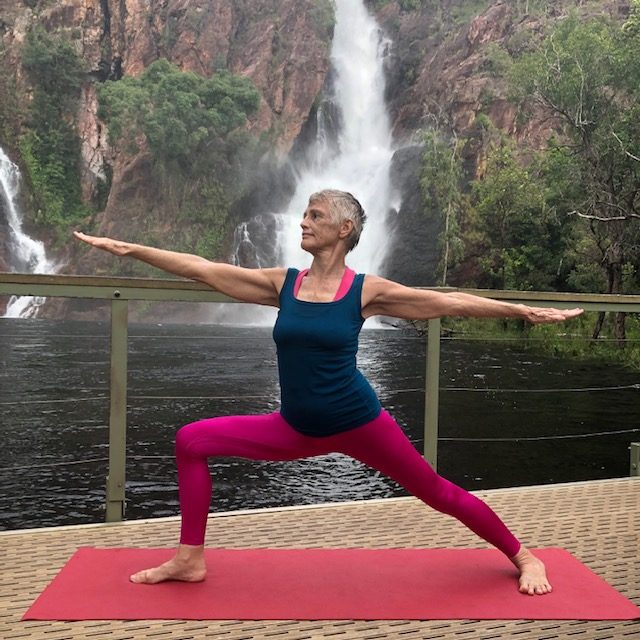
Warrior two builds leg strength and stamina.
- I am always happy with the smallest improvement. I do not try to reach Perfection but only the little perfection of every day. BKS Iyengar, Sparks of Divinity, 1959
- The maximum of what you did yesterday becomes the minimum of today. BKS Iyengar, Sparks of Divinity, 1972
- I do not feel the tiredness or monotony at all in my yogic practice. It is nothing but my love for my practice and nothing more. BKS Iyengar, Yoga Rahasya, Vol 7 No 4, 2000, Prashant-O-Scope: Insights and Words of Wisdom for Teachers
- When I practise, I am a philosopher. When I teach, I am a scientist. When I demonstrate, I am an artist. BKS Iyengar, Yoga: The Path to Holistic Health, Life and Work
- Something is better than nothing. BKS Iyengar, Yoga Wisdom and Practice, Yoga is for All
- Success will come to the person who practices. BKS Iyengar, Light on Life, Stability: The Physical Body (Asana)
- As long as you take food, you need yoga. BKS Iyengar, Yoga Rahasya, Vol 6 No 1, 1999, Questions Answered by Guruji
- The general notion is that Yoga is not intended for women. It is fallacious and it underrates the moral, intellectual, and spiritual legacies to which women are entitled as much as men. BKS Iyengar, foreword to Geeta S Iyengar, Yoga: A Gem for Women, Foreword
- Motions get you into a pose, actions refine it. BKS Iyengar, Yoga: The Path to Holistic Health, Iyengar Yoga Course
- When there is softness in the body and lightness in mind, the asana is correct. Hardness and heaviness mean the asana is wrong. BKS Iyengar, Light on Life, Stability: The Physical Body (Asana)

A forward bend with support lengthens the back of the legs.
Effort And Discipline (15)
- Every day do five or ten minutes, even if it bores you. Then you conquer the monotony, and you will succeed. BKS Iyengar, Sparks of Divinity, 1959
- I will not leave the practice of what I learned… BKS Iyengar, Yoga Rahasya, Vol 5 No 4, 1998, Guru Purnima: a Talk by Yogacharya BKS Iyengar
- It is better to do a good pose minimum than a bad pose maximum. BKS Iyengar, Light on Life, Stability: The Physical Body (Asana)
- Never go to an asana with aggressiveness. BKS Iyengar, Sparks of Divinity, 1961
- A minimum of thirty minutes a day has to be spent. Don’t say that people have no time. They can gossip on the road. BKS Iyengar, Astadala Yogamala, volume 8, Interview with the Times of India
- Do not think about having no time; then you will squeeze the time for your practices. BKS Iyengar, Sparks of Divinity, 1959

A strap lets you reach the pose without strain.
- Sometimes the body says, ‘Yes,’ and the mind says, ‘Excuse me today.’ Sometimes the mind says, ‘Yes,’ and the body, ‘Excuse me.’ I always say, ‘Let us go ahead.’ BKS Iyengar, Sparks of Divinity, 1959
- If you are practising casually, the effects too will be casual. If you practise regularly, the effects will grow subtler and subtler. BKS Iyengar, Astadala Yogamala, volume 4, Does Yoga Build Personality?
- To master an asana, you need patience and discipline. The asana will not come by making faces. BKS Iyengar, Light on Life, Stability: The Physical Body (Asana)
- If infinity seems a long way off, let us not forget that when, by an act of effortful intelligence, we remove our feet from the warm bed to the cold floor, we have taken our first step. BKS Iyengar, Light on Life, Clarity: The Mental Body (Manas)

A forward bend over a chair lets the back rest.
- Man has learnt to tame cats, dogs, serpents, lions, tigers and elephants; but he has not learnt to tame himself. BKS Iyengar, Astadala Yogamala, volume 7, Is the Yogic Path Hard and Painful
- The body must be trained to be the servant, not the master. BKS Iyengar, Sparks of Divinity, 1968
- If you say you are trying, you are not trying; it is only a mental movement. Don’t try, do it. BKS Iyengar, Sparks of Divinity, undated
- The minute you say, I am satisfied, the light is fading. BKS Iyengar, Sparks of Divinity, undated
- You must be as joyful when you fail again and again as you are joyful when you succeed. It is often when you fail that you move toward the goal without being aware of it. BKS Iyengar, Sparks of Divinity, 1963
The Body And Alignment (17)
- Extension brings space, space brings freedom, freedom brings precision… BKS Iyengar, Sparks of Divinity, undated
- The body, … should be neither neglected nor pampered. BKS Iyengar, Sparks of Divinity, 1972
- Man has landed on the moon but he has not landed in his own body. BKS Iyengar, Astadala Yogamala, volume 6, Yoga: A Way for Artful Living
- I live in the body, not in Mauritius, London, India, or South Africa. BKS Iyengar, Sparks of Divinity, 1968
- Your body is your child, look after it. BKS Iyengar, Iyengar: His Life and Work, Wisdom of the Master
- The parts of your body are your pupils. Teach them well. BKS Iyengar, Iyengar: His Life and Work, Wisdom of the Master
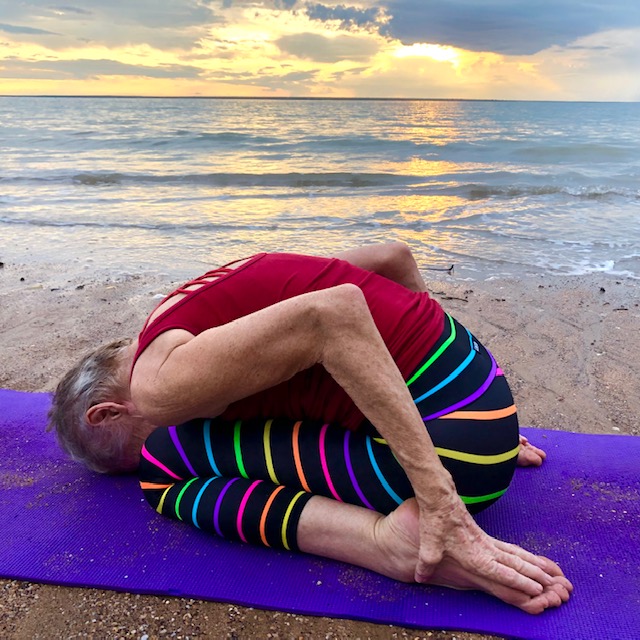
Seated forward bends lengthen the back of the legs and soothe the mind.
- The muscles are more adamant than we are. Instead of serving us they boss us about. BKS Iyengar, Astadala Yogamala, volume 5, Never Give up Hope
- Unfortunately, the thinking is in the head, but the doing is in the knee! BKS Iyengar, The Tree of Yoga, Old Age
- If the joints are hard, there is a traffic jam in our body. There should be freedom to act. BKS Iyengar, Sparks of Divinity
- Now people have only restricted movements. They don’t use their joints to the optimal level, therefore the joints are rusted. BKS Iyengar, Yoga Wisdom and Practice, The Art of Sitting
- Do you have a problem part that makes the practice difficult for you? An injured knee? A stiff back? That is your problem child. BKS Iyengar, Light on Life, Stability: The Physical Body (Asana)
- After my knee injury, I had lost Virasana, Padmasana. I got them back after 10 to 12 years of patience with efforts. BKS Iyengar, Astadala Yogamala, volume 6, Yoga: A Way for Artful Living
- Do not get discouraged. BKS Iyengar, Yoga: The Path to Holistic Health, on arthritis, p. 263
- Your brain may say, “We can do it.” But the knee may say, “Who are you to dictate to me? It is for me to say whether I can do it or not.” BKS Iyengar, Light on Life, Stability: The Physical Body (Asana)
- Correct alignment is enlightenment. It enlightens the practitioner. BKS Iyengar, Astadala Yogamala, volume 8, Interview with the Times of India
- To work a part, work the whole. BKS Iyengar, Sparks of Divinity, 1975
- Divide the body into millions of parts and then stretch; do not attempt to stretch a lump. BKS Iyengar, Sparks of Divinity, undated
- Slouching acts like a narcotic to the body. BKS Iyengar, Light on Life, Stability: The Physical Body (Asana)
- It is the spine’s job to keep the mind alert. BKS Iyengar, Light on Life, Stability: The Physical Body (Asana)
- You all overstretch the brain and understretch the body. BKS Iyengar, The Tree of Yoga, On Teachers and Teaching
- Density in bones is a virtue, but in brains it is a vice. BKS Iyengar, Light on Life, Stability: The Physical Body (Asana)
- If your body flexes like rubber, do not think you have learnt. You have to see whether the mind has reached there or not. BKS Iyengar, Yoga Rahasya, Vol 6 No 1, 1999, Questions Answered by Guruji
- Know that the brain exists in the head of man, but the mind exists everywhere in him. BKS Iyengar, Yoga Rahasya, Vol 7 No 4, 2000, Prashant-O-Scope: Insights and Words of Wisdom for Teachers

A supported backbend opens the chest and lifts the mood.
Standing Poses (7)
- The standing asanas break the tamasic, inert, lazy nature of the body and bring activeness in the practitioner. (with Geeta) BKS Iyengar and Geeta S Iyengar, Basic Guidelines for Teachers of Yoga, Sequence
- Always watch your base: Be attentive to the portion nearest the ground. Correct first from the root. BKS Iyengar, Light on Life, Stability: The Physical Body (Asana)
- Feet are like the root of a tree. If one can’t stand properly on one’s feet, one develops a negative attitude toward life, and one’s yoga too becomes unsteady. BKS Iyengar, Light on Life, Stability: The Physical Body (Asana)
- When the legs are shaky, the mind is also shaky. BKS Iyengar, Sparks of Divinity, undated
- If I were to ask you if your leg is straight in Trikonasana, you say, “I think so.” You are not sure. Your intelligence is in darkness in your leg in this asana. BKS Iyengar, Yoga Rahasya, Vol 14 No 1, 2007, Removal of the Veil of Ignorance and Arrogance
- I will sometimes assume a standing asana in front of the class, and I will tell them that what I have done is a perfect asana. Nobody can tell me it has any defect. It is perfect in appearance but dead inside; my mind is elsewhere. BKS Iyengar, Light on Life, Stability: The Physical Body (Asana)
- We get the balance, but the moment the thought arises, “Oh, wonderful, I’m doing it!” we wobble or topple. Only in stillness of mind can it be successfully maintained. BKS Iyengar, Light on Life, Clarity: The Mental Body (Manas)

Sitting on a chair keeps the pelvis steady while the spine turns.
Backbends, Inversions, Forward Bends And Twists (8)
- Inversions are not the starting point in yoga. One has to learn to stand on the legs before trying to stand on the head. BKS Iyengar, Astadala Yogamala, volume 7, Asana
- Until you know how to come down you cannot learn how to go up! BKS Iyengar, Astadala Yogamala, volume 5, Never Give up Hope
- I realised that mobility comes with backbends, but not the strength and stability. BKS Iyengar, Astadala Yogamala, volume 1, My Yogic Journey
- I said to myself that the pride of showmanship in backbends had ruined me. I humbled myself to surrender to the asana and to look within myself while doing them. BKS Iyengar, Astadala Yogamala, volume 1, My Yogic Journey
- While attempting the inversions, the fear of reversing the body position eclipses the freedom of the mind. (with Geeta) BKS Iyengar and Geeta S Iyengar, Basic Guidelines for Teachers of Yoga, Sequence
- When you are doing Paschimottanasana, when your head is down and your legs are straight, you cannot look at the world: you have to look within yourself. BKS Iyengar, Astadala Yogamala, volume 5, Never Give up Hope
- The heart faces the floor in all the forward extensions and this gives rest and helps one recover from fatigue. (with Geeta) BKS Iyengar and Geeta S Iyengar, Basic Guidelines for Teachers of Yoga, Sequence
- If standing asanas stimulate, the forward extension asanas pacify the brain. The former leads towards activity and latter towards passivity. (with Geeta) BKS Iyengar and Geeta S Iyengar, Basic Guidelines for Teachers of Yoga, Sequence

Mountain pose is the base for all the standing poses.
Props (6)
- I first used a prop in 1948 when I was not getting Baddha Konasana at all. I started using bricks, the heavy stones which were available in the street. BKS Iyengar, Astadala Yogamala, volume 4, The Search in Alignment Led Me to Experience the Inner Mind
- People called me “raving mad” when I picked up odd size stones and weights, using them for obtaining alignments and freedom in my practice which you call as props now. BKS Iyengar, Astadala Yogamala, volume 5, Can Aerobics Replace a Purposeful Yogic Life?
- My props became my guru and taught me how to use the body. BKS Iyengar, Astadala Yogamala, volume 6, Iyengar Looks Back
- Do you teach a child to run as soon as it is born? You allow the child to have support whether it can stand or not and you hold the child to take one step after the other and make the child to learn the art of walking. BKS Iyengar, Astadala Yogamala, volume 4, How to Become a Yogi?
- Props benefit in two ways; one is extension and the other is relaxation, taking place at the same time. BKS Iyengar, Yoga Wisdom and Practice, On Using Props
- The use of props stimulates the practitioner’s body and mind and creates the zeal to stay longer and longer. BKS Iyengar, Yoga: The Path to Holistic Health, Life and Work
Beginners And Stiffness (11)
- …age, flexibility are not the qualities of eligibility to do yoga. Everyone is welcome in this field. BKS Iyengar, Astadala Yogamala, volume 6, Master Unfolds the Secret of What Yoga Is
- There are no special qualities required to become a student of yoga but only regularity, determination and discipline are needed. BKS Iyengar, Astadala Yogamala, volume 8, How to Be a Good Yoga Student

Kneeling with support is kind to stiff knees.
- There is a popular misconception that yoga is only for those who have power of concentration. But all of us are not so endowed. Yoga can be practiced by anyone, whatever one’s state of mind or health. BKS Iyengar, Light on Life, Wisdom: The Intellectual Body (Vijnana)
- As beginners, our intellect is only in the brain. You must have a million eyes, all over the body. BKS Iyengar, Sparks of Divinity, undated
- When I began yoga I did not know what yoga was and my Guru was not willing to explain it when questioned. He only said: Good for your health, go ahead. BKS Iyengar, Astadala Yogamala, volume 8, From Darkness to Light
- It is better just to start, and when you have started, maintain a regular rhythm of practice. BKS Iyengar, The Tree of Yoga, Old Age
- We all have to begin yoga somewhere. Mild practice is not bad practice, and it is better to sustain what we can do than to collapse and give up. BKS Iyengar, Light on Life, Stability: The Physical Body (Asana)
- Just as a car cannot pick up speed in first gear, we require time and patience to understand the subtleties and technical requirements of asanas. BKS Iyengar, Yoga: The Path to Holistic Health, Iyengar Yoga Course
- Begin with small expectations. Restructuring muscles, bones, tissues, posture, and internal organs takes time. BKS Iyengar, Yoga: The Path to Holistic Health, Iyengar Yoga Course
- Initially, repetition is more important than duration. (with Geeta) BKS Iyengar and Geeta S Iyengar, Basic Guidelines for Teachers of Yoga, Guiding the Teachers
- Beginners show intense interest in yoga but it dies before it sprouts. BKS Iyengar, Astadala Yogamala, volume 8, Asana: Exercise

Twist from the base of the spine and keep the chest lifting.
Ageing Well (13)
- When I was young the body was very active but the mind was not willing. Today the mind is willing, but the body is not willing. BKS Iyengar, Astadala Yogamala, volume 6, Yoga: A Way for Artful Living
- Previously I used to challenge the body, now the body challenges me. BKS Iyengar, Yoga Wisdom and Practice, A Continuing Practice
- Then I was seeking. Now, I am seeing. BKS Iyengar, Yoga Wisdom and Practice, A Continuing Practice
- My practice is not changing. It is transforming. It is becoming subtler and finer. BKS Iyengar, Yoga Wisdom and Practice, A Continuing Practice
- When I was young, I played. Now I stay. BKS Iyengar, Yoga: The Path to Holistic Health, Life and Work
- I am also ageing but my yogic practice, for hours together, is very regular like the rising and the setting of the sun. BKS Iyengar, Yoga Wisdom and Practice, Yoga and Ageing
- I have not retired and never shall. I will always keep the inner fire burning. BKS Iyengar, Light on Life, Living in Freedom
- I have deliberately kept a little bit of paunch to show that a stout septuagenarian can be very agile. BKS Iyengar, Astadala Yogamala, volume 5, Moulding Life
- I ate seventy-six jalebis. While I can still stand on my head for twenty minutes, I don’t think I could still eat seventy-six jalebis. BKS Iyengar, Light on Life, Vitality: The Energy Body (Prana)
- Even as the body ages and is able to do less, there are subtleties that reveal themselves, which would be invisible to younger or more athletic bodies. BKS Iyengar, Light on Life, Stability: The Physical Body (Asana)

A wide stance opens the inner legs and calms the mind.
- It is never too late in life to practise yoga. If it were, then I should have stopped my practice long ago. BKS Iyengar, The Tree of Yoga, Old Age
- An iron gets rusted if it is not used. So also, your physiological, emotional, intellectual, mental body gets rusted. BKS Iyengar, Yoga Rahasya, Vol 9 No 2, 2002, An Interview with Guruji on Yoga Therapy
- I want every one to stand on their two feet till the last breath. Do not think of the third leg, be on two legs, and if yoga has given you that, yoga has given you plenty of joy. BKS Iyengar, Yoga Rahasya, Vol 6 No 1, 1999, Guruji’s Talk on December 14, 1998
Health, Illness And Injury (18)
- Health is firmness in body, stability in mind and clarity in thinking. BKS Iyengar, Iyengar: His Life and Work, Wisdom of the Master
- Health is a living force. Health is not static. You need not work at all if health is static. Health is motion. BKS Iyengar, Yoga Rahasya, Vol 9 No 2, 2002, An Interview with Guruji on Yoga Therapy
- Health is that state in which one can forget about the body. BKS Iyengar, Sparks of Divinity, 1968
- In health we forget our bodies; in sickness we cannot. How much simpler life would be if this were the other way round. BKS Iyengar, Light on Life, Bliss: The Divine Body (Ananda)
- If a mirror is clean, it reflects objects clearly. Health is the mirror of man. BKS Iyengar, Iyengar: His Life and Work, Wisdom of the Master
- In short, health means awareness and awareness means health. BKS Iyengar, Astadala Yogamala, volume 6, Yoga: A Way for Artful Living

A steady lunge builds strong, willing legs.
- Most people ask only from their body that it does not trouble them. BKS Iyengar, Light on Life, Stability: The Physical Body (Asana)
- Health has to be earned, not bought. BKS Iyengar, Astadala Yogamala, volume 6, Stress Busters
- We have hospitals to make the sick well again, but do we have anything except yoga to keep the healthy people healthy? BKS Iyengar, Sparks of Divinity, undated
- Pain is unbearable; a stretch is bearable. We must know if we experience a bad pain or one that gives us a nice feeling. BKS Iyengar, Sparks of Divinity, 1971
- While we must recognize the existence and importance of pain, we must not glorify it. Where pain exists, there must be a reason for it. BKS Iyengar, Light on Life, Stability: The Physical Body (Asana)
- If the practice of today damages the practice of tomorrow, it is not correct practice. BKS Iyengar, Light on Life, Stability: The Physical Body (Asana)
- It is not yoga that injures, but it is the way one does yoga that leads to injury. BKS Iyengar, Light on Life, Stability: The Physical Body (Asana)
- Too much tension is aggression. Injuries come by aggression, by doing aggressive movements, not by doing yoga. But too little tension is weakness. BKS Iyengar, Light on Life, Stability: The Physical Body (Asana)
- As we shave, it happens that we cut ourselves with the razor blade; this does not mean that we must not shave in the morning any longer. It is the same thing for yoga. BKS Iyengar, Sparks of Divinity, 1961

Inversions are practised with props and a teacher in the room.
- These injuries made me a humble disciple of yoga, a better teacher and an encouraging performer. BKS Iyengar, Astadala Yogamala, volume 7, Asana
- I have not conquered pain, it is there in my body, but I have accepted it as a natural process in my evolution. BKS Iyengar, Astadala Yogamala, volume 5, Never Give up Hope
- Asanas are not prescriptions; they are descriptions. BKS Iyengar, The Tree of Yoga, The Aim and the By-product
Teaching (15)
- If pupils come, say, “… I have someone to teach.” If pupils do not come, say, “… I am free. I can practice for myself.” BKS Iyengar, Sparks of Divinity, undated
- Teaching without practice is cheating. Then there is no difference between a teacher and a cheater. Only the order of the letters changes. BKS Iyengar, Astadala Yogamala, volume 8, Recognising a Good Yoga Teacher
- Teaching yoga is very simple, but to teach yoga in the right way is very difficult. BKS Iyengar, The Tree of Yoga, The Art of Prudence
- What you know, teach well; what you do not know, do not teach. BKS Iyengar, Sparks of Divinity, undated
- Be a guinea-pig on your own self before you play with others. BKS Iyengar, The Tree of Yoga, The Healing Art
- The master is one who knows how to come down to the level of the pupil and who knows how to go up. BKS Iyengar, Sparks of Divinity, undated
- Teachers should roar like a lion outside but be like a lamb inside. BKS Iyengar, Iyengar: His Life and Work, Wisdom of the Master

Plough pose is held with the hips lifted and the spine long.
- Your words should shoot like arrows to the part of the body you are teaching. (with Geeta) BKS Iyengar and Geeta S Iyengar, Basic Guidelines for Teachers of Yoga, Guiding the Teachers
- I will often say to a student, “Your brain is not in your body! That is why you can’t get the asana.” BKS Iyengar, Light on Life, Stability: The Physical Body (Asana)
- As a teacher, if I say ‘move’ you stay and if I say ‘stay’ you move. BKS Iyengar, Yoga Rahasya, Vol 7 No 4, 2000, Prashant-O-Scope: Insights and Words of Wisdom for Teachers
- The teacher has to watch the mental clock of each student and not the physical clock. BKS Iyengar, Yoga Rahasya, Vol 6 No 4, 1999, Guruji Answers Queries on Introducing Yoga to Children
- Everybody knows how to begin, but nobody knows how to end the class. BKS Iyengar, The Tree of Yoga, On Teachers and Teaching
- Did you come to watch your clock or to do yoga? BKS Iyengar, Sparks of Divinity, 1970
- Life cannot be always serious. Without humour, teaching cannot be fresh and it cannot easily be absorbed. BKS Iyengar, Astadala Yogamala, volume 5, Moulding Life
- I may be a martinet when you are on your feet, but I do not think I have ever woken a student from Savasana, except possibly in time to send him home. BKS Iyengar, Light on Life, Living in Freedom
Learning (17)
- A guru is one who removes darkness and gives light. BKS Iyengar, The Tree of Yoga, On Teachers and Teaching
- …You are learning by helping them. They make you understand and you must give them respect. (with Geeta) BKS Iyengar and Geeta S Iyengar, Basic Guidelines for Teachers of Yoga, Guiding the Teachers

Strong legs and a calm face are the aim in standing poses.
- We are always beginners from the point where we get a new point. BKS Iyengar, Iyengar: His Life and Work, Wisdom of the Master
- The beginning of humility is to say, I know nothing, even about the first pose. BKS Iyengar, Sparks of Divinity, undated
- The moment you say, “I have got it,” you have lost everything you had. As soon as something comes, you have to go one step further. BKS Iyengar, Light on Life, Stability: The Physical Body (Asana)
- In semi-retirement I just want to remain in studentship. BKS Iyengar, Yoga Wisdom and Practice, A Day in the Life
- Learning can be acquired, but wisdom must be earned. BKS Iyengar, Sparks of Divinity, undated
- In Light On Yoga, I have given 6 years to master all the asanas with intense practice. If you ask me today when I am more mature than when I wrote the book, I would say add one zero to that six. BKS Iyengar, Yoga Rahasya, Vol 6 No 1, 1999, Questions Answered by Guruji
- Now, as a mature man, I realize I should have divided the course into 900 weeks. BKS Iyengar, Yoga Wisdom and Practice, Yoga is for All
- Asana was my school and university, pranayama was where I earned my doctorate BKS Iyengar, Light on Life, Bliss: The Divine Body (Ananda)
- If you learn a lot of little things, one day you may end up knowing a big thing. BKS Iyengar, Light on Life, The Inward Journey
- Repeated mistakes become habits. BKS Iyengar, Iyengar: His Life and Work, Wisdom of the Master
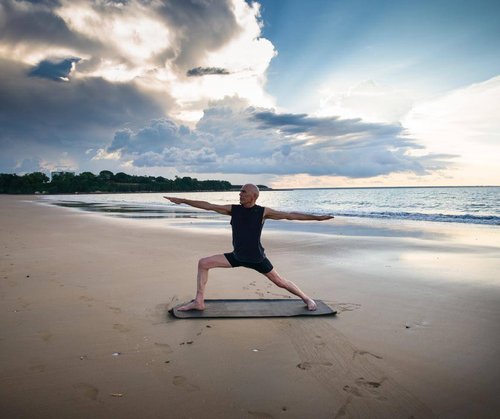
Warrior two builds leg strength and stamina.
- A real mirror permits us to see ourselves as if from outside, therefore to notice what we could not otherwise see, food stains on our ties for example. BKS Iyengar, Light on Life, Clarity: The Mental Body (Manas)
- An opinion is yesterday’s right or wrong knowledge warmed up and re-served for today’s situation. BKS Iyengar, Light on Life, Wisdom: The Intellectual Body (Vijnana)
- Prejudice means making up your mind before you look. BKS Iyengar, Light on Life, Wisdom: The Intellectual Body (Vijnana)
- Hearsay is not knowledge. BKS Iyengar, Sparks of Divinity, 1974
- We are like a man who has put his shirt on inside out and back to front. The only way he can rectify his error is to take it off, work out how it should be, and start again. BKS Iyengar, Light on Life, Bliss: The Divine Body (Ananda)
Life And Happiness (19)
- While others are asleep when duty calls and wake up only to claim their rights, the yogi is fully awake to his duty, but asleep over his rights. BKS Iyengar, Light on Yoga, What is Yoga?
- …If each one of us is true to our own selves, then everything is possible. BKS Iyengar, Astadala Yogamala, volume 6, Iyengar Looks Back
- I used the tool of disappointment as an appointment for a new assignment. BKS Iyengar, Astadala Yogamala, volume 8, From Darkness to Light
- The circumstances of life are there for our evolution, not for our destruction. BKS Iyengar, The Tree of Yoga, Individual and Society
- Love, labor, and laugh. BKS Iyengar, Sparks of Divinity, 1974
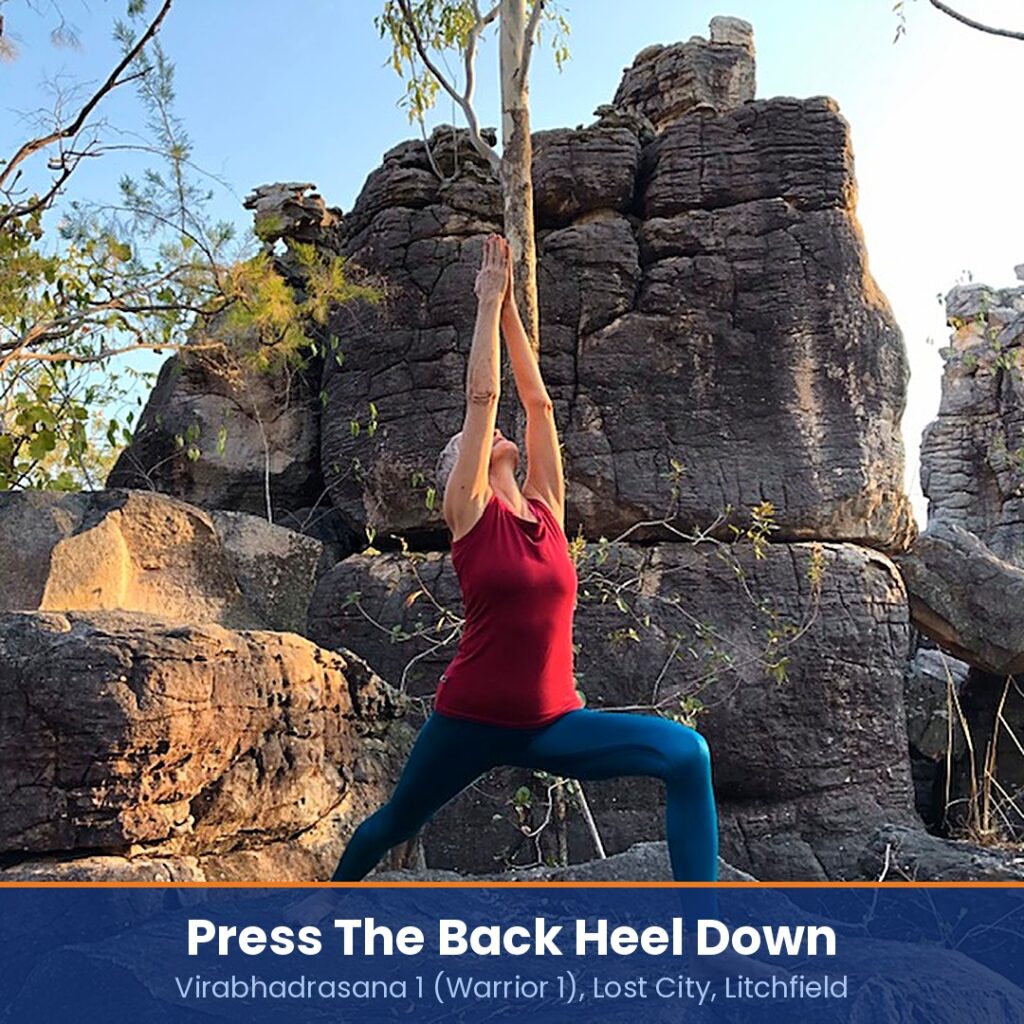
Warrior one builds strong legs and opens the chest.
- For one man a meal is slight; for another it is a feast. Life is the same way. The fewer our demands on life, the greater is our ability to see its bounty. BKS Iyengar, Light on Life, Vitality: The Energy Body (Prana)
- The correct attitude to our “possessions” is gratitude, not ownership. BKS Iyengar, Light on Life, Bliss: The Divine Body (Ananda)
- Giving does not impoverish and withholding does not enrich. BKS Iyengar, Yoga: The Path to Holistic Health, Life and Work
- Compassion is the recognition of sameness, of kinship with others. BKS Iyengar, Light on Life, Vitality: The Energy Body (Prana)
- Balance in the body is the foundation for balance in life. BKS Iyengar, Light on Life, Stability: The Physical Body (Asana)
- We all have presence of mind when everything goes well, but we need to have presence of mind when something goes wrong. BKS Iyengar, Light on Life, Stability: The Physical Body (Asana)
- In a healthy organism, feelings should pass like clouds over the sun. When feelings get anchored by thought into our memory, they become emotions, which are no longer related to the moment but to the past. BKS Iyengar, Light on Life, Vitality: The Energy Body (Prana)
- Look at your dog. When you leave him, he is sad; his heart is on the ground. When you come home, is there resentment? No, he is overjoyed to see you. Are you closer to reality or is your dog? BKS Iyengar, Light on Life, Vitality: The Energy Body (Prana)
- Our consciousness increasingly becomes what we feed it. BKS Iyengar, Light on Life, Clarity: The Mental Body (Manas)

A chair makes many poses safe and easy to reach.
- I am not hard like iron, but hard like a diamond. BKS Iyengar, Light on Life, Stability: The Physical Body (Asana)
- I believe in the perfection of the yogic system as a vehicle to enlightenment. I also support the Indian cricket team. BKS Iyengar, Light on Life, Living in Freedom
- Freedom to a child often means the liberty to eat ice cream until he is sick or to stay up watching television till midnight. BKS Iyengar, Light on Life, Living in Freedom
- Cheats always lose. BKS Iyengar, Light on Life, Living in Freedom
- For them food comes first and then yoga. For me, it is yoga first, then food. BKS Iyengar, Yoga Wisdom and Practice, Yoga and Diet
Fear And Courage (14)
- To master fear is the most important battle to win. BKS Iyengar, Sparks of Divinity, 1962
- Do not be afraid. Do not be attached to your body. Even if fear comes, accept it and find the courage to come through it. BKS Iyengar, Light on Life, Stability: The Physical Body (Asana)
- Forget about fear. You may only fall on the floor, not beyond. In the future there is fear. In the present there is no fear. BKS Iyengar, Light on Life, Vitality: The Energy Body (Prana)
- Fright should descend; confidence should ascend. BKS Iyengar, Sparks of Divinity, undated
- Fear and fatigue block the mind. Face both, then courage and confidence flow into you. BKS Iyengar, Iyengar: His Life and Work, Wisdom of the Master
- Freedom is about dropping the shackles of fear and desire. BKS Iyengar, Light on Life, Vitality: The Energy Body (Prana)
- The presence or absence of intelligence is shown when you face insecurity. Security lies in insecurity. BKS Iyengar, Sparks of Divinity, 1968

Standing poses build strength, balance and confidence.
- Use caution and be bold. BKS Iyengar, Iyengar: His Life and Work, Wisdom of the Master
- You have to take a chance, then balance comes. BKS Iyengar, Iyengar: His Life and Work, Wisdom of the Master
- If there is no wind in our sails, the only way out is to row. BKS Iyengar, Light on Life, Stability: The Physical Body (Asana)
- In your discipline, if doubt comes, let it come. You do your work and let doubt carry on with its work. And let us see which gives up first! BKS Iyengar, Sparks of Divinity, 1968
- Show courage at the time of doubt; do not take risks if you are in doubt. (with Geeta) BKS Iyengar and Geeta S Iyengar, Basic Guidelines for Teachers of Yoga, Guiding the Teachers
- If the students are afraid to do the asana, then you may just ask them to do the first step of it. Build up courage in the student. (with Geeta) BKS Iyengar and Geeta S Iyengar, Basic Guidelines for Teachers of Yoga, Guiding the Teachers
- Bring in refinement later. Your presentation gives them courage to break their limitations. (with Geeta) BKS Iyengar and Geeta S Iyengar, Basic Guidelines for Teachers of Yoga, Guiding the Teachers
Relaxation, Rest And Sleep (13)
- Savasana is just a pause between passive and active life. BKS Iyengar, Astadala Yogamala, volume 7, Asana
- Savasana is not simply lying on one’s back with vacant gaze or flopping on a foam-rubber mattress. Nor should Savasana end in snoring. BKS Iyengar, Iyengar: His Life and Work, The Art of Relaxation
- But Savasana is not about falling asleep. If it were, Savasana would hardly be a difficult pose. BKS Iyengar, Light on Life, Living in Freedom
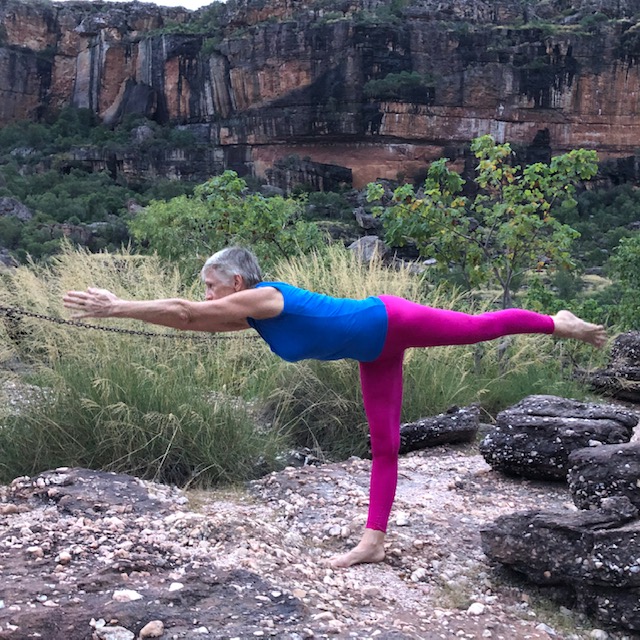
Half moon builds balance, leg strength and trust.
- Savasana is being without was, being without will be. BKS Iyengar, Light on Life, Living in Freedom
- If I say, “Relax your brain,” you cannot do it. If I put you in a certain asana, your brain relaxes, and you become quiet. This is the beauty of yoga. BKS Iyengar, Light on Life, Vitality: The Energy Body (Prana)
- One who knows the art of relaxation, also knows the art of meditation. BKS Iyengar, Iyengar: His Life and Work, Wisdom of the Master
- Do not clench your teeth or you will also be “clenching” your brain. BKS Iyengar, Light on Life, Stability: The Physical Body (Asana)
- Tensions are not stretches. If the stretching is good, relaxation is bound to be complete. A half-hearted stretch gives a half-hearted relaxation. BKS Iyengar, Sparks of Divinity, 1959
- If one stretches completely, one relaxes completely. Look at a cat, a master of stretching and a master of relaxation. BKS Iyengar, Light on Life, Stability: The Physical Body (Asana)
- In every pose there should be repose. BKS Iyengar, Light on Life, Stability: The Physical Body (Asana)
- By living each day presently and thoroughly, we earn a clear conscience. A clear conscience is the best preparation for a restful and peaceful night. BKS Iyengar, Light on Life, Wisdom: The Intellectual Body (Vijnana)
- If we toss and turn at night, we shall toss and turn in the day. BKS Iyengar, Light on Life, Wisdom: The Intellectual Body (Vijnana)
- Good sleep makes consciousness brilliant. Poor sleep leaves it tarnished. BKS Iyengar, Light on Life, Wisdom: The Intellectual Body (Vijnana)
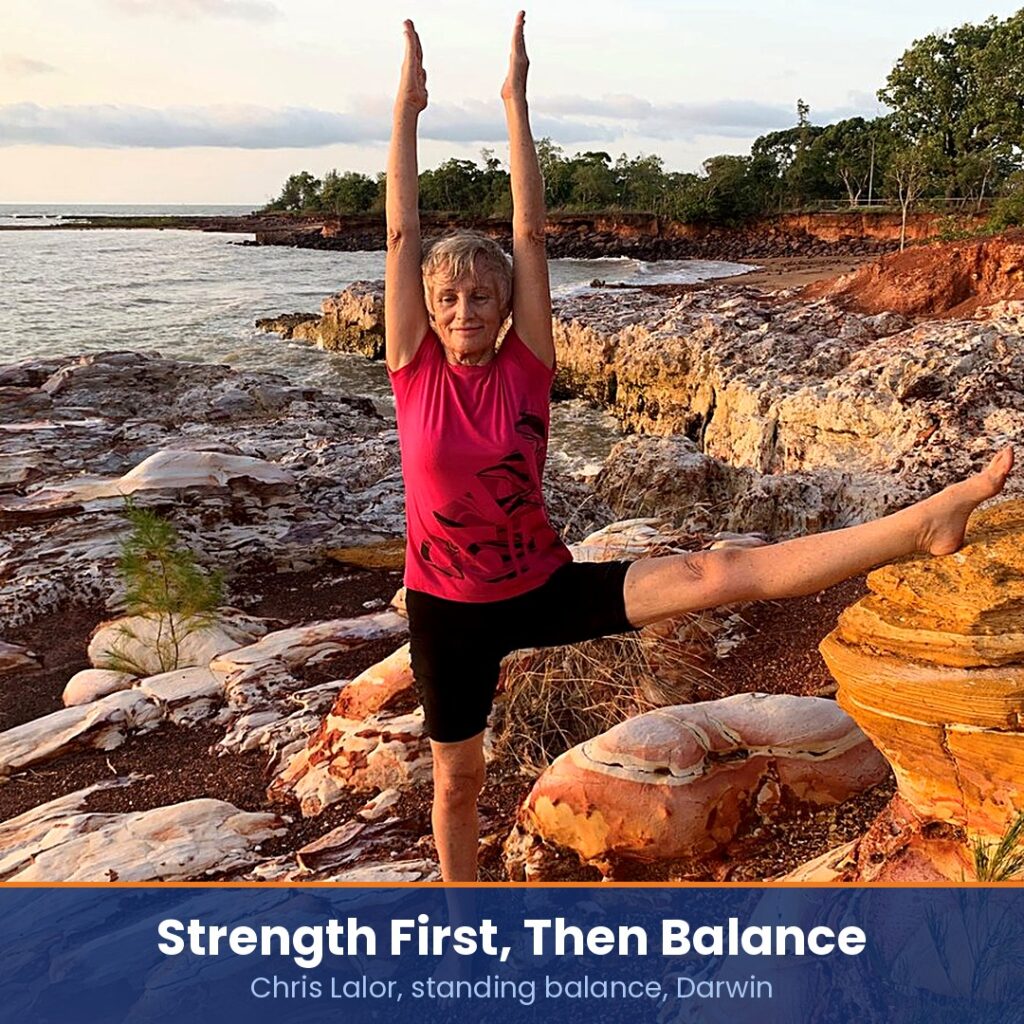
Standing balance builds steadiness in the feet and ankles.
Stress (16)
- …They are human emotions that we will feel whether we want to or not. Suppression does not work. BKS Iyengar, Light on Life, Vitality: The Energy Body (Prana)
- Mental peace is achieved only when you love for the sake of love… BKS Iyengar, Yoga Rahasya, Vol 4 No 2, 1997, Guruji Answers Queries on Stress and Fatigue
- We cannot eliminate stress and tension from our lives. That is not the point. Life is of itself stressful. BKS Iyengar, Light on Life, Vitality: The Energy Body (Prana)
- There is nothing in this world free from stress until death. Rather than asking, “Can I be completely free from stress?” we must ask, “What is the degree of stress?” BKS Iyengar, Light on Life, Vitality: The Energy Body (Prana)
- A positive stress is a life elixir. BKS Iyengar, Astadala Yogamala, volume 3, Yoga De-stresses the Stress
- Meditation is not going to remove stress, my friend. Meditation is only possible when one is in a stress-less state. BKS Iyengar, Astadala Yogamala, volume 5, Never Give up Hope
- The main causes of negative stress are anger, fear, speed, greed, unhealthy ambition, and competition. BKS Iyengar, Light on Life, Vitality: The Energy Body (Prana)
- Rushing saps the strength, whether you are in Delhi or New York. Do things rhythmically with a calm mind. BKS Iyengar, Light on Life, Stability: The Physical Body (Asana)
- The diaphragm is the window of the self. The more tension you have, the more the window of the diaphragm gets closed. BKS Iyengar, Astadala Yogamala, volume 4, The Search in Alignment Led Me to Experience the Inner Mind
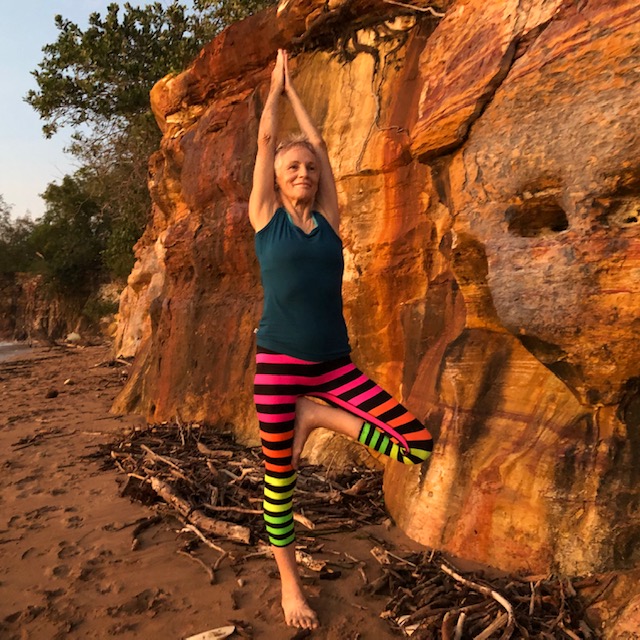
Tree pose trains balance, and a wall is always welcome.
- After all, our nerves are liquid semiconductors, and they do not react well to wild fluctuations of current any more than your computer would. You have to tame your breath to tame your brain. BKS Iyengar, Light on Life, Vitality: The Energy Body (Prana)
- Where’s the time to hark back and talk and listen to your own body and mind? BKS Iyengar, Astadala Yogamala, volume 5, Can Aerobics Replace a Purposeful Yogic Life?
- So when our boss is on holiday, we carry on hating him. This does not harm him, but it certainly pollutes and poisons us. It is both a blockage and a dissipation of our vital energies. BKS Iyengar, Light on Life, Vitality: The Energy Body (Prana)
- Does it do any good? Do you feel better for letting your serenity be so easily shattered? Does blaming the other driver restore your peace of mind? No. BKS Iyengar, Light on Life, Clarity: The Mental Body (Manas)
- The practice of yoga teaches us to deal with each task in the day as it arises, and then to put it down. BKS Iyengar, Light on Life, Wisdom: The Intellectual Body (Vijnana)
- A stable mind is like the hub of a wheel. The world may spin around you, but the mind is steady. BKS Iyengar, Light on Life, Wisdom: The Intellectual Body (Vijnana)
- Don’t go to bed with tomorrow’s pressure of work. Whatever you have to do, you have to do it, so why worry about the matter? BKS Iyengar, Sparks of Divinity, 1959
Philosophy, The Sutras And The Ego (21)
- Is there American electricity or Russian cancer or European tuberculosis? Yoga is for all men, women, and children, irrespective of race, color, sex, language… BKS Iyengar, Sparks of Divinity, 1973
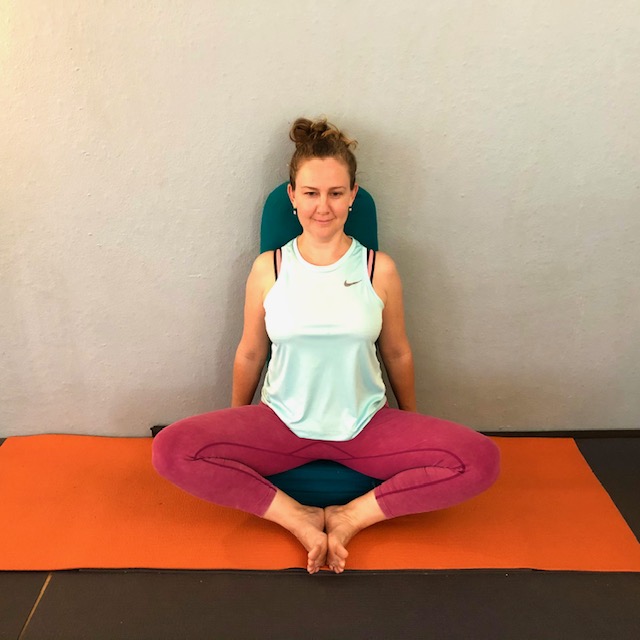
Bound angle pose with support opens the hips without strain.
- …It makes a human being a better human being. BKS Iyengar, Astadala Yogamala, volume 6, Master Unfolds the Secret of What Yoga Is
- In short, yoga is the union of the body with the mind, and mind with the self… BKS Iyengar, Astadala Yogamala, volume 4, Interview by German TV
- There is no I, no you, no self when you are in the correct asana. BKS Iyengar, Yoga Rahasya, Vol 9 No 3, 2002, Yogacharya BKS Iyengar on Spirituality
- …to stick to ethics is our duty. BKS Iyengar, 70 Glorious Years of Yogacharya BKS Iyengar, Interview of Guruji by the Teenagers
- You people! You say that Iyengar yoga is only physical! But where is the spiritual person who does not have a body? Show me that person! Where is he standing? BKS Iyengar, Astadala Yogamala, volume 6, Iyengar Looks Back
- People say that yoga is a spiritual subject. I say it is a physical, physiological, physio-neurological, neuro-psychological and psycho-spiritual subject. You cannot separate them at all. BKS Iyengar, Astadala Yogamala, volume 6, Iyengar Looks Back
- If you say you are your body, you are wrong. If you say you are not your body, you are also wrong. BKS Iyengar, Light on Life, Stability: The Physical Body (Asana)
- Like anatomy, yoga is a practical science dealing with human development. There is no question of miracles. BKS Iyengar, Sparks of Divinity, 1973
- People speak about philosophy because they have read books. Philosophy is a way of living, not something to study. BKS Iyengar, Sparks of Divinity, 1959
- Yoga might have had its origins in India, but it belongs to everybody. BKS Iyengar, Astadala Yogamala, volume 5, The Latest News of the Most Ancient Science – Yoga
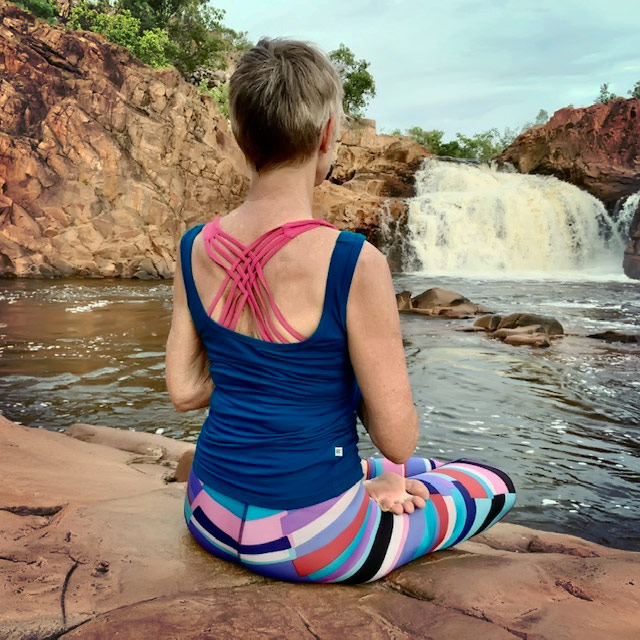
A steady, upright seat comes first, before any breathing practice.
- I never wanted my pupils to call my method Iyengar yoga. Yet they continue to do so. For me, yoga is yoga. BKS Iyengar, Astadala Yogamala, volume 6, Yoga Practice Needs Will Power and Discriminative Power
- Iyengar Yoga is not a brand. It is a quality. BKS Iyengar, Yoga Rahasya, Vol 7 No 4, 2000, Prashant-O-Scope: Insights and Words of Wisdom for Teachers
- Ego has been compared to the filament in a light bulb, which, because it glows with light, proclaims itself to be the light’s source, electricity. BKS Iyengar, Light on Life, Clarity: The Mental Body (Manas)
- It is me, me, me by means of my, my, my. BKS Iyengar, Light on Life, Living in Freedom
- Ego is on an elastic and will always pull you back. BKS Iyengar, Light on Life, Living in Freedom
- Pride is a smear of dirt on the mind. BKS Iyengar, Astadala Yogamala, volume 7, Asana
- If overstretching comes from a swollen ego, then understretching results from a lack of confidence. If overstretching is exhibitionism, understretching is escapism. BKS Iyengar, Light on Life, Stability: The Physical Body (Asana)
- Virtue is an ideal. Integrity is a reality. BKS Iyengar, Light on Life, Vitality: The Energy Body (Prana)
- We should not use truth as a club with which to beat other people. BKS Iyengar, Light on Life, Living in Freedom
- If our house is gloomy because the windows are dirty, we don’t say there is a problem with the sun; we clean the windows. BKS Iyengar, Light on Life, Wisdom: The Intellectual Body (Vijnana)

Cobra lifts the chest while the hands press firmly into the floor.
From class notes
8 class notes record what Mr Iyengar taught, as summarised by students who took notes in class. They are the note-takers’ wording, not exact words, so they are not shown as quotes. Each links to its explanation on a topic page.
The Mind And Meditation (1)
Standing Poses (1)
Beginners And Stiffness (1)
- Mr Iyengar taught that objectively you do yoga, but subjectively you are equal to beginners. Pune, 1997
Ageing Well (1)
- Mr Iyengar taught that the self has no age, so the mind has to be cultured to face life. London, 1985
Health, Illness And Injury (1)
Teaching (1)
Life And Happiness (1)
Stress (1)
Related pages
- All the Iyengar quotes, by topic
- Geeta S Iyengar quotes
- Prashant S Iyengar quotes
- Our longer note on Mr Iyengar and Light on Yoga
- Yoga philosophy and Iyengar yoga: our notes
Frequently asked questions
What are some well-known BKS Iyengar quotes?
Lines that people often share include “Health has to be earned, not bought”, “Love, labor, and laugh” and his picture of the horse that comes to you when you stand still with an apple. Every quote on this page links to a plain-English explanation.
Which books did Mr Iyengar write?
His first book was Light on Yoga, with the poses photographed in 1961. The books quoted here include Light on Life, The Tree of Yoga, Yoga Wisdom and Practice and Yoga: The Path to Holistic Health, plus his collected talks in Astadala Yogamala.
Where did Mr Iyengar teach?
He moved to Pune in 1937 to teach yoga, and Pune became his home. The institute named after his wife Ramamani opened there in 1975. He also taught abroad, first travelling to America in 1956.
Did Mr Iyengar use props himself?
Yes. He first used a prop in 1948, when he could not get into Bound Angle Pose and used bricks from the street. Props such as belts, blocks, chairs and wall ropes became a key part of how Iyengar yoga is taught.
Practise this at Flametree
Your first class is free if you’re new to Flametree. New students, and anyone who has been away three months or more, can also get a half price 10 class pass, in the studio or LIVE online.
- Beginners: see the half price 10 class pass for new and lapsed students
- Already done some yoga: see the half price 10 class pass for new and lapsed students
- See the timetable, including online classes
Can’t make a class? Practise at home with our video courses.
Flametree Yoga Studio teaches Iyengar yoga in Darwin and LIVE online. This page is general information, not medical advice. The quotes are short credited extracts; each credit names the source. Further reading: Mr Iyengar on Wikipedia.
Last updated 1 November 2026
