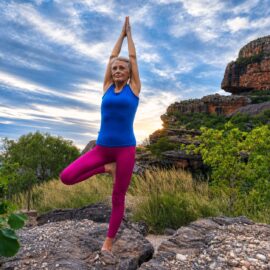
Yoga For Anxiety, And Breathing Exercises For Anxiety That Help
Yoga for anxiety: the short answer
Yoga for anxiety has good research behind it, and breathing is a big part of why. A 2018 review of randomised trials (studies where people are put into groups by chance) found yoga eased anxiety by a moderate amount in people with raised anxiety, compared with no treatment. A 2025 review found slow yogic breathing, or pranayama, eased symptoms too, and that fast breathing caused more side effects than slow breathing. So yoga helps with anxiety, and the breathing exercises for anxiety that work best are slow ones. Here is the article in short form.
Yoga for anxiety in short form
- Yoga for anxiety eased symptoms by a moderate amount in a 2018 review.
- In diagnosed anxiety disorders, yoga beat control groups in a 2023 review.
- In a 2021 trial, yoga beat stress education for anxiety.
- Slow breathing exercises for anxiety help; fast ones need care.
- Four breathing practices we teach, and how to start safely.
- Perimenopause anxiety also eased in a 2025 menopause review.
- Calming poses we teach: Legs Up The Wall and Supported Bridge.
- Classes run in Darwin and LIVE online, and the first one is free.
Iyengar yoga is the style developed by Mr BKS Iyengar. In the 20th century he did more than anyone to set down traditional Indian yoga, through his books and his teaching, and he pioneered the use of props. It is sometimes called modern classical yoga, and it is the style we teach at Flametree. This note sits in our Stress And Sleep notes.
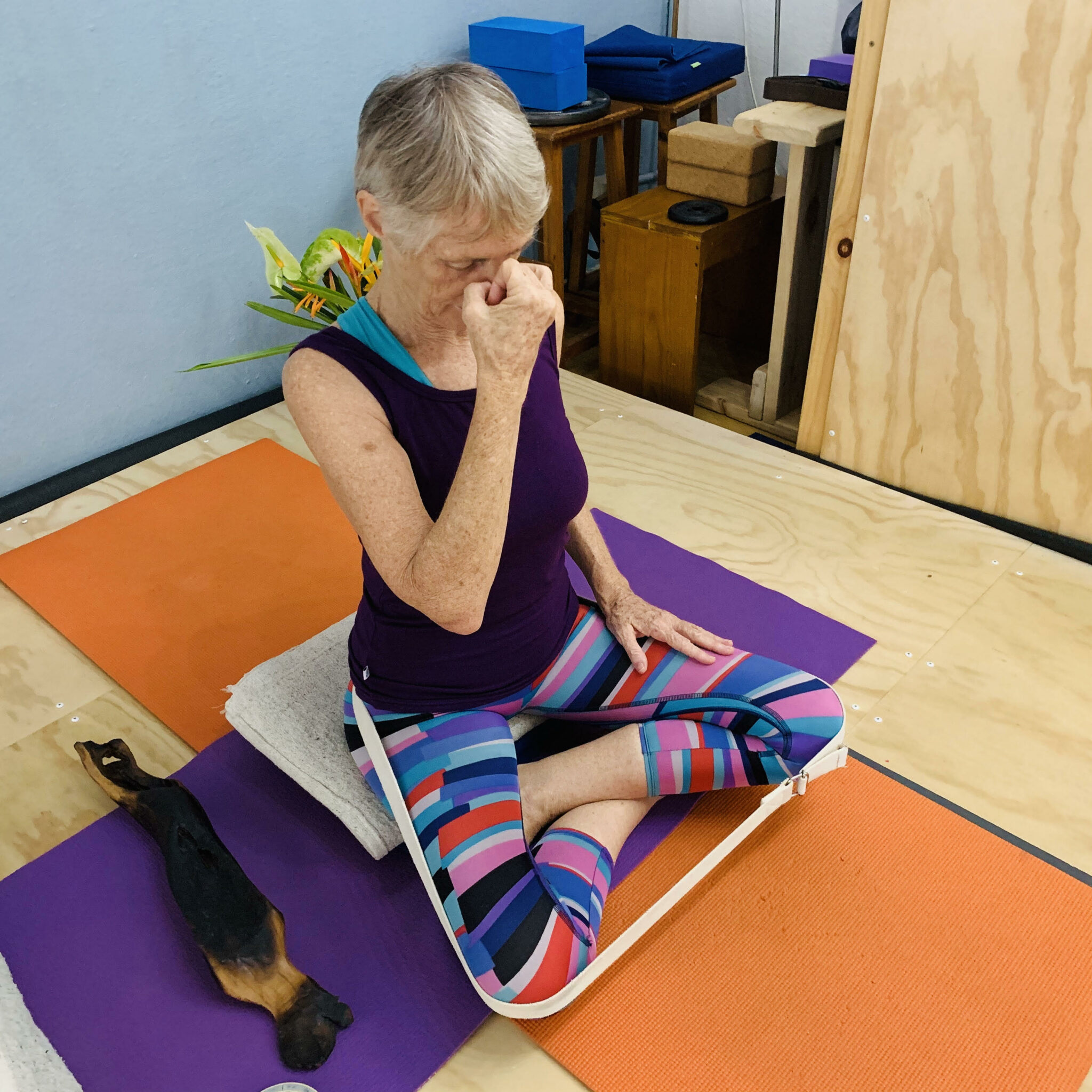
Breathing exercises for anxiety, done sitting on a chair: alternate nostril breathing (Nadi Shodhana), one of the slow practices taught at Flametree.
Free ebook: Cutting Stress With Yoga. Stress, worry and sleep: Chris’s own story, what the trials show, and why yoga and breath work deliver.
New to Flametree, or away 3 months or more? 2 free classes + 2 ebooks, only available via this offer. Already a student? You can still get this book. Get your free copy of Cutting Stress With Yoga
Why anxiety matters, and why it is personal for us
Chris Lalor, Flametree’s senior teacher, remembers watching her mother’s world shrink as anxiety took hold in later life. The freeway from Geelong to Melbourne became out of the question. Her mother and partner would take the longer back roads instead, because the unfamiliar route felt too much.
Chris’s own experience was different. She started yoga in her late 30s, and she puts her calm path through perimenopause down to her regular yoga and pranayama practice. It is why we take anxiety seriously.
Dr Timothy McCall’s poster “117 Health Conditions Helped by Yoga (as found in scientific studies as of June 2019)” lists anxiety first among the more common conditions, along with panic disorder, performance anxiety and PTSD further down. Here is where the research stands now.

Supported rest is the heart of a restorative practice.
How Chris manages her own anxiety, day to day
Daily yoga and breath meditation keep it in its box, and she notices quickly when she skips them. In Chris’s words:
“My dear mother worried too much. It was hard on her, and almost as hard on the rest of us. She also passed a lot of it on to me. A while ago I noticed my eyes were feeling scratchy again, and my eye doctor put it down to stress.”
“Each day I manage it with yoga. If I don’t, it’s dramatically worse. When I do a decent session of yoga and breath meditation each day, the anxiety drops to a level where it is not an issue for me. Even after so many years, I’m surprised by how much it can change from day to day. If I miss my practice, I feel more anxious almost straight away. Then I just get back on my mat in some of the easy, calming poses, and the anxiety goes back in its box. I do the same when I can’t sleep.”
It is why Flametree runs gentle, restorative and breath meditation classes, and why even simple beginner poses are taught with calm in mind.

A supported rest over a bolster. Easy poses like this are the ones Chris goes back to when anxiety rises, or when sleep will not come.
How common is anxiety in Australia?
About one in six Australians aged 16 to 85, roughly 3.4 million people, had an anxiety disorder in the past year, according to the Australian Bureau of Statistics National Study of Mental Health and Wellbeing 2020 to 2022. It is more common in women: 21.1% of women, compared with 13.3% of men.
Chris has also noticed that her posts about anxiety get fewer likes and comments than almost anything else she writes. Many people still feel it is too private to talk about. If that is you, you are far from alone, and a quiet class is an easy place to start.
What Chris and her students say about learning to breathe
Chris has described her own anxiety as “some form of high functioning anxiety”. She says that if it did not include functioning highly, she probably would not even talk about it, and that the stigma around anxiety makes it unspeakable for many people.
Students tell her that breathing takes time to learn. After one class, a student said to her: “I never realised that all the different breathing techniques had such different effects on my mental state. I find I need your help, and sufficient classes, to ease me into it.”
That is why we teach breathing in steps, with a teacher, before you use it alone at home.

A gentle seated twist is a safe place to start.
What does the research say about yoga for anxiety?
- Cramer 2018, Depression and Anxiety. A review of randomised trials. In people with raised anxiety, yoga reduced anxiety by a moderate amount compared with no treatment, and by more than several active comparisons. (Cramer 2018).
- Martinez-Calderon 2023, British Journal of Sports Medicine. 23 studies. Yoga did better than control groups for anxiety in people with anxiety disorders (Martinez-Calderon 2023).
- Simon 2021, JAMA Psychiatry. 226 adults with generalised anxiety disorder. After 12 weeks, 54% responded to Kundalini yoga and 33% to stress education. A talking therapy group (CBT) reached 71% (Simon 2021).
- Wang 2025, International Journal of Nursing Studies. 24 trials in women at menopause. Yoga improved anxiety, low mood and sleep as well as overall menopause symptoms (Wang 2025).
- Michalsen 2005, Medical Science Monitor. According to PubMed, 24 women who felt emotionally distressed (average age 38) took part. Sixteen joined three months of Iyengar yoga, two 90-minute classes a week, and eight waited as a comparison group. The yoga group improved more on perceived stress and anxiety. (Michalsen 2005 on PubMed).
- Hoge 2023, JAMA Psychiatry. According to PubMed, 208 adults with a diagnosed anxiety disorder completed this trial. After 8 weeks, a mindfulness-based stress reduction course did about as well, on average, as the medicine escitalopram. This tested a mindfulness course (Hoge 2023).
What the yoga for anxiety research means for you
In plain words: yoga helps many people feel less anxious, and it is well worth adding to your week.
Always follow the directions of any doctor you are consulting. Feel free to check with your professional advisers if you wish, but also give yoga a try.
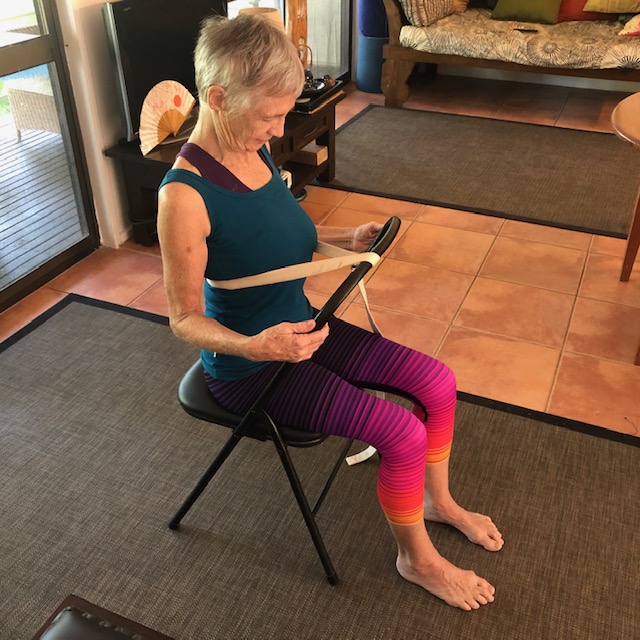
Pranayama for anxiety does not need a cross-legged seat. A chair and a belt let the spine lift so the breath can slow.
Breathing exercises for anxiety: what the research says
Breathing is the part of yoga you can take anywhere, and the research on it is growing.
- Mütze 2025, Frontiers in Psychiatry. 6 trials, 517 people with mental health conditions. Pranayama eased symptoms compared with no extra treatment, and did as well as standard care. Side effects were more common with fast breathing than with slow breathing (Mütze 2025).
- Fincham 2023, Scientific Reports. 20 trials measured anxiety. Breathwork lowered anxiety by a small amount compared with no breathwork (Fincham 2023).
- Laborde 2022, Neuroscience and Biobehavioral Reviews. 223 studies. Slow breathing raised heart rate variability (a sign the calming side of the nervous system is working), during a session and after training (Laborde 2022).
The message is consistent: slow and gentle works; fast and forceful needs care, especially if you are anxious.
Four breathing exercises for anxiety we teach
These are taught in Flametree’s pranayama (breath meditation) classes. Learn them with a teacher first, then use them at home.
- Watching the breath. Lie on your back with the chest supported on a folded blanket. Simply notice the breath for a few minutes without changing it.
- Victorious Breath (AKA Ocean Breath, Ujjayi). A slow, smooth breath with a soft sound in the throat. Make the out-breath a little longer than the in-breath.
- Interrupted Breath (AKA Staircase breathing, Viloma). The out-breath is taken in two or three small steps with short pauses, which teaches control without strain.
- Humming breath (Bhramari). A soft hum on each out-breath. Many students find it quietens a racing mind quickly.
Alternate nostril breathing (Nadi Shodhana) comes later, once these are steady. Fast practices such as skull-shining breath (Kapalabhati) are not the place to start if you are anxious.
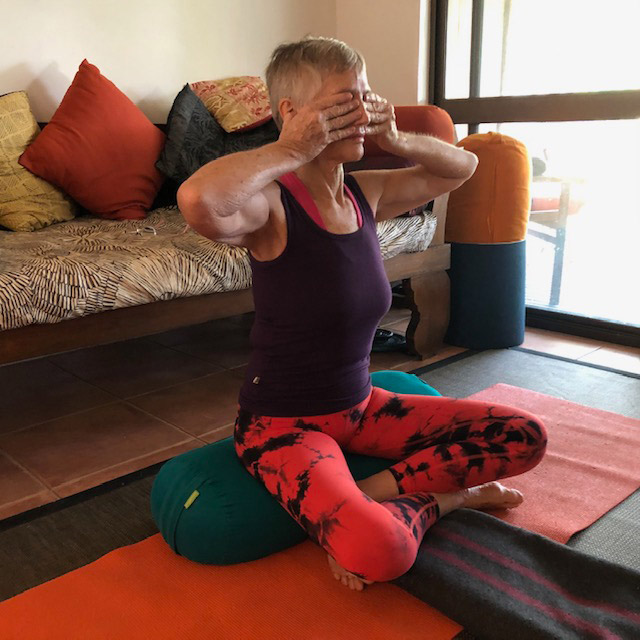
Humming breath (Bhramari). The fingers gently close the ears and eyes, and the out-breath becomes a soft hum.
How can you start to befriend your breath at home?
Think of your breath as a good friend: there in the good times, and still there when things get tough. When we are anxious the breath often turns quick and choppy, and when we are calm it is smoother and more rhythmic. Chris suggests four small steps.
- Watch your breath in different poses. In a restful pose, does the in-breath or the out-breath get longer? In a forward bend, does the out-breath lengthen? In a chest-opening backbend, does the in-breath? Then ask how you feel after each kind of pose.
- Take your time, because every day is different. Some days a forward bend settles you. On other days, when you feel anxious and flat, a backbend may be what lifts your spirits.
- Choose poses that help you relax. Use props, and include a good share of restful poses in every practice, such as supported forward bends, Supported Bridge, Legs Up The Wall and lying over a bolster.
- Leave time at the end to lie and watch your breath. Rest your hands on your belly and feel the breath move there. Over time, you can gently lengthen every third or fourth out-breath, with normal breaths in between. Try 5 to 10 minutes, and never force it.
When you find you can ease your own worry a little with the breath, consider joining a pranayama class. A teacher can then guide you into the exercises above.

A chair gives something steady to hold while you stretch.
What an Iyengar yoga class does for anxiety
- It gives the mind one job. A standing pose asks for precise attention to the feet, the knees and the spine. Students commonly find there is no room left for worry.
- It uses up nervous energy first. Active poses come before quiet ones, which is how the nervous system settles more deeply.
- It ends in supported rest. Restorative poses such as a supported forward bend or legs up the wall let the body switch to “rest and digest”.
- It is safe to be anxious in. You can keep your eyes open, stay near the wall and tell the teacher anything.
A few safe practice notes: tell your teacher if you have panic attacks, as some breath holds and inversions (upside-down poses) are changed or left out. Keep breathing slow.
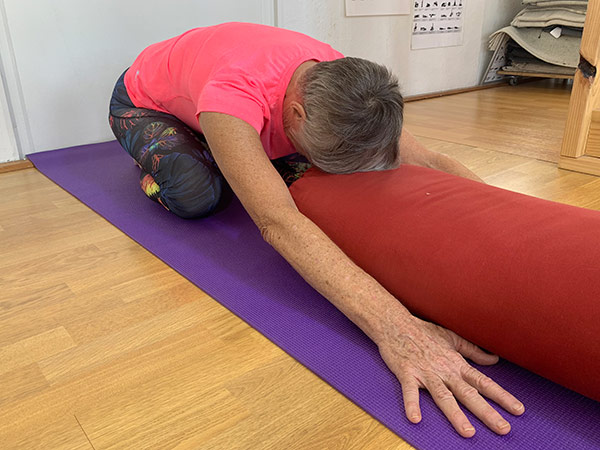
Supported Child’s Pose, with the head on a bolster. Resting the forehead is one of the quickest ways to settle the nervous system.
Yoga poses for anxiety: which help when worry is high?
These are the poses Chris turns to when she feels anxious, and the ones our teachers use most in restorative classes. Learn each one with a teacher first, and tell your teacher about any health condition or panic attacks.
Legs Up The Wall
Chris rates this number one for anxious days. “Just a few minutes with my legs up the wall and I notice the thoughts have stopped. It helps me feel calm and peaceful.” She stays about 10 minutes, and when she cannot sleep she gets up and does it. She keeps a bolster set up at home so there is minimum fuss. Our Legs Up The Wall note shows the set-up step by step.
Supported Bridge Pose
This is Chris’s next go-to pose, held for 8 to 10 minutes. The support under your back does the holding, so you can let go of effort. Set it up with a teacher the first time.
More restful poses we use
- Reclining Bound Angle Pose (Supta Baddha Konasana). Lying over a bolster with a belt around the feet, for 5 to 8 minutes.
- Reclining Hero Pose (Supta Virasana). Also for 5 to 8 minutes. It is demanding on the knees, so use props and learn it with a teacher.
- Supported Child’s Pose (Forward Virasana). With the head supported, for about 3 minutes.
- Head-to-Knee Pose (Janu Sirsasana). With the head supported.
- Triangle Pose (Utthita Trikonasana) with the back foot against a wall. The wall gives a feeling of being held and steady.
On anxious days, Chris adds a few of these to a regular practice and a weekly restorative session.

Lying supported lets the breath slow and the body settle.
Perimenopause anxiety
Anxiety often rises in the years around menopause, when hormones swing up and down. The 2025 menopause review above found yoga improved anxiety and low mood in women at menopause, as well as overall symptoms (Wang 2025). See our page on yoga for menopause and perimenopause for more.

Bound angle pose with support opens the hips without strain.

Rest properly at the end of practice. It is part of the pose, not an extra.
Yoga and pranayama are known from long practice to calm the mind, and the research now backs it. Feel free to check with your professional advisers if you wish, but also give yoga a try.
Yoga for anxiety in Darwin, or LIVE online
Flametree Yoga Studio runs beginner, gentle and restorative yoga classes, and early morning pranayama classes, at Woolner in Darwin and LIVE online. They are taught by certified Iyengar teachers, led by Christine Lalor, Senior Iyengar Yoga Teacher and certified yoga therapist.
- New to Flametree? Your first class is free if you’re new to Flametree. In the studio, just come along. Online, click the class time you want and we email you the link to join. See every class time on the beginner timetable.
- Keep going at half price. New students, and anyone who has been away three months or more, can also get a half price 10 class pass with 2 extra classes free, to use online, in the studio, or both.
Already practising yoga? The same half price 10 class pass for new students, and for anyone away three months or more, is also available as the non-beginner half price pass.
Read more: yoga for stress relief, how to calm your nervous system, what is pranayama, Bhramari (humming breath) benefits, yoga for sleep, Legs Up The Wall, and the benefits of yoga hub.
More from Flametree: how to stop overthinking, GABA, the brain’s calming chemical, box breathing and waking up at 3am.
Your free copy of Cutting Stress With Yoga is waiting. New to Flametree, or away for 3 months or more? You get 2 free classes + 2 ebooks, only available via this offer. Already coming to class? You can still get the book.
Yoga for anxiety: questions people ask
Does yoga actually help with anxiety?
For many people, yes. A 2018 review of randomised trials found yoga reduced anxiety by a moderate amount in people with raised anxiety, compared with no treatment. A 2023 review found yoga also beat control groups in people with diagnosed anxiety disorders.
What is the best breathing technique for anxiety?
Slow breathing with a longer out-breath. Victorious Breath (Ujjayi), Interrupted Breath (Viloma) and humming breath (Bhramari) are good places to start. A 2025 review found slow yogic breathing eased symptoms, and that fast breathing techniques caused more side effects, so leave those until you are experienced.
Does box breathing work for anxiety?
Box breathing (breathe in, hold, breathe out, hold, for equal counts) slows the breath, which is the part that helps. The holds do not suit everyone who is anxious. At Flametree we start with slow breathing and a longer out-breath, and add breath holds later, with a teacher.
How long should I do breathing exercises for anxiety?
Five to ten minutes of slow breathing is a good start, once or twice a day. In a class, pranayama usually runs for 20 to 30 minutes after some poses. Stop if you feel dizzy, and keep the breath smooth rather than forced.
Is yoga or meditation better for anxiety?
They work well together. Yoga poses use up nervous energy and give the mind one thing to attend to, which makes it easier to sit still afterwards. Pranayama is a bridge between the two: a meditation you do with the breath.
Can yoga help with perimenopause anxiety?
A 2025 review of 24 trials in women at menopause found yoga improved anxiety and low mood as well as overall menopause symptoms. Restorative poses and slow breathing are especially useful when sleep is broken and hormones are swinging.
How long before I notice a difference with yoga for anxiety?
Many people feel calmer after one class, especially a restorative or pranayama class. In the trials, measured changes in anxiety usually came after about 8 to 12 weeks of regular practice, often twice a week or more.
Where can I find yoga for anxiety in Darwin?
Flametree Yoga Studio teaches beginner, gentle and restorative yoga and early morning pranayama at Woolner in Darwin and LIVE online. Your first class is free if you’re new to Flametree. New students, and anyone who has been away three months or more, can also get a half price 10 class pass with 2 extra classes free, to use online, in the studio, or both.
Can I do yoga if I take medication for anxiety?
Yes. Yoga sits happily alongside any medication you take. Always follow the directions of any doctor you are consulting. In a 2023 trial, an 8 week mindfulness course did about as well as the medicine escitalopram. Feel free to check with your professional advisers if you wish, but also give yoga a try.
Which yoga poses help when you feel anxious?
In our classes the usual starting points are restful, supported poses: Legs Up The Wall, Supported Bridge, Reclining Bound Angle and supported Child’s Pose. Chris stays in Legs Up The Wall for about 10 minutes. Learn the poses with a teacher first.
Last updated 14 October 2026: added a short form summary, how to start befriending your breath at home, Chris Lalor’s calming poses, two more studies, and answers on medication and poses. General information, not medical advice.
Sources
- Australian Bureau of Statistics. National Study of Mental Health and Wellbeing, 2020 to 2022. abs.gov.au
- Cramer H et al. Yoga for anxiety: a systematic review and meta-analysis of randomized controlled trials. Depress Anxiety 2018. doi:10.1002/da.22762
- Martinez-Calderon J et al. Yoga-based interventions may reduce anxiety symptoms in anxiety disorders. Br J Sports Med 2023. doi:10.1136/bjsports-2022-106497
- Simon NM et al. Efficacy of yoga vs cognitive behavioral therapy vs stress education for generalized anxiety disorder. JAMA Psychiatry 2021. doi:10.1001/jamapsychiatry.2020.2496
- Mütze C et al. Effectiveness of pranayama for mental disorders. Front Psychiatry 2025. doi:10.3389/fpsyt.2025.1616996
- Fincham GW et al. Effect of breathwork on stress and mental health. Sci Rep 2023. doi:10.1038/s41598-022-27247-y
- Laborde S et al. Effects of voluntary slow breathing on heart rate and heart rate variability. Neurosci Biobehav Rev 2022. doi:10.1016/j.neubiorev.2022.104711
- Wang H et al. The effectiveness of yoga on menopausal symptoms. Int J Nurs Stud 2025. doi:10.1016/j.ijnurstu.2024.104928
- Michalsen A et al. Rapid stress reduction and anxiolysis among distressed women as a consequence of a three-month intensive yoga program. Med Sci Monit 2005. PubMed 16319785
- Hoge EA et al. Mindfulness-based stress reduction vs escitalopram for the treatment of adults with anxiety disorders. JAMA Psychiatry 2023. doi:10.1001/jamapsychiatry.2022.3679
- McCall T. 117 Health Conditions Helped by Yoga (as of June 2019). Yoga As Medicine, DrMcCall.com.
Flametree Yoga Studio, Darwin NT. This article is general information, not medical advice. Feel free to check with your professional advisers if you wish, but also give yoga a try.