Stillness In Yoga: Why A Still Pose Is Never Just Holding On
Stillness in yoga: the short answer
Why does a yoga pose that looks perfectly still feel so busy inside? Because stillness in yoga is not freezing. In Iyengar yoga, stillness is what appears when the effort in a pose becomes just right: enough to hold the shape, with nothing extra. The body steadies, the breath quietens, attention settles on one point, and the mind stops pulling you elsewhere. Pranayama (breathing practice), and especially the pause in the breath called kumbhaka, teaches the same stillness from another direction.
Here is the whole article in short form:
- Stillness is not rigid: it is effort with nothing extra.
- Doing and undoing: you act, then release what is not needed.
- One-pointed attention: the mind rests on one action at a time.
- The breath settles you: smooth breathing lets the pose quieten.
- Kumbhaka: the natural pause in the breath, learned with a teacher.
- Stillness carries over: from the mat into how you react in daily life.

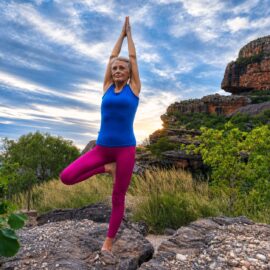
Chris Lalor in Mountain Pose with arms raised, beside a waterfall. Outwardly still, inwardly every part of the body is working.
What does stillness in yoga actually mean?
Stillness in yoga means a steady body, a quiet breath and a settled mind, all at once, while you are still working. It is not the absence of action. It is the absence of disturbance inside the action.
Patanjali’s Yoga Sutras describe asana (the pose) as sthira sukham asanam: steady and comfortable. Both words matter. Steady without comfort is gripping. Comfort without steadiness is collapse. Stillness lives where the two meet.
The same text defines yoga itself as the stilling of the movements of the mind. So in the yoga tradition, stillness in the body is not an end in itself. It is a way in to stillness of the mind.
How do you find stillness in a pose?
At the start of any pose there is a lot of doing. You place the feet, straighten the legs, lift the spine, adjust and correct. That is necessary. Without it there is no pose.
But most of us overdo it. We grip the jaw, harden the belly, hold the breath, frown. So the second half of the skill is undoing: noticing effort that is not needed and letting it go, without letting the pose collapse.
- Lift the chest (doing), then soften the lower ribs if they have hardened (undoing).
- Firm the legs (doing), then release the face and throat (undoing).
- Reach the arms (doing), then let the shoulders drop away from the ears (undoing).
When the doing and the undoing balance, the pose begins to hold itself. Underneath, tiny adjustments carry on. On the surface, it is still. That is the stillness Iyengar teachers mean.
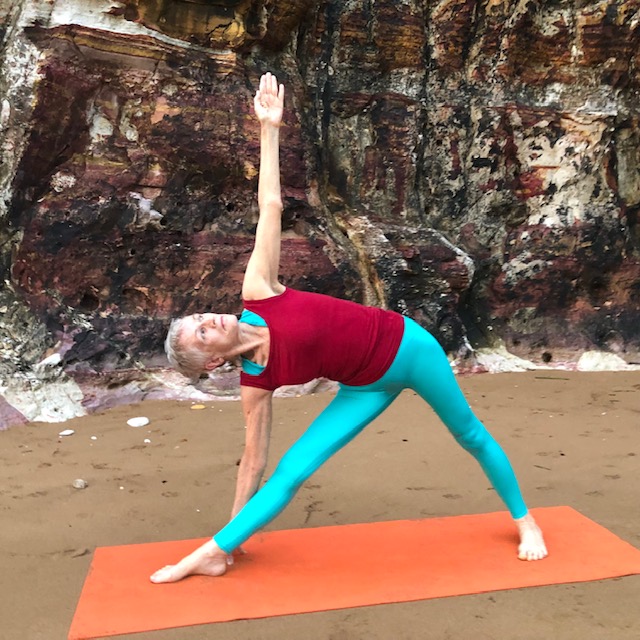
Chris Lalor in Triangle Pose. Attention travels from the feet to the legs, pelvis, spine and chest, one part at a time, without jumping around.
What is single-pointed attention?
The yoga tradition calls it ekagrata (one-pointedness). Instead of letting the mind scatter over every sensation at once, you give it one clear thing to attend to: the lift of the kneecaps, the press of the outer heel, the even length of both sides of the waist.
In the Iyengar method this has an unusual twist. Attention can be spread through the whole body while the mind stays single and undistracted. In Triangle Pose, for example, awareness moves from the foot to the leg, to the pelvis, the spine and the chest, but it flows from one to the next instead of jumping randomly.
Over time, this steadies the mind. Agitation drops, because the mind has somewhere to be. It is attention that is gathered, not forced.
How does the breath help you stay still?
The breath is the anchor. At first, in a demanding pose, most people hold the breath or breathe unevenly without noticing. As you stay, you invite the breath to become smooth, quiet and continuous.
You do not “do” the breath. You watch it and allow it. Each exhalation can soften effort that is not needed. Each inhalation can bring a little lift and space. When the breath and the body work together, the pose stops being a struggle and becomes something you can stay in.
For more on how long to stay, and what happens when you want to come out, read How Long To Hold Yoga Poses?
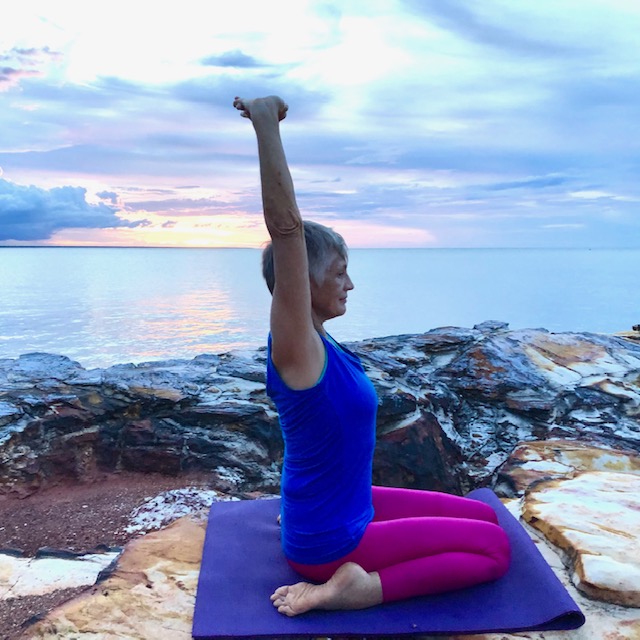
Seated in Hero Pose with the arms raised. The breath becomes smooth and quiet as the pose settles.
What is kumbhaka?
Kumbhaka is the pause in the breath, after breathing in or after breathing out. In pranayama it is a practice of its own, taught step by step. Even in ordinary breathing, though, there is a natural pause at the end of each breath, and noticing it is the first step.
When the breath pauses, something interesting happens. The rhythm that usually occupies the mind goes quiet. Sensations become clearer. The mind has less to latch on to. In the yoga tradition, kumbhaka teaches you to stay present when nothing is happening, and that same capacity is what meditation is built on.
How is kumbhaka learned safely?
- Ease first. The breath should be smooth and continuous before any pause is explored.
- Let pauses appear. In the beginning, notice the natural pause. Do not impose one.
- No strain. No tension in the face, throat or belly. If you feel dizzy, anxious or short of breath, stop and breathe normally.
- Learn it with a teacher, in the studio or LIVE online, then practise at home knowing what you are doing.
Breath holding is taught in stages in the Iyengar method, for good reasons. Our article Is Pranayama Safe? sets out what the research says and how we teach it.
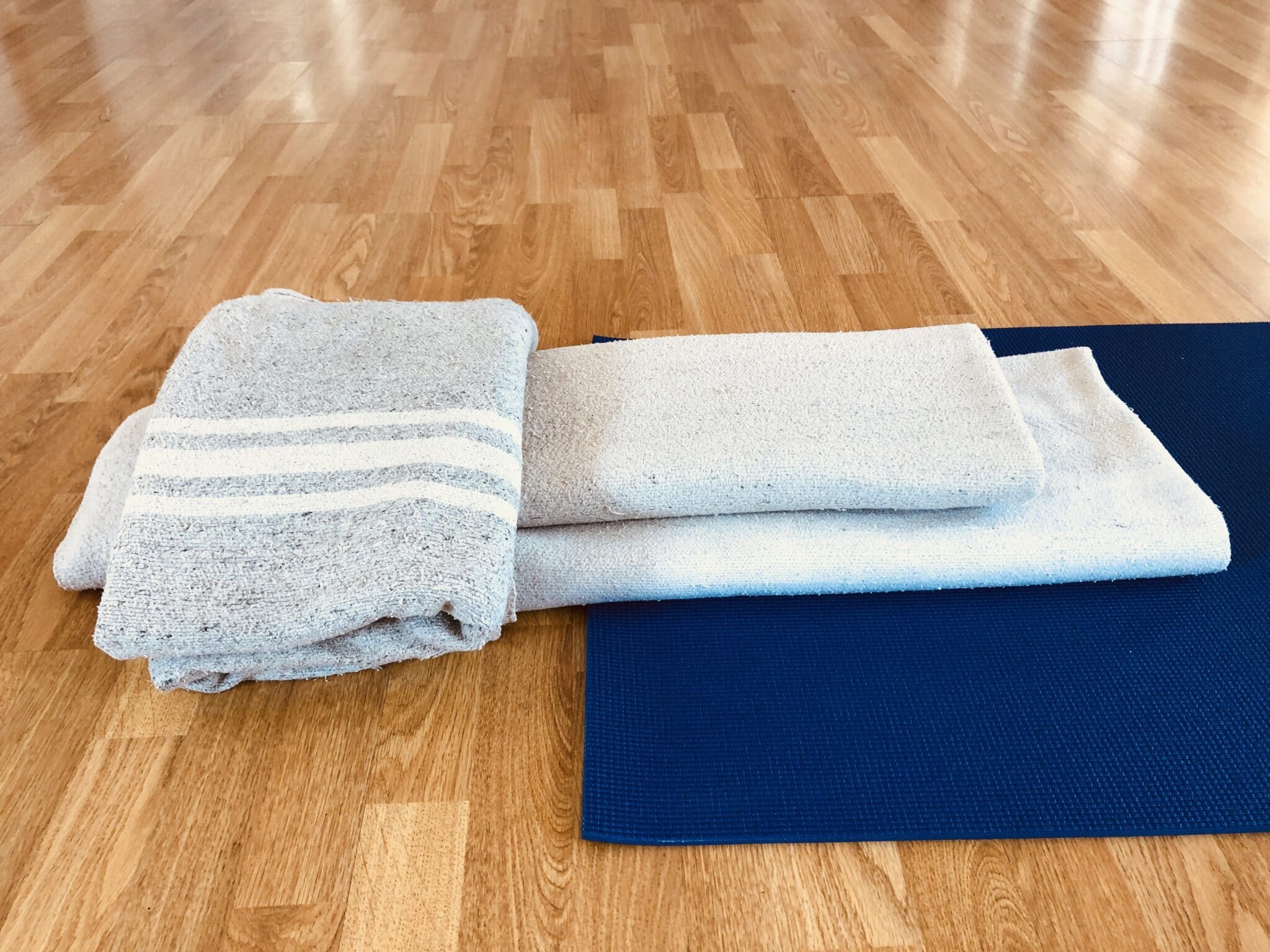
Blankets set out for lying-down pranayama. Supported lying positions let the breath become smooth before any pause is explored.
How does pranayama deepen stillness in your poses?
Asana and pranayama are often taught separately, but each feeds the other. When breath becomes refined in pranayama, you bring that sensitivity back into the poses:
- You stop working only at the level of the muscles.
- You start to feel space, pressure and flow inside the body.
- Attention becomes less scattered and more continuous.
For example, in a standing pose, after a smooth exhalation, there may be a short natural pause where the body feels grounded and quiet. In a supported backbend or forward bend, the same pause can feel spacious or deeply settling. Students often say they become less driven to keep adjusting, and can stay present without needing anything to change.
The Iyengar tradition maps the progression like this: asana steadies the body; pranayama steadies the nervous system and the mind; the pause in the breath lets the mind fall quiet. Stillness in a pose prepares you to experience stillness. Kumbhaka lets you enter it.
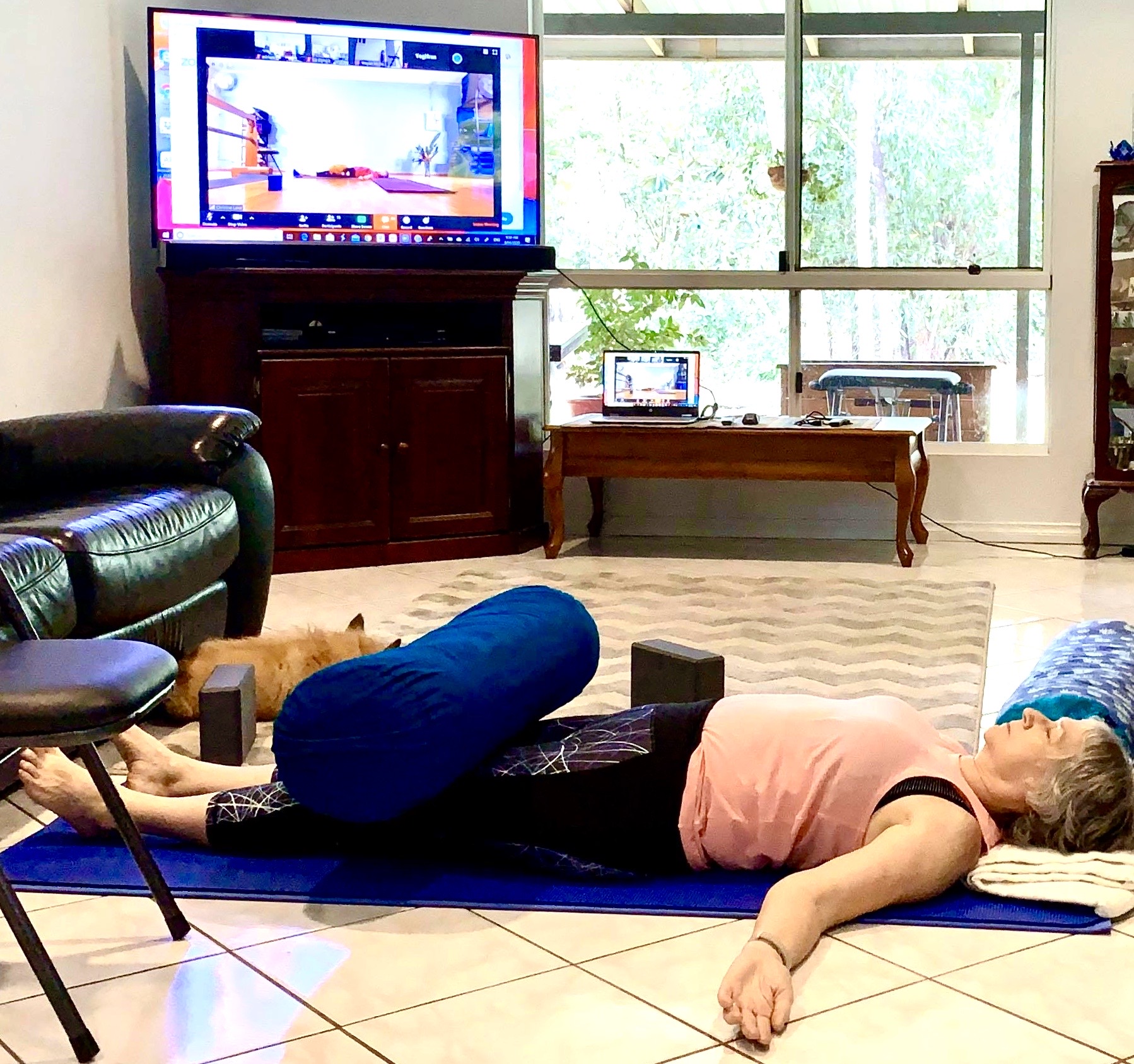
Lying in a supported pose at home during a live online class. Stillness can be learned in the studio or LIVE online.
Why does stillness matter off the mat?
Because the habit of reacting starts in the body. Discomfort in a pose usually triggers bracing, tightening or the urge to get out. Learning to stay with a sensation without immediately reacting is a skill, and it travels.
Many of our students notice it first in small things: waiting in traffic, a sharp email, a difficult conversation. There is a beat of space before the reaction, and in that space, a choice. That is what the tradition means when it says stillness is not dull. It is alert, and it gives you room.

A restorative pose at the end of practice. Rest after effort is where the stillness of the pose settles into the mind.
Where can I learn stillness in yoga in Darwin or online?
Flametree Yoga Studio teaches Iyengar yoga and pranayama at Woolner and Coolalinga in Darwin, and LIVE online across Australia. Long, precise holds and taught breathing are part of every class, and our morning pranayama classes focus on the breath itself. Read more in What Is Pranayama?
If you are new, the easiest way in is our half-price 10-class pass, with 2 classes free, in the studio or live online. You can see the class times on the timetable.
Frequently asked questions
What does stillness mean in yoga?
Stillness in yoga means a steady body, a quiet breath and a settled mind while you are still working in a pose. It is not freezing or going rigid. It appears when the effort is just enough, with nothing extra.
Is stillness in yoga the same as relaxing?
No. Relaxing lets everything go. Stillness keeps the effort that holds the pose and releases only what is not needed, so the body is steady but not tense and the mind is alert but not agitated.
What is kumbhaka?
Kumbhaka is the pause in the breath after breathing in or breathing out. In pranayama it is taught step by step, beginning with simply noticing the natural pause. In the yoga tradition it is a direct way into stillness of the mind.
Is kumbhaka safe?
Breath holding is taught in stages in the Iyengar method, starting with smooth breathing and natural pauses, never strain. Learn it with a teacher first, in the studio or live online, and stop if you feel dizzy, anxious or short of breath.
What is single-pointed attention in yoga?
Single-pointed attention, ekagrata in Sanskrit, means giving the mind one clear action to rest on, such as the lift of the kneecaps or the grounding of the feet, instead of letting it scatter. Over time it steadies the mind.
Why do I fidget in yoga poses?
Most fidgeting is the mind reacting to sensation or boredom. Giving attention one clear point, smoothing the breath and releasing effort you do not need usually lets the urge to move settle.
Can stillness in movement apply to daily life?
Yes. Learning to stay with a sensation in a pose without reacting straight away builds a small space before you react, which many students notice in traffic, at work and in difficult conversations.
Where can I learn yoga and pranayama for stillness in Darwin?
Flametree Yoga Studio teaches Iyengar yoga and pranayama at Woolner and Coolalinga in Darwin, and live online across Australia. New students can start with the half-price 10-class pass.
Sources
- Patanjali. Yoga Sutras, 1.2 and 2.46. See Iyengar BKS, Light on the Yoga Sutras of Patanjali, HarperCollins, 1993 and later reprints.
- Yoga Sutras of Patanjali, overview. en.wikipedia.org/wiki/Yoga_Sutras_of_Patanjali
- Iyengar BKS. Light on Pranayama. Crossroad, 1981 and later reprints.
Flametree Yoga Studio, Darwin and live online. Written by Christine Lalor, from her study notes on stillness and movement. Last updated 1 October 2026. This article is general information, not medical advice. If you have a heart, lung or blood pressure condition, or a mental health condition, talk to your doctor and your teacher before practising breath holding.