Duck Feet Posture: Why Iyengar Yoga Teaches Your Feet Parallel
Duck feet posture: the short answer
Stand up for a moment and look down. Do your toes point out, like a duck’s? Duck feet posture (out-toeing, where the feet turn outwards) is very common, and for many people it is simply a habit of how they stand. In Iyengar yoga the feet are taught parallel in standing, because that lets the legs work evenly on both sides and helps the lower back stay broad instead of pinched. Feet are something you can learn to notice, and a duck-footed habit is often something you can change.
Here is the whole article in short form:
- What duck feet are: toes turned out while standing or walking.
- Where it comes from: habit, tight hips, flat arches, or the bones themselves.
- Why Iyengar yoga teaches feet parallel: even legs, a broad lower back.
- Soldiers and squats: turned-out feet suit those jobs, not everyday standing.
- How to practise: Mountain Pose with a block, every day.
- The honest limit: yoga cannot untwist a bone.

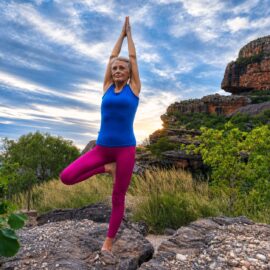
Chris Lalor in Mountain Pose (Tadasana) with her feet parallel. The outer edges of the feet run straight ahead, not out like a duck’s.
Where did this question come from?
Stuart, who teaches with me at Flametree, asked it after watching soldiers on parade. When soldiers in the Australian Defence Force stand to attention, the heels come together and the toes point outwards. When they stand at ease, the feet move apart, and they are still turned out.
He noticed something in his own body. When he stood like that, with the feet turned out and the buttocks clenched, his lower back felt narrower and more squeezed, not broad. And that is the opposite of what we teach in every standing pose.
So he wanted to know: is the duck-footed stance doing anything to the back over time? Here is what we teach, and what is and is not known.
What is duck feet posture, and what causes it?
Duck feet, or being duck footed, means the feet point outwards when you stand or walk. The whole leg usually turns out with them, from the hip down.
There are several causes, and they are not all the same:
- Habit. Many people simply stand that way, and the muscles adapt to it.
- Tight hips. When the muscles that turn the leg outward are short, the feet follow.
- Flat arches. When the arch drops, the foot often splays out.
- The bones. In some people the shin bone or thigh bone is twisted, often from childhood. The Pediatric Orthopaedic Society of North America notes that a twist in the shinbone, called external tibial torsion, generally does not correct itself.
The first three can often be changed with practice. The last one cannot, and you should not force it. A good teacher will tell the difference.

Mountain Pose with a block between the thighs. Squeezing the block gently turns the thighs in a little, so the feet can stay parallel.
Why does Iyengar yoga teach the feet parallel?
In Mountain Pose (Tadasana), the foundation of every standing pose, the outer edges of the feet are taught parallel. Beginners often stand with the feet hip-width apart. The weight spreads evenly over the four corners of each foot: the big toe mound, the little toe mound, and the inner and outer heel.
Iyengar teaching holds that this does three things:
- The legs work evenly. The muscles on the inside and outside of each leg share the work, instead of the outer muscles doing most of it.
- The knees track straight. The kneecaps face forward, in line with the feet.
- The lower back can stay broad. With the thighs not rolled out, the buttocks do not need to clench, and the back of the pelvis can widen.
This is known from long practice and close observation in the Iyengar method. Modern research has not yet tested foot position in yoga and back comfort directly, so we say so plainly.
Do duck feet cause a narrow, squeezed lower back?
Not on their own, and not in everyone. But the pattern Stuart felt is common. When the feet turn out, the thighs roll out too. Many people then grip the buttocks to stay upright. That grip draws the back of the pelvis in and can leave the lower back feeling short and tight.
Turn the feet parallel and soften the buttocks, and most people feel the lower back widen straight away. Try it now: stand duck footed and clench, then turn the feet parallel and let the buttocks go. Notice the difference across the back of the waist.
That feeling is the point of the practice. You learn to notice it, and then you choose the one that feels broad.

Kim in a wide-legged standing forward bend. Even with the legs wide apart, the outer edges of the feet stay parallel.
Why do soldiers and squats turn the feet out, then?
Because they are doing a different job. Drill is designed for a uniform look and a stable stance that can be held on parade. In a deep squat with a heavy bar, a little turn-out often suits the shape of the hip socket and lets the knees follow the toes.
Those are specific tasks, done for a short time. The question for your back is what you do the rest of the day. If turned-out feet become how you stand in the kitchen queue and walk to the car, the whole body learns that shape.
So the turned-out stance is not wrong for its task. It just should not become your default.
But some yoga poses turn the feet out too. Why?
Yes. In Triangle Pose (Trikonasana) and Warrior II (Virabhadrasana II), the front foot turns out to the side. The difference is how it turns.
In the Iyengar method, the turn comes from the whole leg, from the top of the thigh, so the kneecap faces the same way as the toes. The back foot turns in slightly. Nothing twists at the knee. That is a very different thing from standing with both feet flopped out and the knees pointing somewhere else.
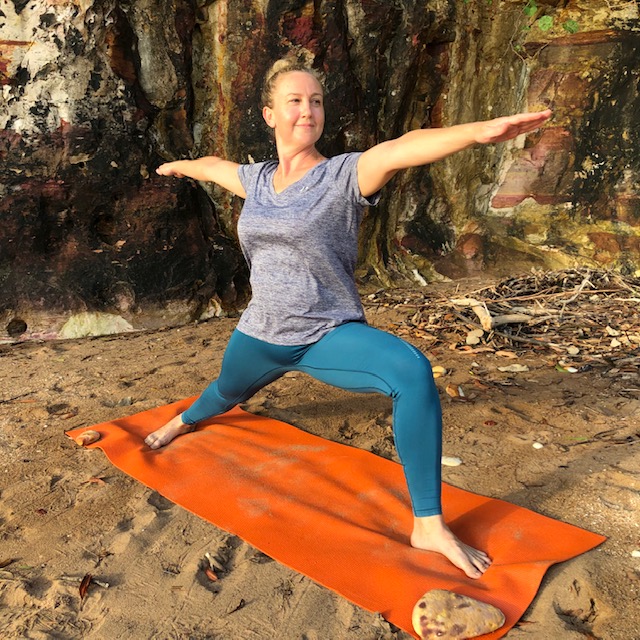
Kim in Warrior II. The front leg turns out from the thigh, so the knee points the same way as the toes. The back leg stays straight.
How do I practise feet parallel? A daily Mountain Pose
- Stand with your feet hip-width apart. Look down and line up the outer edges of the feet so they are parallel.
- Lift and spread your toes, then put them down.
- Feel your weight on the four corners of each foot.
- Lift your kneecaps and firm your thighs. Check the kneecaps face straight ahead.
- If the knees roll out, place a block between the upper thighs and press it gently.
- Let the buttocks soften. Feel the back of the waist widen.
- Stand for 30 seconds to a minute, breathing evenly.
Then take it into life. Check your feet while you clean your teeth, wait for the kettle, or queue at the shops. Little and often is how a habit changes.
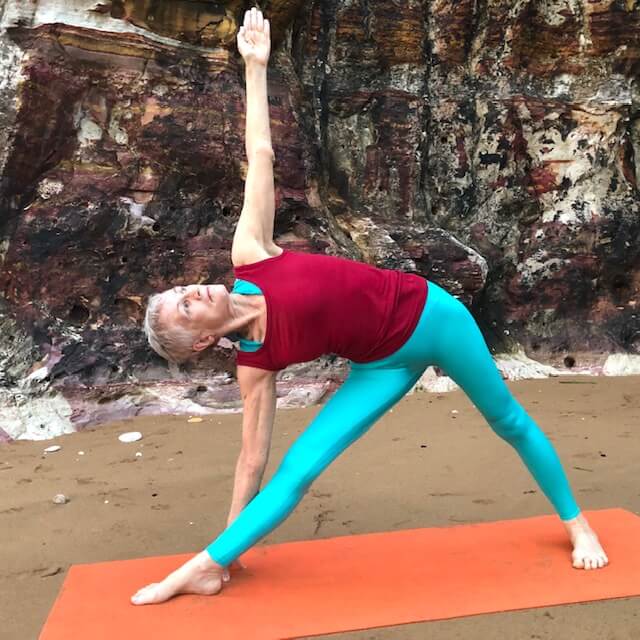
Chris Lalor in Triangle Pose. The front leg turns from the thigh and both legs stay straight: a turned foot done the Iyengar way.
Can yoga fix duck feet?
It depends on the cause. If your duck feet come from habit, tight hips or dropped arches, regular practice can change how you stand and walk, because it builds both the awareness and the muscle work to hold a new shape.
If the cause is a twist in the bones, yoga cannot untwist it, and you should not force your feet straight against it. Your teacher will help you find the alignment that suits your own legs. If you have pain in the knees, hips or back, see your doctor or physiotherapist as well.
For more on how the feet hold up the whole body, read Yoga For Feet: Why Your Arches Change Everything. For standing taller, see Yoga For Posture.

Mountain Pose with a chair for support. A chair behind you lets you work on the feet and legs without worrying about balance.
Where can I learn this in Darwin or online?
Flametree Yoga Studio teaches Iyengar yoga at Woolner and Coolalinga in Darwin, and LIVE online across Australia. Every class starts from the feet, so good yoga posture in Darwin or online begins with where you put them.
If you are new, the easiest way in is our half-price 10-class pass, with 2 classes free, in the studio or live online. You can see the class times on the timetable. If your back is the reason you are reading, see Yoga For Back Pain Over 50.
Frequently asked questions
What is duck feet posture?
Duck feet posture means standing or walking with the toes turned outwards, usually with the whole leg rolled out from the hip. It is also called out-toeing or being duck footed.
Is it bad to stand with your feet turned out?
Not always, but as an everyday habit it often comes with rolled-out thighs and clenched buttocks, which can leave the lower back feeling narrow and tight. Iyengar yoga teaches the feet parallel in standing so the legs work evenly and the back can stay broad.
Can yoga fix duck feet?
If duck feet come from habit, tight hips or flat arches, regular yoga can change how you stand and walk. If the cause is a twist in the shin or thigh bone, yoga cannot change the bone, and the feet should not be forced straight.
Should my feet be parallel in Mountain Pose?
Yes. In Iyengar yoga the outer edges of the feet are parallel in Mountain Pose, with the weight even over the four corners of each foot. Beginners usually stand with the feet hip-width apart.
Why do soldiers stand with their feet turned out?
Military drill uses a set stance for a uniform look and stability on parade. In the Australian Defence Force, soldiers at attention stand with the heels together and the toes turned out. It suits that task, but it is not a good default for everyday standing.
Why do Iyengar standing poses turn the front foot out?
In poses like Triangle and Warrior II the front foot turns out, but the turn comes from the whole leg, from the top of the thigh, so the kneecap points the same way as the toes. Nothing twists at the knee.
How long does it take to change a duck-footed habit?
There is no fixed time. A short Mountain Pose each day, plus checking your feet in ordinary moments, usually makes the new stance feel normal over some weeks. Regular classes speed it up because a teacher can see what you cannot.
Where can I learn Iyengar yoga posture in Darwin?
Flametree Yoga Studio teaches Iyengar yoga at Woolner and Coolalinga in Darwin, and live online across Australia. Every class works on how you stand, starting from the feet.
Sources
- Pediatric Orthopaedic Society of North America, OrthoKids: Out-toeing. orthokids.org/conditions/out-toeing
- Iyengar BKS. Light on Yoga. HarperCollins, 1966 and later reprints. The entry for Tadasana.
- Wikipedia: At attention, including the foot position used by the Australian Defence Force. en.wikipedia.org/wiki/At_attention
Flametree Yoga Studio, Darwin and live online. Written by Christine Lalor, with Stuart’s question and observations. Last updated 1 October 2026. This article is general information, not medical advice. If you have pain in your feet, knees, hips or back, talk to your doctor or physiotherapist, and tell your yoga teacher before class.