
Yoga For Autism: What Mr Iyengar, The Yoga Doctors And The Research Say
By Chris Lalor, Certified Senior Iyengar Yoga Teacher and Certified Yoga Therapist, and Dr Stuart McGill, Yoga Teacher, Flametree Yoga Darwin
Stress, anxiety, big feelings and a body that rarely gets to rest: can yoga help? For autistic teenagers and adults, a review of 67 trials ranked mindfulness first for easing anxiety. This guide brings together what Mr BKS Iyengar’s teaching, the yoga doctors and the research say about yoga, pranayama (yogic breathing), mindfulness and meditation for autistic people of every age. Last updated: 9 November 2026.
Get 2 Free Yoga Classes And 2 Free Ebooks
Does yoga help autistic people? The short answer
Yes, especially for teenagers and adults. The best-supported benefit is calmer feelings: less anxiety and stress, steadier emotions and better wellbeing. In trials, autistic teenagers and adults who learned mindfulness had lower anxiety, depression and stress, and a large review ranked mindfulness first of the approaches compared for anxiety. For younger children the research is thinner: a few small trials of yoga, all with a positive result, and mindfulness trials that point the right way but are mostly early. Yoga is not about changing who a person is. The studies measured stress, anxiety, emotions, sleep and quality of life, and that is what this guide is about.
Overall evidence: Moderate
The research here is moderate. Several trials, or reviews with a more modest result, point to a benefit.
Best study (review of many trials): Ding 2025 pooled 67 randomised trials and 3,604 autistic people. Mindfulness-based programmes ranked first for easing anxiety, and the gains were stronger in adults. Most people in the trials did not have an intellectual disability, so the finding fits those people best.
By age: teenagers Moderate, adults Moderate, younger children Limited.
How Strong Is The Research, By Age
Rated on the best-supported finding for each age group.
Teenagers
Moderate. Mindfulness trials lowered emotional distress and depression.
Adults
Moderate. Several trials lowered anxiety, depression and stress.
Younger children
Limited. Small yoga trials, all positive. Mindfulness trials mostly early.
Yoga for autism: overall evidence by age. Mindfulness evidence counts for what yoga and pranayama classes build. Our rating.
How mindfulness counts for yoga. Most of the autism trials below tested mindfulness courses, a few tested yoga poses, and one tested yoga nidra (guided deep rest). We say what each study tested, every time. Then it counts for what our classes build, because mindfulness is a state of steady, present attention, and there are several roads to it. Jon Kabat-Zinn, who created the best-known mindfulness course (MBSR, mindfulness-based stress reduction), defines mindfulness as paying attention, on purpose, in the present moment, non-judgmentally. He says this in the film My Year Of Living Mindfully, where he also describes mindfulness as a state or a capacity that a whole family of practices builds. Holding a yoga pose reaches it through the body. Slow, smooth pranayama reaches it through the breath. So what mindfulness is shown to do for autistic people traces back to yoga and to yogic breathing.
One more point to keep in mind: no autism trial has tested Iyengar yoga. The yoga trials tested yoga in general, mostly school programmes, and the mindfulness trials tested mindfulness courses. Not yet tested is not the same as does not work. Iyengar teachers train for years and are assessed by a panel of senior teachers, and in our view as certified Iyengar teachers, well-taught Iyengar yoga is likely to go further than the average. Why the kind of yoga matters.
What The Autism Trials Tested
The trials
Mostly mindfulness courses, for teenagers and adults.
A few yoga trials, mostly school programmes for children.
One study of yoga nidra (guided deep rest).
Iyengar yoga
Not yet tested for autism.
Teachers train for years.
Assessed by senior teachers.
Yoga for autism: what the trials tested, and where Iyengar yoga fits. Our view as certified Iyengar teachers.
The bottom line: five key moves
- Go to a yoga class at your level, once or twice a week to begin, then more. A regular class gives the same steady, step-by-step practice the trials used, in a group that settles in over weeks.
- Add breath work (pranayama). A slow, smooth breath calms the body and brings stress and worry down. In class it is taught step by step and never forced.
- Give your attention one job. Holding a pose, or following the breath, trains steady attention. That is mindfulness, and it is the practice behind the trials that eased anxiety and stress.
- Use props and rest. Bolsters, blankets, chairs and the wall let the body be held, so the mind can let go. Supported rest ends every class.
- Start now. New to Flametree, or away 3 months or more? 2 free classes, then 10 at half price, in Darwin or LIVE online.
Five Key Moves For Autism
1. Go to class
Once or twice a week to begin, at your level.
2. Add pranayama
A slow, smooth breath, never forced.
3. One job for the mind
Stay with the pose or the breath.
4. Props and rest
Held by the props, so the mind can let go.
5. Start now
2 free classes, then 10 at half price.
Yoga for autism in five moves: regular, steady practice that builds calm.
Who was Mr BKS Iyengar? Iyengar yoga is the style we teach at Flametree. During the 20th century, Mr BKS Iyengar was the major teacher who codified traditional Indian yoga, through his seminal books and widespread teaching. He also pioneered the use of props, so poses can be adapted to almost any body. His style is sometimes called modern classical yoga. This guide is part of our encyclopaedia of yoga for health conditions.
This guide in short
- Overall evidence: Moderate. Best study: Ding 2025 pooled 67 randomised trials and 3,604 autistic people. Mindfulness-based programmes ranked first for easing anxiety, and the gains were stronger in adults. By age: teenagers Moderate, adults Moderate, younger children Limited.
- The Iyengar approach: we have not yet found a separate entry for autism in Mr Iyengar’s books. His teaching on children points to support first, courage built one small step at a time, and a breath that is never forced.
- Dr Timothy McCall, an American medical doctor and yoga therapist who studied with Mr BKS Iyengar, author of Yoga as Medicine: autism is no. 8 on his list of conditions helped by yoga, with five yoga studies behind it.
- The research: 30 studies listed below, for mindfulness, yoga and yoga nidra, including 9 reviews. No trial of Iyengar yoga, and none of pranayama on its own.
- Nearby guides: anxiety and anger, sleep and energy, children’s emotional and learning difficulties and intellectual disability.
- Take it further: our free ebook Cutting Stress With Yoga, the 2027 masterclass on anxiety, upsets and anger, and classes in Darwin and online.
Yoga For Autism On One Page
Tradition and research point the same way: steady the body, calm the breath, train the attention.
The Iyengar approach
Support first, one small step at a time, a breath never forced.
Dr Timothy McCall
Autism is no. 8 on his list of 117 conditions.
Mindfulness research
Teens and adults: less anxiety, depression and stress.
Yoga research
Children: small trials, all positive, in school programmes.
Yoga for autism at a glance. Each source is set out in full below.
What autism is, and how common it is
Autism is a different way of experiencing and making sense of the world. Autistic people often take in sound, light, touch and social situations more intensely, and often prefer clear, predictable routines. Many are also very good at focus, pattern and detail. We write “autistic people” because many autistic adults prefer it, and because autism is part of who a person is, not an illness to be removed.
What does cause real difficulty is the load that comes with living in a loud, fast, unpredictable world: stress, anxiety, strong emotions, poor sleep and tiredness. A large review of trials noted that nearly three out of four autistic people have mental health problems such as stress, anxiety or depression (Linden 2023). The good news: in trials, mindfulness lowered anxiety, depression and stress in autistic teenagers and adults, and that is where the yoga research points.
Autistic People In Australia
290,900
Autistic Australians in 2022, 1.1% of the population.
Source: Australian Bureau of Statistics, Autism in Australia 2022.
“You have to tame your breath to tame your brain.”
What Mr BKS Iyengar taught about a busy, overloaded nervous system
In short: we have not yet found a separate entry for autism in the Iyengar books we hold. But the tradition has taught children for decades, and its answer for a busy, easily overloaded system is steady: support the body, give the mind one clear job, and never force the breath. This is known from practice and teacher experience, and no Iyengar trial has yet been done with autistic people.

- Support first. Props are the support in Iyengar yoga: the body is held, so the mind can let go.
- One small step at a time. In Basic Guidelines for Teachers of Yoga, Mr Iyengar and Geeta Iyengar advised that when a student is afraid of a pose, the teacher asks for the first step only and builds courage.
- Never force the breath. In Light on Life he wrote that nothing pertaining to pranayama can be forced. For a student who is overloaded, that means an easy breath, and rest first.
- A teacher who watches each person. Iyengar teaching adapts each pose to the person in front of the teacher.
“If the students are afraid to do the asana, then you may just ask them to do the first step of it. Build up courage in the student.”
The Iyengar Way: Support, Small Steps And An Easy Breath
Support
Props hold the body.
Small steps
The first step only, then the next.
Easy breath
Slow and smooth. Never forced.
A teacher who watches
Each person, each pose.
Known from practice, following Mr Iyengar and Geeta Iyengar. In trials, calm practice lowered anxiety and stress.
What Dr Timothy McCall says
In short: autism is on his list of conditions helped by yoga, and the five studies he gave for it are all yoga trials in children and teenagers.
Dr McCall is a US medical doctor and yoga therapist who studied with Mr BKS Iyengar, author of Yoga as Medicine. His June 2019 list of 117 health conditions helped by yoga includes autism spectrum disorder as no. 8. The studies he gave are Radhakrishna 2010, Koenig 2012, Litchke 2018, Vidyashree 2019 (listed on his sheet as Maheshkumar) and Sotoodeh 2017, and all five are described below. Since 2019, trials of mindfulness in autistic teenagers and adults have added a lot, and they are the strongest part of the picture today.
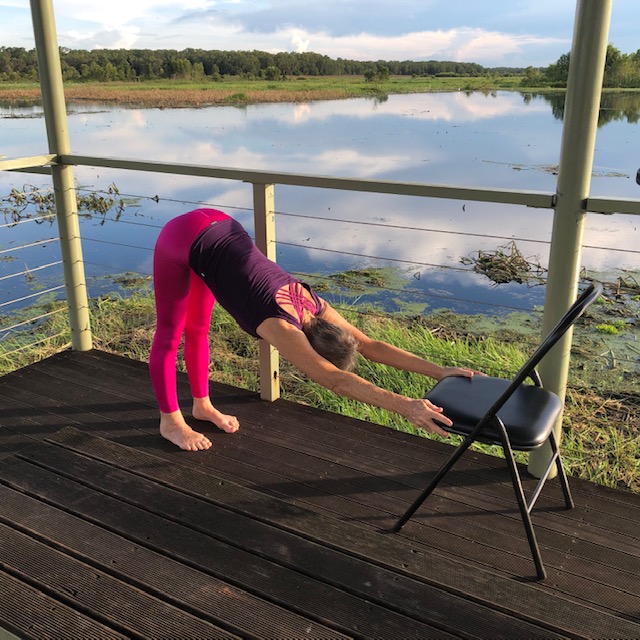
What does the research say about yoga and mindfulness for autism?
In short: in teenagers and adults, mindfulness courses lowered anxiety, depression and stress in several randomised trials. In children, yoga trials were small and all positive, and mindfulness trials were mostly early. Not one tested Iyengar yoga, so we call them yoga and mindfulness. Why the difference matters. Yoga research is hard to fund, because the money mostly comes from universities and governments, not drug companies, so yoga trials tend to have tens of people rather than thousands.
The Research At A Glance
Four key findings, conclusion first.
67 trials, 3,604 people
Mindfulness ranked first for easing anxiety (Ding 2025).
109 teens and young adults
Greater drops in emotion reactivity and low mood (White 2025).
63 autistic adults
Less distress and stress, kept at follow-up (Lunsky 2025).
Children’s yoga trials
Positive in every trial, from 17 to 61 children.
Yoga and mindfulness for autism: research at a glance. Every study is listed in full below.
Reviews of many trials
- Mindfulness-based programmes ranked first for easing anxiety, with the gains stronger in adults and in programmes of 9 to 16 weeks. Ding 2025, a network review (a review that compares many approaches at once) of 67 randomised trials and 3,604 autistic people. Mindfulness lowered anxiety by a large margin (effect size 0.84). Most people in the trials were male and did not have an intellectual disability, so it fits those people best. Read the study.
- Mindfulness may help autistic people without an intellectual disability, and the authors ask for more research. Linden 2023, a network review of 71 randomised trials and 3,630 autistic people. Read the study.
- Mindfulness programmes gave mostly positive results, but the studies were low quality overall, so the authors call for better trials. Simione 2024, a review of 37 studies: 12 in adults, 9 in children and teenagers, 13 with caregivers and 5 with both. Read the study.
- Mindfulness raised wellbeing in autistic children and adults and in their carers, and the gain was still there at three months. Hartley 2019, a review of 10 studies, with 233 autistic children and adults and 241 carers. Read the study.
Mindfulness For Autism: What The Reviews Found
71 trials
May help autistic people without an intellectual disability (Linden 2023).
10 studies
Wellbeing up, still there at three months (Hartley 2019).
37 studies
Mostly positive results, in studies of low quality (Simione 2024).
Yoga and mindfulness for autism: the reviews point to a benefit, and ask for better trials.
- Mindfulness-based stress reduction (MBSR) may lower anxiety and depression in autistic adults. Luo 2026, a review of 13 studies. Only one study involved children and none involved teenagers, and the authors call the evidence not yet strong enough. Read the study.
- Mindfulness showed promise for anxiety, social skills and aggression in children and young people aged 6 to 25. Loftus 2023, a review of 23 studies. Fourteen were of weak quality and only four were strong. Read the study.
- Mindfulness improved how children responded socially (effect size 0.35), but did not clearly change problem behaviour or emotional difficulties. Peng 2025, a review of 12 randomised trials and 643 children and parents. The parents themselves had less stress. Read the study.
- Mind-body therapies for autism, including mindfulness, meditation and yoga, have mostly been tested in small, uncontrolled studies so far. Hourston 2017, a review of 16 studies, only three of them randomised. It also covered acceptance and commitment therapy and Nei Yang Gong, a form of qigong, which is not yoga. Read the study.
- For autistic children and teenagers, cognitive behavioural therapy had the best evidence, and mindfulness had weak evidence for anxiety and depression. Lovell 2026, an umbrella review (a review of reviews) of 31 reviews. Most of those reviews were rated low quality, so the finding reflects how early this research is. Read the study.
The Main Mindfulness Trials For Teenagers And Adults
People who took part in each randomised trial.
Mindfulness for autistic teenagers and adults: the larger randomised trials. Bars drawn to scale from zero.
Mindfulness in teenagers and young adults
- A mainly mindfulness-based programme brought greater drops in emotion reactivity and low mood than a rigorous comparison programme. White 2025, the EASE programme (Emotion Awareness and Skills Enhancement), a multisite randomised trial of 109 autistic people aged 12 to 22, compared with an active control. The gain was bigger for people who attended more sessions. The share of people who clearly improved was higher (63% against 44%) but that gap was not large enough to count as certain. PubMed 40750084. Read the study.
- An 8-week online mindfulness programme lowered depression in autistic teenagers, and anxiety in girls. Matthews 2025, a pilot randomised trial of 42 teenagers aged 13 to 18, each with a parent. Depression was parent-reported, and the comparison group waited for the programme. PubMed 40160168. Read the study.
- Mindfulness sessions lowered the stress hormone cortisol straight afterwards and improved heart rate variability (a measure of calm). Kemeny 2021, a crossover trial of 27 autistic people aged 12 to 21 comparing HeartMath mindfulness, therapeutic riding and a control period. The cortisol effect did not last at follow-up. PubMed 34131850. Read the study.
Mindfulness For Autistic Teenagers: What The Trials Found
109 people, aged 12 to 22
Greater drops in emotion reactivity and low mood (White 2025).
42 teenagers
Lower depression, and lower anxiety in girls (Matthews 2025).
27 people, aged 12 to 21
Lower cortisol, the stress hormone, straight after sessions (Kemeny 2021).
Yoga and mindfulness for autism in teenagers: calmer emotions and mood. Mindfulness counts for what yoga and pranayama classes build.
Mindfulness in autistic adults
- Autistic adults who learned mindfulness had less distress and stress and better wellbeing, and the gains were kept at follow-up. Lunsky 2025, a randomised trial of 63 autistic adults, comparing a 6-week online group with a waitlist. Feelings of connection to other autistic people did not change. PubMed 40598750. Read the study.
- Mindfulness lowered depression, anxiety and rumination (going over and over a worry), and raised positive feelings. Spek 2013, a randomised trial of 42 adults compared with a waitlist, using a 9-week mindfulness course. PubMed 22964266. Read the study.
- Mindfulness (MBSR) and a social support group both lowered depression, anxiety and autistic traits. Only MBSR also lifted executive function (planning and mental flexibility) and mindfulness skills. Pagni 2023, a randomised trial of 78 autistic adults. The support group did about as well on depression and anxiety, so a friendly group matters too. PubMed 36990468. Read the study.
- Mindfulness (MBSR) improved quality of life, and improved disability-related quality of life more than the comparison group. Braden 2022, a randomised pilot trial of 56 adults, compared with a support group. Both groups improved mental quality of life. PubMed 34655389. Read the study.
- Mindfulness (MBSR) lowered depression compared with a support group. Pagni 2020, a pilot randomised trial of 28 adults comparing MBSR with a support group. Anxiety did not change in either group. PubMed 32090389. Read the study.
- Online mindfulness lowered anxiety compared with a waitlist. Gaigg 2020, a pilot trial of autistic adults: 35 tried online tools (19 of them mindfulness, 16 cognitive behavioural therapy) and 19 waited. Benefits on wider wellbeing were less clear. PubMed 32267168. Read the study.
Mindfulness For Autistic Adults: What The Trials Found
63 adults
Less distress and stress, kept at follow-up (Lunsky 2025).
42 adults
Less depression, anxiety and rumination (Spek 2013).
78 adults
Mindfulness and a support group both helped; mindfulness also lifted planning (Pagni 2023).
28 adults
Less depression than a support group (Pagni 2020).
Yoga and mindfulness for autistic adults: less distress, and a friendly group helps too.
Mindfulness in children
- A mindfulness-based programme (mindfulness and dialectical behaviour therapy skills) led to fewer tantrums and arguments in school-aged autistic children. Clifford 2022, a randomised trial of 51 children compared with an active control, over nine weekly sessions. There was no change in destroying things or physical aggression, and none in quality of life. PubMed 36053934. Read the study.
For children, the mindfulness picture is early. The reviews above found promise, mostly in studies of low quality, and the umbrella review found weak evidence for anxiety and depression. That is why we rate younger children Limited.

Yoga trials in autistic children and teenagers
These trials are small but positive. Most were school programmes, taught by trained yoga instructors, with outcomes rated by parents or teachers.
- Eight weeks of yoga lowered parent-rated autism scale scores on every part of the checklist except speech and communication. Sotoodeh 2017, a randomised trial of 29 children aged 7 to 15, 24 sessions over 8 weeks. This is one of the five studies on Dr McCall’s list. PubMed 28779937. Read the study.
- Twelve weeks of school yoga improved gross motor skills (running, jumping, balance) and lowered parent-rated autism scale scores. In the same children, teachers saw better social communication, less irritability and less social withdrawal. Shanker and Pradhan 2022 and 2023, a randomised trial of 43 children in four special schools, reported in three papers. It counts as one trial. Fine motor skills did not change. PubMed 35045396. Read the study.
- Eight weeks of yoga lowered irritability and social withdrawal and improved motor coordination. Ju 2024, a randomised trial of 17 children over 8 weeks. PubMed 38392469. Read the study.
- Parents reported better executive control (planning and self-control) and fewer sleep problems after a 6-week yoga-informed programme. Tanksale 2021, the Incredible Explorers pilot randomised trial of 61 children aged 8 to 12, compared with a waitlist. The authors ask for more research. PubMed 33238718. Read the study.
- Daily classroom yoga for 16 weeks lowered teacher-rated difficult behaviour. Koenig 2012, a classroom yoga programme. This is on Dr McCall’s list. PubMed 22917120. Read the study.
- Three months of yoga shifted the body towards its calm, resting state (higher heart rate variability) in autistic children. Vidyashree 2019, a randomised trial of 50 children over 3 months. This is on Dr McCall’s list. PubMed 30692787. Read the study.
Yoga Trials In Autistic Children: Every One Positive
Children in each randomised yoga trial.
Yoga for autistic children: every randomised yoga trial found a benefit. Bars drawn to scale from zero.
- Ten months of yoga improved imitation skills. Radhakrishna 2010, a study of 6 children. This is on Dr McCall’s list. PubMed 20948898. Read the study.
- Mandala yoga improved social skills and mood. Litchke 2018, an exploratory study of 5 young people. This is on Dr McCall’s list. PubMed 29343932. Read the study.
- Yoga showed moderate to significant effects for six children who have autism and an intellectual disability. Maggu 2025, a single-case study with six children aged 7 to 12. PubMed 40419562. Read the study.
- Yoga was practical for autistic teenagers, and attention improved. Anxiety fell, though that change was only borderline. Beaudoin 2026, a feasibility study of 6 teenagers. PubMed 42481009. Read the study.
- A yoga nidra (guided deep rest) programme for autistic children aged 8 to 14 was practical to run. Anxiety did not change by a measurable amount, though the effect sizes were medium (0.55 and 0.45), so a larger trial is needed. Loftus 2026, a feasibility study of 13 children. PubMed 42632169. Read the study.
Two larger yoga trials for anxiety in autistic children are being planned, one of them with a co-designed yoga programme. They have no results yet.
Iyengar yoga studies
No trial has yet tested Iyengar yoga for autistic people. Not yet tested is not the same as does not work. In the studies above, the yoga was general yoga taught by school or programme instructors. When Iyengar yoga is taught by trained Iyengar teachers, the instructions are precise and the support is built in, and in our view that is a good fit for people who like clear, step-by-step teaching.
Not Yet Tested For Autism
Iyengar yoga
No trial yet with trained Iyengar teachers.
Pranayama on its own
No trial yet. The breath is part of the programmes tested.
What that means
Not yet tested is not the same as does not work.
Yoga for autism: these are gaps in the research, not evidence against the practice.
Breathing and pranayama
We found no trial of pranayama on its own for autistic people. Breath awareness is part of the yoga nidra and mindfulness programmes above, and slow breathing is one of the roads to mindfulness. We teach a slow, smooth breath through the nose, step by step, and leave out fast, forceful breathing. Pranayama for autism is not yet tested. That is not the same as not working.
What the research did not show
- No trial tested yoga or mindfulness on the core features of autism, and that is not what the practice is for.
- Many mindfulness trials had waitlist comparisons, and some found that a social support group did about as well on depression and anxiety (Pagni 2023, Braden 2022). So a friendly group matters as well.
- Most trials were in people without an intellectual disability, and most were mostly male. We know little yet about autistic women, or about people with higher support needs.
- For children, many studies were rated low quality, and the children’s yoga trials were small.
What the practice that worked had in common
What The Practice That Worked Had In Common
Steady and regular
Weekly sessions for 6 to 16 weeks.
Clear and structured
Step-by-step teaching, the same order each time.
Attention with one job
On a pose, the breath or a body sensation.
In a group
Shared practice, with support from others.
Yoga and mindfulness for autism: what the trials that worked shared. Our reading of the studies above.
Yoga, pranayama and mindfulness: how they work together
Most of the autism studies above tested mindfulness courses, a few tested yoga poses, and one tested yoga nidra. That still counts for our classes. Mindfulness is steady, present attention, and yoga poses and pranayama (yogic breathing) are old routes to that same state. So the mindfulness trials that lowered anxiety and stress also show what a good yoga and pranayama class can build, with the attention held on the body and the breath. No trial separates which part does the work.
Two routes to one steady mind
A steady body, with attention held on the pose.
A steady breath, with attention held on the breath.
Mindfulness: steady, present attention. Each makes the other easier.
A simplified picture, known from practice. No trial separates which part does the work.
We suggest coming to both a yoga class and a pranayama class. Mr Iyengar taught that asana (poses), pranayama and meditation are not divided, and in our experience the two together do more than either alone. See every class time. We trace the history and the links in Yoga And Mindfulness: Why The Mindfulness Research Points Back To Yoga And The Breath.
How this comes together in a Flametree class
Everything above points the same way, and it is how we teach yoga for autism in Darwin and online.
- Precise, step-by-step teaching. Each pose is taught in clear stages, so the attention always has a definite, practical job.
- A steady class shape. Standing poses first to use up restless energy, then quieter poses, then supported rest to finish.
- Props in every class: chairs, belts, blocks, blankets, bolsters, the wall and the ropes, so the body is held and the mind can let go.
- Your pace, one step at a time. You can take the first step of any pose, rest whenever you need to, and keep your eyes open if that feels steadier.
- Rest and breath to finish: every class ends with supported rest, and our pranayama classes teach a slow, smooth breath step by step.
- A practice for every kind of day: our gentle yoga and restorative yoga classes suit the days when energy is low or the world feels loud.
- A friendly group. A regular class, at the same time each week, with the same faces, is a gentle way to practise alongside others.
See the timetable and book a class. Body, then breath, then a quieter mind: that is the path a class follows, and it is why we offer poses and breathing together. Tell your teacher what helps you, and the class is adapted for you.
Practising Yoga As An Autistic Person
Feeling overloaded?
Choose a gentle or restorative class. Come anyway.
Attention drifting?
Come back to the feet on the floor, or the breath.
Pose feels like too much?
Take the first step only. Props make it easier.
Not sure?
Tell your teacher. The class is changed for you.
Yoga for autism in class: adapted to you, steady and grounded. Known from practice.

Read more on the mind and emotions
- Anxiety and anger: worry, panic and the calm breath
- Sleep and energy
- Depression and low mood
- Stress and burnout
- Children’s emotional and learning difficulties
- Intellectual disability
- Yoga and mindfulness
Take it further
This guide gives you the facts on what helps. Stress and anxiety run through many of the studies above, so the ebook to start with is our stress book, with the stories of people it has helped. Go and do the free classes, see what you think, and then a pass puts it all into action.
Four Ways To Put Yoga For Autism Into Action
Classes
2 free, then 10 at half price. Darwin or LIVE online.
Free ebook
Cutting Stress With Yoga.
Masterclass
Anxiety, upsets and anger, 2027.
Retreat
A week of daily, adapted yoga in Bali.
Yoga for autism: the facts are on this page, and classes put them into action.
Free ebook: Cutting Stress With Yoga. How long stress wears the body down, and how an Iyengar class turns the alarm off. The same steady body, breath and attention the trials on this page measured.
New to Flametree, or away 3 months or more? 2 free classes + 2 ebooks, only available via this offer. Already a student? You can still get this book. Get your free copy of Cutting Stress With Yoga
- Classes, in Darwin or LIVE online: new, or away 3 months or more? 2 free classes, then 10 at half price. Already practising yoga? See the non-beginner half price pass. See the timetable and book.
- Masterclass: anxiety, upsets and anger is one of our 2027 Sunday Arvo Masterclasses with Chris Lalor. Come for the poses, the sequences and the pranayama that steady the body and calm the mind. Bookings are open.
- Retreats: a week of daily, adapted yoga in Bali. See the retreats.
2027 Masterclasses From 28 December
Over four months, learn the poses and breath practices that make the biggest difference for a range of key health conditions: arthritis, sleep and energy, pelvic floors, backs, wisdom, and anxiety, upsets and anger. In Darwin or LIVE online.
Other conditions are in our encyclopaedia of yoga for health conditions.
Yoga for autism: questions people ask
Does yoga help autistic people?
Yes, especially teenagers and adults, mainly for anxiety, stress and emotions. A review of 67 randomised trials and 3,604 autistic people ranked mindfulness first for easing anxiety (Ding 2025), and trials in teenagers and adults found less emotional distress, depression and stress. Mindfulness grows from yoga poses and from yogic breathing, so it counts for what classes build. For young children the evidence is thinner: small yoga trials, all positive. No trial has tested Iyengar yoga for autism yet.
Can yoga cure autism?
No, and it does not need to. Autism is a different way of experiencing the world, not an illness to cure. What yoga can do is calm the system: in trials, mindfulness lowered anxiety, depression and stress, and yoga improved behaviour, motor skills and mood in children, as the studies above found.
What Yoga Can Do For Autistic People
Yoga can
Calm stress and anxiety.
Steady the emotions.
Help motor skills and mood in children.
Yoga is not for
Changing who a person is.
Removing autism.
Yoga for autism: a calmer system, and the person stays who they are.
Does mindfulness help autistic teenagers?
Yes. In a trial of 109 autistic people aged 12 to 22, a mainly mindfulness-based programme brought greater drops in emotion reactivity and low mood than a rigorous comparison programme (White 2025). In 42 teenagers, an 8-week online mindfulness programme lowered depression, and anxiety in girls (Matthews 2025). Mindfulness is steady attention, reached through yoga poses and yogic breathing too.
Does yoga help autistic adults?
Mindfulness trials in autistic adults found less depression, anxiety and stress, and better wellbeing (Spek 2013, 42 adults; Lunsky 2025, 63 adults; Pagni 2023, 78 adults). We found no yoga trial in autistic adults yet. Mindfulness is a state that yoga poses and pranayama also build, so the mindfulness trials count for what a class produces.
Is yoga good for autistic children?
Every yoga trial in autistic children had a positive result. They are small, with 17 to 61 children, mostly school programmes. They found better motor skills, less irritability and social withdrawal, fewer difficult behaviours, better executive control and calmer heart rhythm (for example Sotoodeh 2017, Shanker and Pradhan 2022, Ju 2024, Tanksale 2021). We rate children Limited because the trials are early.
Can breathing exercises help autistic people?
No trial has tested pranayama on its own for autism yet. Breath awareness is part of the yoga nidra and mindfulness programmes that were tested, and slow breathing is one of the routes to mindfulness. We teach a slow, smooth breath through the nose, step by step, and leave out fast, forceful breathing.
The Calm Breath, Step By Step
1. Supported
Sit tall or lie down, with a bolster or blanket.
2. Through the nose
Smooth and quiet.
3. Longer out-breath
Let it lengthen a little, without strain.
4. Rest when you need
Eyes open if that feels steadier. Never forced.
Breathing for autism: a slow, smooth breath, never forced, learned with a teacher. Known from practice.
What helps with anxiety in autism, and where does yoga fit?
Mindfulness ranked first for easing anxiety among the approaches compared in a review of 67 trials (Ding 2025), and an online self-guided programme lowered anxiety in autistic adults (Gaigg 2020, a pilot). Yoga poses and pranayama build the same steady attention. A class gives you step-by-step practice, props and rest, in a regular group.
What is a yoga class like for an autistic person?
Clear and step by step. Each pose is taught in stages, the class follows a steady shape from standing poses to supported rest, and props hold the body. You can take the first step of any pose, rest when you need to, and keep your eyes open. Tell your teacher what helps and the class is adapted for you.
Can I do yoga for autism in Darwin or online?
Yes. Flametree Yoga teaches Iyengar yoga in Woolner and Coolalinga in Darwin, and LIVE online, with gentle and restorative classes and pranayama classes for the breath. New students can begin with our new-student offer of 2 free classes, then 10 at half price.
Where this comes from: BKS Iyengar, Light on Life (Kindle edition). BKS Iyengar and Geeta S Iyengar, Basic Guidelines for Teachers of Yoga. Timothy McCall MD, his June 2019 list of 117 health conditions helped by yoga and its bibliography. ABS, Autism in Australia 2022. Studies as linked above, each looked up in PubMed in November 2026. Everything is summarised in our own words.
This page is general information, not medical advice. Flametree Yoga Studio, Darwin and LIVE online.
