
Your free afternoon — where to go from the Bali retreat
Flametree retreat · Pondok Pisang, Candidasa · your free afternoon
As part of your Flametree retreat we put on a free half-day of excursions, to let you see something of the culture, history and landscape of East Bali. Everything here fits comfortably into about four hours, at a relaxed pace.
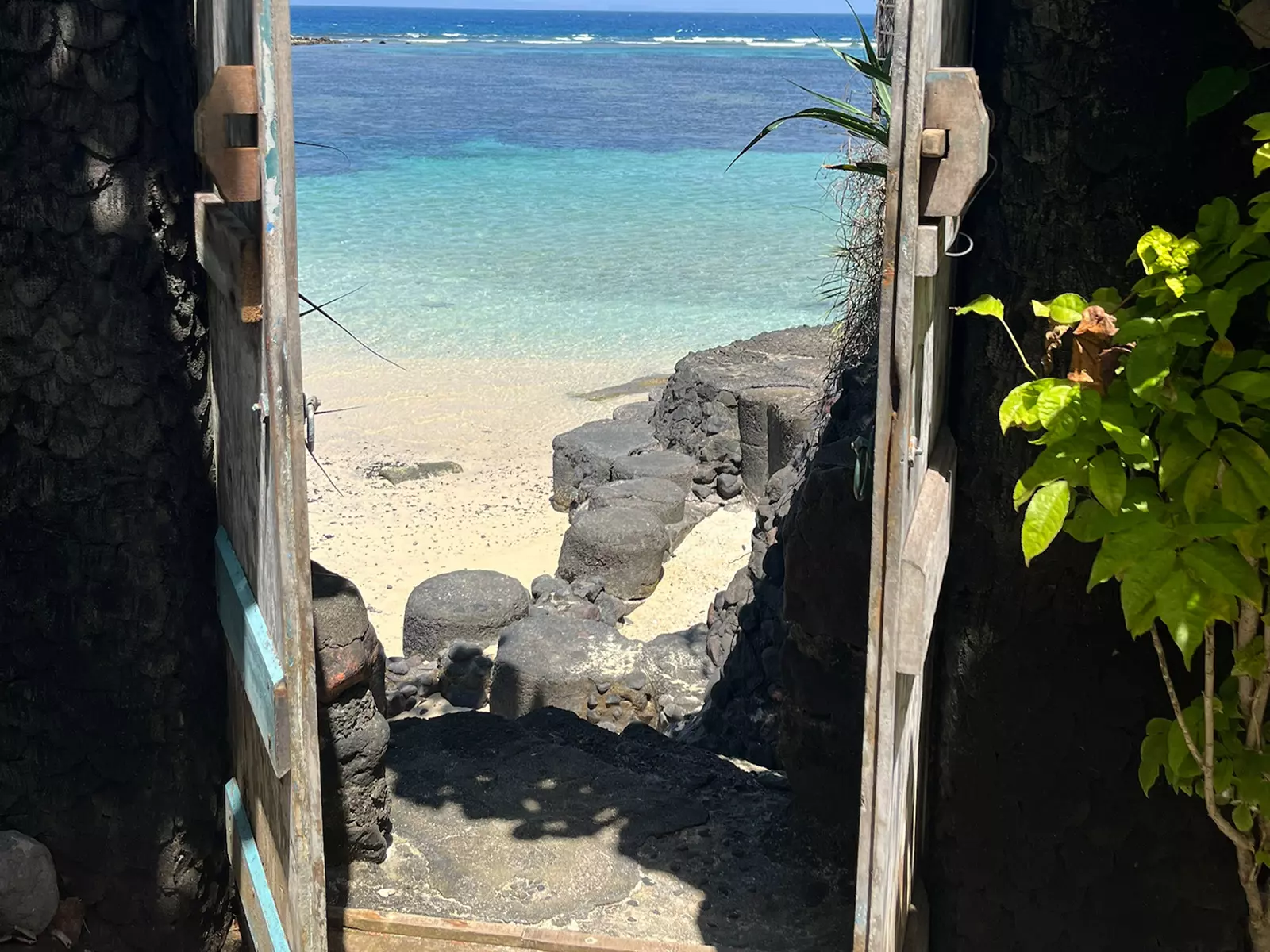
The cars leave Pondok Pisang at 1.15pm, or at 1pm for the two five-hour tours. Wayan and his drivers, all from the local village co-operative and all English speaking, will be waiting out the front. Each car takes up to four people plus the driver.
The whole afternoon, drivers and vehicles, is part of what you have already paid for. What we cannot cover is the entry fees, because we have no way of knowing in advance where anyone will choose to go. Some of these tours cost nothing at all, some a dollar or two, and the dearest is about sixteen dollars a head. Bring rupiah in cash. Almost none of these places take a card. Dollar figures on this page use about 12,500 rupiah to the Australian dollar.
Minimum three people per car, please. We budget for four cars, five at the very most, and a couple taking a whole car to one place is what tips it over. Team up. Half the fun of the afternoon turns out to be who you end up in the car with.
Four hours is the plan, and five is fine. Tours 11 and 12 are five-hour tours and leave at 1pm. If your car would rather stretch any of the others, say so beforehand and settle the extra directly with the driver.
Below is a look at the places you might visit. Obviously you cannot see them all in one afternoon, and some of you have been to several of them before. What you do not get to this time, you can come back to.
So have a read, think about what interests you, and talk it over with the others. Then sort yourselves into car-loads with Chris, and decide where each car is going. Chris will settle each car’s route with Wayan. If there is somewhere else you have in mind, that is fine too — these are only our suggestions. But don’t leave it to the driver! Have an agreed plan / trip.
The places you could visit
Tirta Gangga water palace

A serene royal water garden, known for its tiered fountains, stone statues and ornamental ponds full of koi. The water comes from natural springs. It is a peaceful, very photogenic place, and you can feed the fish or even take a dip in the cool pools.
About 15 minutes’ drive. Allow 1 to 1.5 hours. Entry IDR 50,000, plus about IDR 2,000 to park. Open 8am to 5pm. Modest dress is the right thing at any Balinese sacred site.
Taman Ujung water palace, the “floating palace”


A former royal water palace, and a striking one. The complex mixes Balinese, Dutch and Chinese architecture, with linked pools, elegant bridges and landscaped gardens. It was where the Karangasem royal family came to take their leisure.
About 15 to 30 minutes’ drive. Allow an hour. Entry around IDR 100,000, plus IDR 5,000 to park. Modest dress again.


Tenganan Pegringsingan, the old village

One of Bali’s oldest and most traditional villages — a Bali Aga village, meaning the original Balinese, who kept their own customs when the rest of the island changed. The architecture is unlike anywhere else, and the village is famous for geringsing, a rare double-ikat weaving recognised by UNESCO. You can watch the weavers at work.
About 10 minutes’ drive. Allow an hour or so. There is no fixed fee. A donation of IDR 50,000 to 100,000 a head is what is expected now — it has crept up, and the old IDR 30,000 figure is out of date. A village guide usually walks with you at no charge; around IDR 50,000 is the customary tip. No sarong needed, though modest dress is respectful.


Goa Lawah, the bat cave temple

A sacred temple built around a natural bat cave. The sound of the bats never stops, which gives the place an oddly meditative feel. You can watch them at the cave mouth and walk the temple courtyards.
About 15 to 20 minutes’ drive. Allow 30 to 45 minutes. Entry around IDR 30,000, plus IDR 5,000 to park. A sarong and sash are required here — they are handed out at the ticket counter, or hired for about IDR 5,000.
Kertha Gosa and Klungkung Palace

Once the royal court of the Klungkung kingdom, and its court of justice. The Kertha Gosa pavilion and the Bale Kambang, the floating pavilion, are famous for their painted ceilings — scenes from the old epics, and a good many pointed moral lessons about what happens to wrongdoers.
About 45 to 60 minutes’ drive. Allow 45 minutes to an hour. Entry IDR 50,000, which includes the sarong and scarf. Cash only, and the ticket office is across the road, not at the gate — worth knowing before you queue at the wrong window.
Virgin Beach, Pantai Pasir Putih

A quiet white-sand beach not far from Candidasa, with calm clear water that is good for swimming and snorkelling. Small warungs line the sand, so you can sit with a cold drink or some fresh seafood and do very little.
About 15 to 20 minutes’ drive. Allow 1.5 to 2 hours. Entry IDR 20,000, with parking now included rather than charged separately. If temples are not what you feel like, this is the restful choice.
Goa Gajah, the elephant cave

A ninth-century Hindu-Buddhist site. The cave entrance is carved to look like a demon’s open mouth, and inside there are meditation chambers and old relics, with bathing pools and quiet gardens outside.
About 1 hour 15 to 1 hour 30 minutes’ drive — it is nearly at Ubud. Entry IDR 50,000, including parking and sarong. Open 8am to 6pm.
Be honest with yourself about the clock on this one. Leaving at 1pm, in afternoon traffic, the driving alone can take two and a half to three hours of your four, which leaves you almost no time at the site. It is a much better full-day trip than a half-day one — worth keeping in mind if you are staying on either side of the retreat.
Besakih, the mother temple

Bali’s largest, holiest and most important temple complex, sitting high on the south-western slopes of Mount Agung. More than eighty temples and shrines, and views to match.
About 1 hour to 1 hour 15 minutes’ drive. Allow 1.5 to 2 hours. Choose this one only if it is the thing you most want to do, because it will be your whole afternoon.
The price and the system have both changed, so ignore any older figure you may have seen. Entry is now IDR 150,000 for a foreign adult, up from IDR 90,000 in April 2024. Parking is IDR 10,000 on top. The good news is that the ticket now includes your sarong and sash, an official local guide, and the electric shuttle from the car park up to the temple — none of that is an extra.
Entry fees and drive times, at a glance
| Place | What it is | Drive from Pondok Pisang | Time there | Entry (IDR) | Sarong? |
|---|---|---|---|---|---|
| Tirta Gangga | Royal water garden | 15 min | 1–1.5 hrs | 50,000 | Modest dress |
| Taman Ujung | Water palace | 15–30 min | 1 hr | 100,000 | Modest dress |
| Tenganan | Traditional village | 10 min | 1–1.5 hrs | Donation, 50,000–100,000 | No |
| Goa Lawah | Temple and bat cave | 15–20 min | 30–45 min | 30,000 | Yes, 5,000 to hire |
| Kertha Gosa | Royal court and palace | 45–60 min | 45 min – 1 hr | 50,000 | Yes, included |
| Virgin Beach | Beach | 15–20 min | 1.5–2 hrs | 20,000 | No |
| Goa Gajah | Ancient cave temple | 1 hr 15 – 1 hr 30 | 1–1.5 hrs | 50,000 | Yes, included |
| Besakih | The mother temple | 1 hr – 1 hr 15 | 1.5–2 hrs | 150,000 (includes guide and shuttle) | Yes, included |
The twelve tours, with maps
Each of these fits the afternoon, and each one has its own map. Download the map for whichever tour your car picks, save it to your phone, and show it to your driver. It has the route, the stops, the times and what you pay, all on one screen, and it works with no wifi at all.

1. Royal and cultural heritage
A good first visit. Taman Ujung (Ujung Water Palace), then Tenganan (the old walled village). Out at 1.15pm, back at 4.45pm. Entry about IDR 200,000 a head (about AUD $16), which includes the Tenganan donation and a tip for the village guide.

2. The two water palaces
For anyone who likes architecture, gardens and water. Tirta Gangga (Water of the Ganges), then Taman Ujung (Ujung Water Palace). Out at 1.15pm, back at 4.55pm. Entry IDR 150,000 a head (about AUD $12).

3. Klungkung and the bat cave
History and a very different kind of temple. Kertha Gosa (the Hall of Justice), then Pura Goa Lawah (Bat Cave Temple). Out at 1.15pm, back at 4.55pm. Entry IDR 80,000 a head (about AUD $6). A good choice if you have already done the water palaces.

4. The mother temple
Pura Besakih, and nothing else, because the driving alone is two hours and twenty minutes. Out at 1.15pm, back at 5.15pm. Entry IDR 150,000 plus IDR 10,000 parking (about AUD $13 all up), which now includes your sarong, an official guide and the shuttle up. Choose this one only if it is the thing you most want to do, because it will be your whole afternoon.

5. The clifftop and the tailors


Bukit Asah (Asah Hill), then Candidasa for the shops and the tailors. Out at 1.15pm, back at 4.45pm. Entry IDR 10,000 (about AUD $1) and nothing at all in Candidasa. Close, cheap, beautiful, and off the standard driver circuit.

6. Padangbai


Pura Silayukti, one of the oldest temples in Bali, then the Blue Lagoon beach for a swim. Out at 1.15pm, back at 4.25pm. No entry fee, parking only. Take swimmers and the resort snorkel gear.

7. Salt, bats and a lagoon


Three stops, all close together. Kusamba salt farms, then Pura Goa Lawah (Bat Cave Temple), then the Candidasa lotus lagoon. Out at 1.15pm, back at 4.10pm. Entry IDR 30,000 (about AUD $2), plus IDR 20,000 to 50,000 (about $2 to $4) if you buy salt. Kusamba is furthest out, so you go there first and pick the other two up on the way home.

8. The hill road to Putung

Putung, a hill village at 800 metres, for the view over the coast and across to Nusa Penida, and a coffee. You stand on the edge of a ridge and the whole of east Bali is below you: wooded valleys, then rice terraces, then the coastal plain, then the sea at Manggis and the bay at Amuk, with Nusa Penida on the horizon on a clear day. No gate, no ticket, no queue. A few warungs, somewhere to sit, and air cool enough to notice after a week at sea level. The whole point of it is that almost nobody is there. Out at 1.15pm, back at 4.00pm. Free. The gentlest one on the list, mostly about the drive, and noticeably cooler up there.

9. The courtroom and the market

Kertha Gosa (the Hall of Justice), then Semarapura market, which is five minutes away on foot. Out at 1.15pm, back at 4.55pm. Entry IDR 50,000 (about AUD $4) for Kertha Gosa, and the market is free to walk into.

10. The Agung lookout

Lahangan Sweet, a ridge-top with a Balinese gate built to frame Mount Agung, plus bamboo platforms and a swing. Out at 1.15pm, back at 4.45pm. Entry IDR 100,000 plus IDR 3,000 parking (about AUD $8 all up). The Gates of Heaven photograph without the Lempuyang queue. Agung is often in cloud after mid-morning, so the view is a gamble.

11. The Liberty shipwreck, five hours


Tulamben, and the USAT Liberty, a United States army ship torpedoed in 1942. She lies thirty metres off the beach and starts five metres down, so you can snorkel her, walking in from the sand. Out at 1pm, back at 5.20pm. No entry fee, small parking charge only. Take the resort snorkel gear.

12. Sukawati art market, five hours

Sukawati, three halls of carvings, batik, paintings, bags and jewellery. Out at 1pm, back at 5.30pm. Free to walk in. Bring rupiah, haggle, and never pay the first price. This is a five-hour car, so settle it beforehand.

All twelve, at a glance
| Tour | Where you go | Out and back | Entry a head | |
|---|---|---|---|---|
| 1 | Royal and cultural heritage | Taman Ujung, Tenganan | 1.15pm to 4.45pm | IDR 200,000 (about $16) |
| 2 | The two water palaces | Tirta Gangga, Taman Ujung | 1.15pm to 4.55pm | IDR 150,000 (about $12) |
| 3 | Klungkung and the bat cave | Kertha Gosa, Goa Lawah | 1.15pm to 4.55pm | IDR 80,000 (about $6) |
| 4 | The mother temple | Besakih | 1.15pm to 5.15pm | IDR 160,000 (about $13) |
| 5 | The clifftop and the tailors | Bukit Asah, Candidasa | 1.15pm to 4.45pm | IDR 10,000 (about $1) |
| 6 | Padangbai | Pura Silayukti, Blue Lagoon | 1.15pm to 4.25pm | parking only |
| 7 | Salt, bats and a lagoon | Kusamba, Goa Lawah, lotus lagoon | 1.15pm to 4.10pm | IDR 30,000 (about $2) |
| 8 | The hill road to Putung | Putung | 1.15pm to 4.00pm | free |
| 9 | The courtroom and the market | Kertha Gosa, Semarapura market | 1.15pm to 4.55pm | IDR 50,000 (about $4) |
| 10 | The Agung lookout | Lahangan Sweet | 1.15pm to 4.45pm | IDR 103,000 (about $8) |
| 11 | The Liberty shipwreck | Tulamben. Five hours | 1.00pm to 5.20pm | parking only |
| 12 | Sukawati art market | Sukawati. Five hours | 1.00pm to 5.30pm | free |
If you have been before, some less obvious ideas
Several of you have done this retreat more than once and have already seen the water palaces and Tenganan. Here are places that are close, easy, and genuinely different.
Bukit Asah, the clifftop above Bugbug
A grassy headland on top of the cliffs, looking straight out at the Indian Ocean, with Mount Agung behind you. It belongs to the traditional village, which runs it themselves, and it is still almost empty of tourists.
About 10 minutes’ drive, then a gentle 15 to 20 minute walk from the car park. Entry about IDR 10,000. An hour is plenty. This is the pick of the list — close, cheap, beautiful, and off the standard driver circuit, so even old Bali hands will not have seen it.
Pura Silayukti, on the headland at Padangbai
One of the oldest temples in Bali, on the point above the harbour, with hardly anybody there. Quiet in a way Besakih never is. Pair it with a coffee looking down over the boats.
About 15 to 20 minutes’ drive, then an easy ten-minute walk uphill. Free, or a small donation. Three quarters of an hour.

The salt farms at Kusamba
Sea water carried up the black sand by hand, dried in hollowed palm logs, and raked into salt — the same way it has been done for generations, and one of the last places still doing it. The families will show you how it works. There is no hard sell; people buy a bag of salt because they want to.
About 20 to 25 minutes’ drive, straight down the coast road. No entry fee — budget IDR 20,000 to 50,000 for salt or a small craft. Half an hour to 45 minutes. It sits directly on the way to Goa Lawah and Kertha Gosa, so it costs you almost nothing to add.
Putung, for the view and a coffee
A hill village at 800 metres, on the back road between Candidasa and Sidemen, about 19km from Amlapura. Locally it is Bukit Putung.
What you see from it. You are standing on the edge of a ridge, looking down and east. Green hills and steep valleys full of tropical trees drop away in front of you, then rice terraces, then the coastal plain, and at the bottom the sea at Manggis and the bay at Amuk. On a clear day Nusa Penida sits on the horizon across the strait. It is the whole of east Bali laid out below you in one view.
What is actually there. Very little, and that is the appeal. A handful of warungs and simple losmen strung along the road, a car park, some rest areas, and a few places to sit with a coffee. No gate, no ticket, no queue, and nobody selling you anything. It is cool enough at that altitude to notice, which after a week on the coast is the other half of why people like it.
Balinese painters have used this view for generations, which tells you something about it.
There are warungs at the top.
About 30 to 40 minutes’ drive up a winding road. Free. There is not much to do beyond look, so treat it as a scenic stop with a coffee rather than the whole afternoon.

The lotus lagoon at Candidasa
Not a destination in itself, but a lovely fifteen or twenty minutes if the car is passing back through town anyway. Free, and a very easy walk.

If you would rather go shopping
A perfectly good way to spend the afternoon, and several people do it every retreat.
- Candidasa is the easy one — a one to two kilometre walk or a five-minute drive. Cafes, small shops, and the tailors, where a good number of people get something made each retreat. Ask Wayan, who knows exactly which ones and speaks to them in the local language. If you want something made from Australian fabric, you need to have brought it with you.
- Tenganan sells its own geringsing weaving, made in the village. It is expensive, and it is the real thing — this cloth is woven in only three places in the world.
- Semarapura market at Klungkung is a large, busy daily market, and it is right beside Kertha Gosa. If you are doing that itinerary anyway, half an hour in the market costs you nothing extra.
- Amlapura, the regional town, is near Taman Ujung and has ordinary Balinese shops rather than tourist ones — good if you would rather browse than be sold to.
- Salt from Kusamba, straight from the people who made it. It travels well and it makes a very good present.
Two or three we would steer you away from
Lempuyang, the “Gates of Heaven”. The photograph is famous and the queue for it is currently running anything from an hour and a half to four hours. People get up at 5am to beat it. There is no version of this that fits a four-hour afternoon, and you would spend the whole of it standing in a line.
Sidemen. It reads beautifully — a green valley of rice terraces — and a car went there on an earlier retreat. It was not a success, and it is worth saying why. Development has pushed into the valley, the roads that used to be empty now carry traffic, and once you arrive there is very little actually to do. It is a lovely place to stay for a night or two. As a stop where you get out of a car, look at a view, and get back in, you can do better twenty minutes from home at Bukit Asah.
Coffee and “luwak” plantations. Please do not let a driver add one of these to your afternoon. Across Bali they run on commission — the driver is paid for every carload delivered — and what follows is a tasting, a hard sell, and some fairly grim caged civets. It is the single most common way an afternoon gets quietly hijacked.
Making the afternoon go smoothly
Be ready just after lunch. The cars leave as close to 1pm as we can manage. The later you go, the more of the afternoon you lose to the drive home.
What to take with you
- Rupiah in cash. Entry fees and local stalls are cash only.
- A sarong and sash. Required at Goa Lawah and Besakih. They are usually lent or included, but your own is easier.
- Sun protection — hat, sunglasses, sunscreen.
- Water. There is more walking than you expect.
- Comfortable shoes. Some of these sites have a lot of steps.
Being a good guest
- Dress modestly at temples — shoulders and knees covered.
- If you come across a ceremony, watch quietly from a distance and do not walk through it. Never stand higher than a priest, an offering, or a group at prayer.
- Bargain politely, if you bargain at all. It is normal in markets, but it should stay good-humoured.
- Give a donation at places like Tenganan where there is no fixed fee. It is genuinely appreciated.
If you want to see the route beforehand, all of these are easy to find in Google Maps. Put Pondok Pisang in as your start, then add each stop in order, and you will get a good sense of how the afternoon flows.
And then there is the last night
Whatever your car does with its afternoon, you all end up back at the same table. That is rather the point of it.
The last dinner of the retreat is the one people remember. Everyone swaps what they saw, the photographs come out, somebody has been somewhere nobody else went — and the kitchen usually has something up its sleeve for the table.
So come to dinner on the last night, even if you are tired and half packed. It is a lovely couple of hours, and it is the proper end of the week.

Everything else about the retreat is on the retreat information page.
